

Ivona Juka’s Beautiful Evening, Beautiful Day is a film that creeps into your chest quietly and lingers there. It’s not loud or flashy; it doesn’t punch you in the face with grand gestures. Instead, it whispers, pulling you into a world that’s both beautiful and suffocating, full of love and fear, laughter and danger. Set in 1957 Yugoslavia, just after the country shook off the horrors of fascism only to fall under Tito’s watchful communist eye, the story follows Lovro (Dado Cosic) and Nenad (Djordje Galic), two filmmakers and lovers trying to carve out a space for themselves in a society determined to erase them. Their romance isn’t just sweet—it’s a rebellion, a fragile act of claiming life when everything around them is trying to snuff it out.
From the very first shot, Juka’s black-and-white cinematography hits you with its stark beauty. There’s a harshness to it, almost like sunlight slicing through fog, but it also feels intimate, like she’s inviting you to peek behind a curtain into a world that history tried to hide. In this gray, tense landscape, even the quietest moments of joy feel revolutionary. Watching Lovro and Nenad hold hands at dinner with Lovro’s parents is oddly radical, a soft protest against a society that wants them invisible. It’s in these little gestures, these moments of tenderness, that the film packs some of its most powerful punches.
Then comes Emir (Emir Hadzihafizbegovic), a mid-level bureaucrat sent to infiltrate Lovro and Nenad’s filmmaking world. Emir is the perfect mix of weary and calculating; you never quite know what he’s thinking, and that uncertainty is intoxicating. His presence transforms the film from a quiet love story into a subtle game of cat-and-mouse, full of tension that simmers just below the surface. Watching him move through their world, watching the filmmakers respond—there’s a push-and-pull that keeps you on edge, the kind of tension that makes you hold your breath without realizing it.
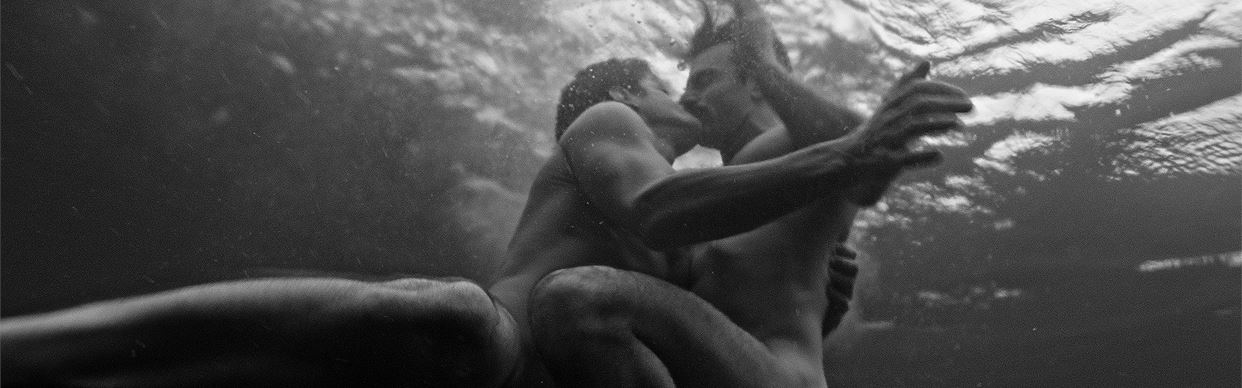
What makes the film so affecting, though, are the fleeting moments of joy, laughter, and intimacy that punctuate the oppression. A scene of Lovro and Nenad skinny-dipping along the coast is heartbreakingly beautiful. It’s playful, tender, and utterly forbidden. In a world so dominated by fear and surveillance, these small acts of freedom feel monumental. There’s a bittersweet quality to them, too—you know they won’t last forever, yet they exist, stubborn and defiant, as proof of life and love against all odds.
At the same time, the film isn’t perfect. Some characters, like Stevan (Slaven Doslo) and Ivan (Elmir Krivalic), never quite get the depth they deserve, and early pacing stumbles a bit as the story finds its rhythm. Violence and oppression are portrayed unevenly—some moments shock, others feel distant, almost abstracted—so it can be hard to know how the film wants you to react. But even in its flaws, there’s honesty. Life under scrutiny is messy, chaotic, and frightening, and Juka captures that sense of unease beautifully.
Where Beautiful Evening, Beautiful Day truly resonates is in its historical lens. It refuses to sugarcoat the past or gloss over the struggles of queer artists trying to survive under oppressive regimes. These filmmakers, these lovers, these friends—Juka gives them presence, humanity, and dignity, even when the world around them refuses it. Watching them work, love, and resist is both inspiring and devastating, a reminder of lives that were nearly erased but refused to disappear completely.
In the end, the film is about small rebellions, about the courage it takes to exist authentically when the world wants to erase you. It’s about love, art, and defiance—quiet but relentless. Lovro and Nenad’s story is a tender reminder that even in the bleakest of circumstances, life can bloom, even if just for a moment. Juka’s camera lingers lovingly on these moments, celebrating them and insisting we remember the people history tried to forget.
Beautiful Evening, Beautiful Day isn’t flawless, but it’s impossible to look away. It’s tender and brutal, intimate and expansive, a love letter to those who dare to live honestly in a world that would rather they didn’t. Watching it, you feel the weight of history and the light of defiance in the same heartbeat—and that alone makes it unforgettable.
Beautiful Evening, Beautiful Day screens at the Mardi Gras Film Festival on 18 February 2026. Tickets are available here:

Director: Ivona Juka
Cast: Dado Cosic, Emir Hadzihafizbegovic, Djordje Galic
Writer: Ivona Juka
Producer: Anita Juka
Composer: Michael Brook
Cinematographer: Dragan Ruljancic
Editors: Nenad Pirnat, Nina Velnic