
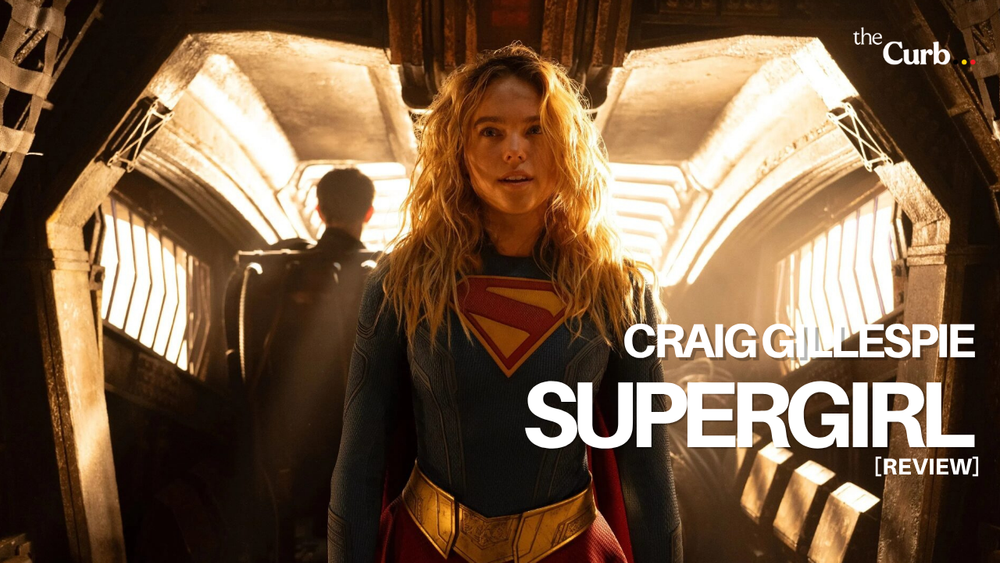
When James Gunn took over the DC universe, many fans delighted in his decision to do away with the murky and dour sensibilities of Zack Synder’s ‘DCEU’. The ‘Snyderverse’ fans may have been grumbling, but last year’s Superman provided a much needed sense of hope and comic book flair to the superhero film. While Superman wasn’t perfect by any means either, it provided a bright tone and introduced audiences to David Corenswet’s puppy-dog-personified Superman.
In Craig Gillespie’s disappointing follow-up Supergirl, the charming tone Gunn established rapidly collapses and not because it has darker subject matter. As a glorified escort mission between Kara (Milly Alcock) and the young Ruthye (Eve Ridley), the film falls back on the tired playbook plaguing the superhero genre: mining the depths of cheap ‘content’ corporate filmmaking.
Equal parts Mad Max: Fury Road and Guardians of the Galaxy lifting plot beats right out of the former and the planet-hopping style of the latter. Milly Alcock is the sole bright spot in the derivative adventure, propping up a script that does little to serve her or the titular character.
Credit where credit’s due, Supergirl does away with the drowning exposition that often weighs down origin story and first-adventure tales. Adapted from the beloved comic series Supergirl: World of Tomorrow by Tom King and Bilquis Evely, the film jumps right in as Kara Zor-El (Supergirl) celebrates her 23rd birthday by interplanetary bar hopping with her beloved dog, Krypto. Frequently intoxicated, down on her luck, and struggling to find purpose in life, Kara’s trajectory changes when she comes across young girl Ruthye Marye Knoll. As the sole survivor of an attack that killed her entirely family, Ruthye is seeking vengeance on brigand leader, ‘Krem of the Yellow Hills’ (Matthias Schoenaerts).
Kara refuses Ruthye’s initial request to aid her on her journey but Krem hijacks Kara’s spaceship and shoots Krypto with a poisonous dart. Kara is left stranded and bereft upon learning that her dog only has three days before the poison will kill him. With Krem the only source of an antidote and time running out, Kara and Ruthye, under a banner of contrivance, find themselves with similar goals. They catch a space bus in pursuit of Krem, whose one-note villain looks like an extra who wandered off the set of The Road Warrior. Schoenaerts only gets one tedious generic villain type to play: kill, laugh, and relish his criminal hedonism.
Along for the ride also is the sparsely used, motorbike riding Lobo (Jason Momoa), an alien mercenary whose also on the hunt for Krem’s lieutenant. Momoa relishes the role with rockstar-coded confidence, even if the film struggles to naturally fit him into the story. The paper-thin plot eventually leads them all to the planet Bilquis, an all-male society that, thanks to the brigands, engages in female trafficking. With a sick dog, women under duress, and a quest for revenge, a simple but forgettable adventure unfolds – think of a budget version of Furiosa mixed with Marvel’s second phase at its most superfluous.
The strongest elements of Supergirl unfold away from the action, where the film, albeit clunkily, shifts gear to Kara’s past on the planet Krypton. With small but impactful performances from David Krumholtz and Emily Beecham as Supergirl’s parents Zor-El and Alura In-Ze, the most emotive moments come as their home turns to ruin and desperate choices are made to ensure their daughter’s safety. It’s no surprise that David Corenswet is back as Superman, elevating any scene he’s in as he tries to help his traumatised and self-destructive cousin. One scene has Kara and Krypto meet Kal-El on Earth for the first time, a beat that provides a refreshing balance of humour and heart the rest of the film lacks.
The visual palette is gloomy and unpolished, draining the vivid colour that made Superman so striking and instead flooding the frame with cosmic CGI sludge. The needle-drops (including Wolf Alice, Sleigh Bells, and Halsey) are heavy handed and distracting. The action sequences are amongst the dullest, poorly blocked bores in a recent blockbuster: mangled by frantic jump cuts and aimless direction that make each set piece feel impossible to follow. If you are excited to see Kara kick some butt in the super suit, also expect to be increasingly disappointed.
The most egregious issues with the film are in Ana Nogueira‘s underdeveloped script. Eve Ridley’s dry revenge-obsessed Ruthye is as woefully underwritten as Krem. Kara’s issues with feeling apathetic and purposeless and drifting in an alcohol-soaked self medicated depression aren’t given enough weight either.
Supergirl is a generic slog: lifeless, trite, and too often centred on events happening around Kara rather than to her. Despite welcome supporting turns from Jason Momoa and David Corenswet, and a committed, sardonic, and ultimately charming lead performance from Milly Alcock; the film is hobbled by an underwritten screenplay and a painfully lacklustre villain. Under Craig Gillespie’s stale direction, this punk-rock reject looks and sounds as depleted as Kara’s mental state. If this is where the DC Universe is headed, there is nothing super about being ordinary. Fingers crossed for a better Man of Tomorrow.
Director: Craig Gillespie
Screenplay: Ana Nogueira
Cast: Milly Alcock, Eve Ridley, Matthias Schoenaerts, Jason Momoa, David Corenswet
Cinematography: Rob Hardy
Producers: James Gunn, Peter Safran