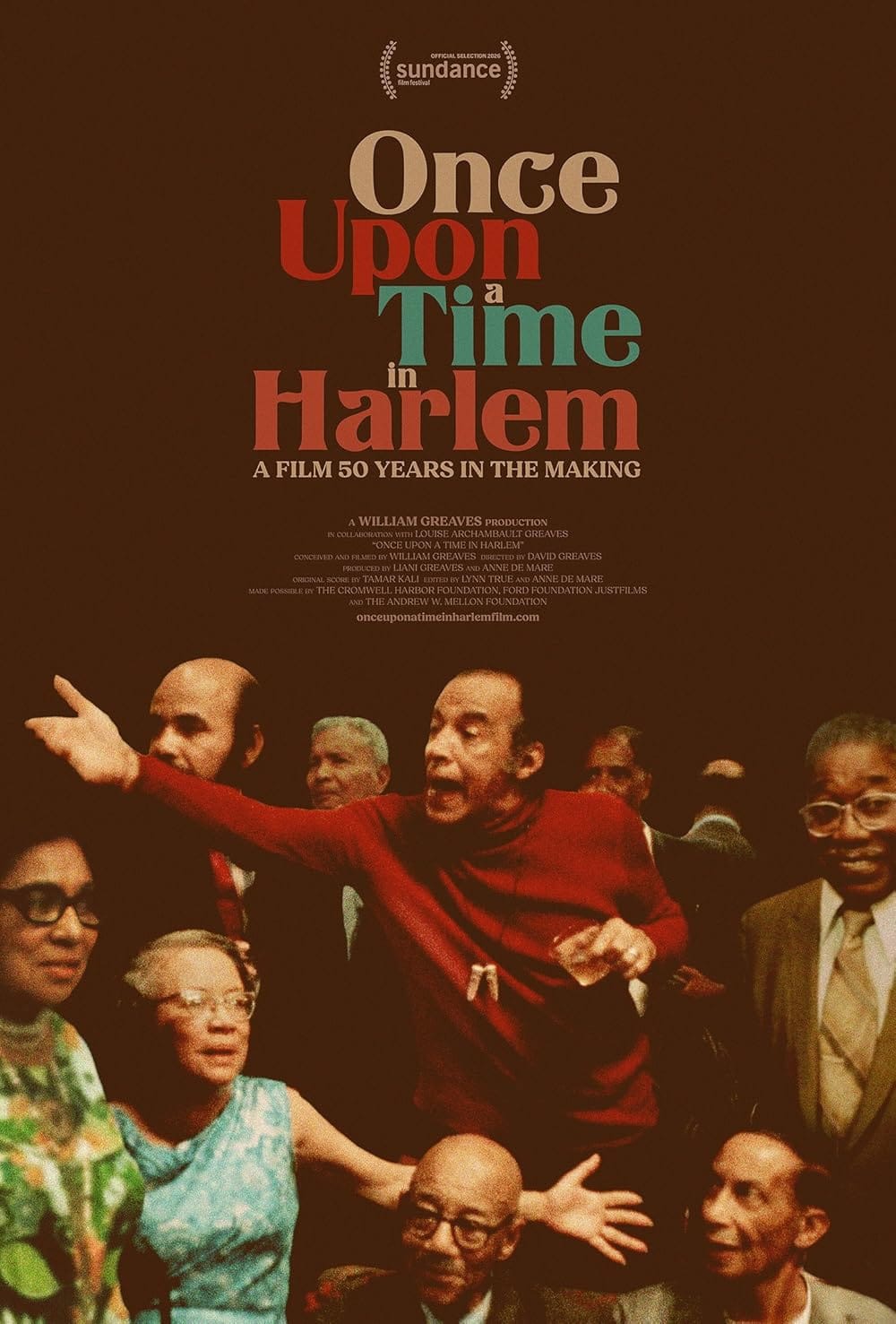
Few forces have shaped global culture more than the creative explosion that came out of the collision of African and American life in New York City in the twentieth century. Tracing it back to a single point of origin is close to impossible, but anyone hunting for the roots of hip-hop, Black poetry, philosophy, literature and art will sooner or later arrive at the era known as the Harlem Renaissance. Across the 1920s and 30s, this one neighbourhood became the centre of Black cultural life, drawing writers, painters, musicians and thinkers towards its libraries, galleries, theatres and clubs – a flowering that occurred while, elsewhere in the United States, segregation was endemic, lynching was rife and the Klan resurgent. Achievements were not measured by the metrics established by white society. As the poet Arna Bontemps puts it in this film, the Harlem Renaissance was "a prism reflecting all of the Black experience from the beginnings to the present."
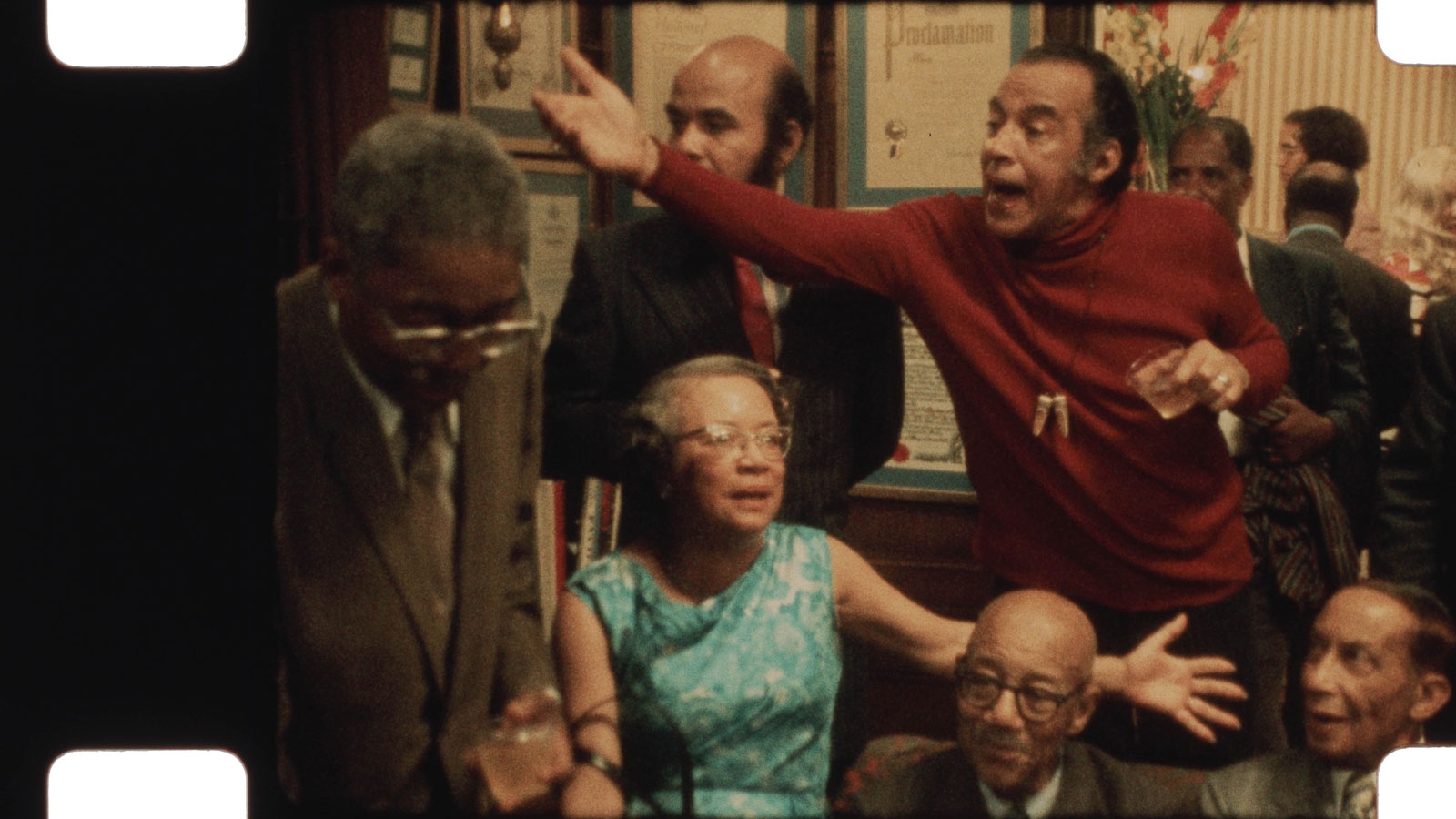
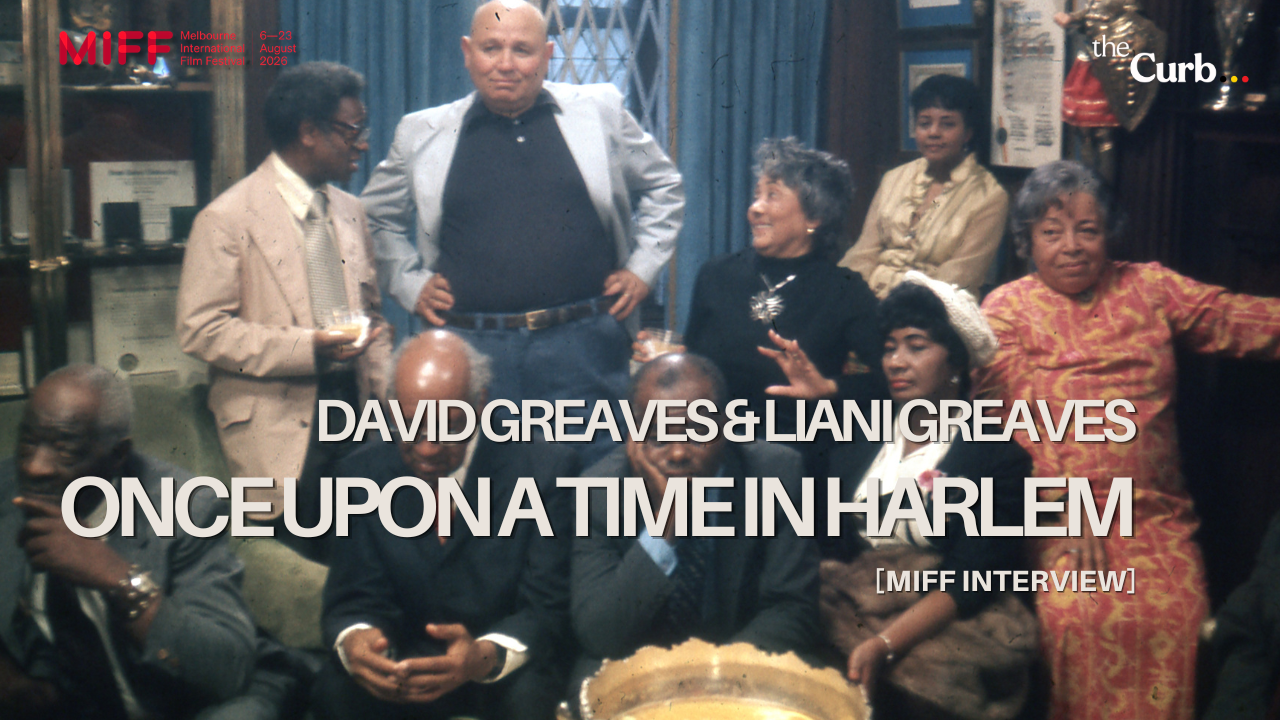
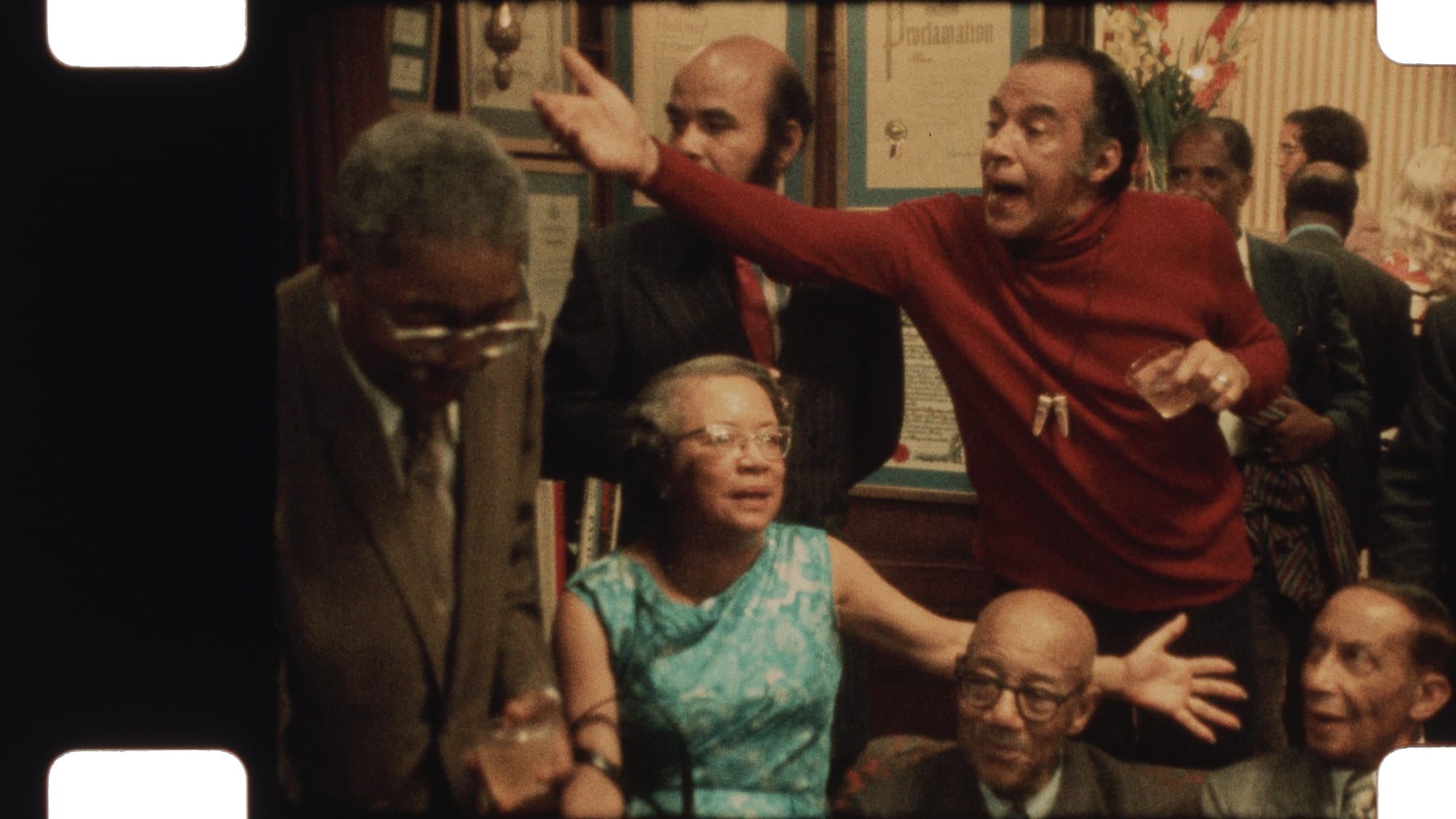
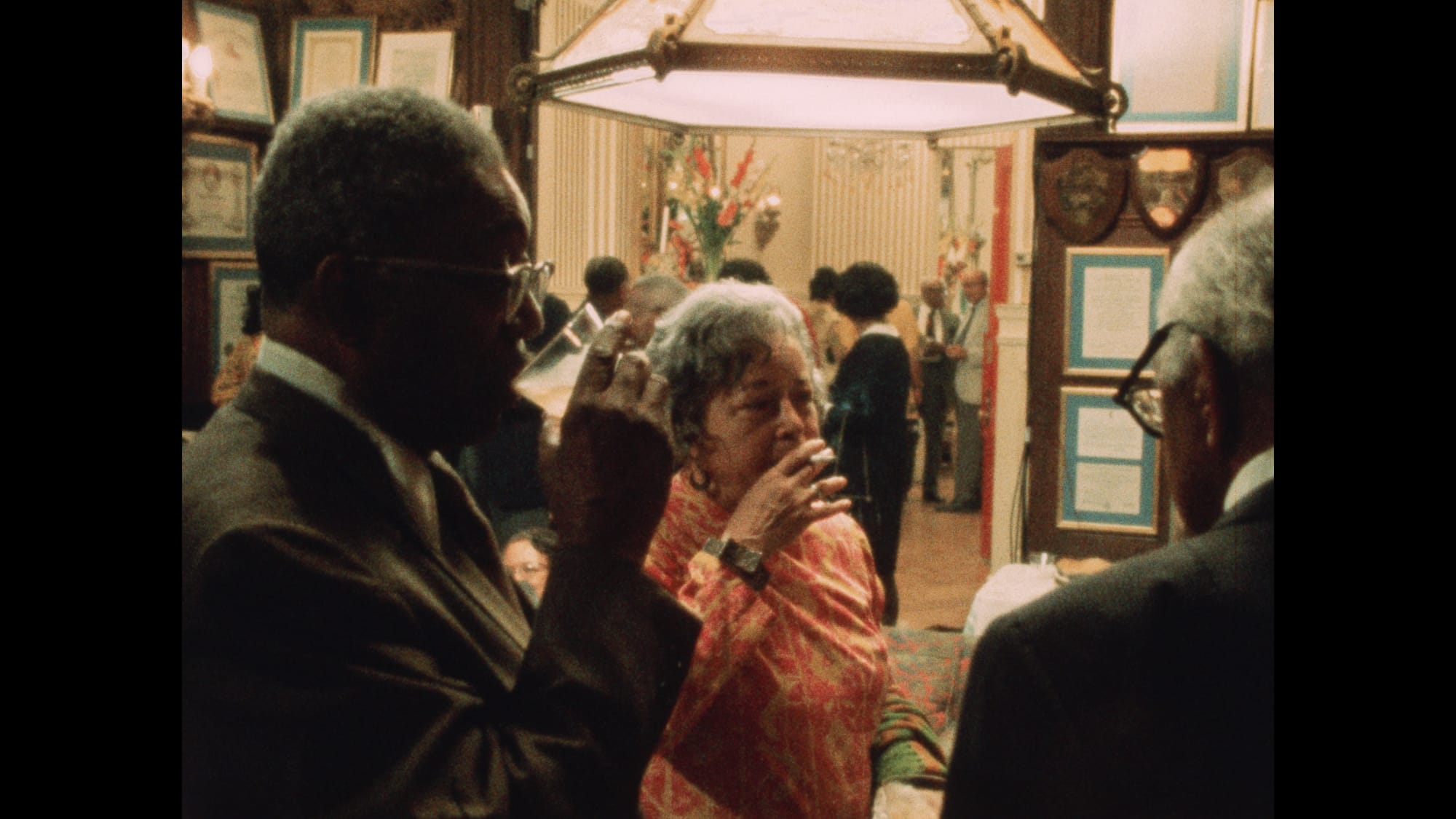
On an overcast day in August 1972, the filmmaker William Greaves gathered the movement's surviving leading lights in Duke Ellington's townhouse on St Nicholas Avenue, pointed several 16mm cameras at them, and let the punch do the rest. What he caught over the next few hours is the most extraordinary room you will sit in this year. Two dozen poets, painters, actors, activists, photographers and librarians, many of whom hadn't seen each other since the 1920s, talking over the top of one another about art, politics and who has and hasn't been given their due. The photographer James Van Der Zee eyes Ellington's grand piano, protests that he hasn't touched one in years, sits down anyway and calls forth a melody. Eubie Blake recounts the dancer Bill "Bojangles" Robinson extending his hand to the then US president Calvin Coolidge at a celebration for the pilot Charles Lindbergh and being left hanging. "When I am meeting a white man I do not know, I never offer my hand first," he says. Ida Mae Cullen, widow of the poet Countee Cullen, seizes her moment to make sure her husband gets his due. Richard Bruce Nugent, unmissable in a red turtleneck, cheerfully insists there's nothing much to say about living through an epoch, and then spends the rest of the film disproving himself: "While you're living it, it is the now."
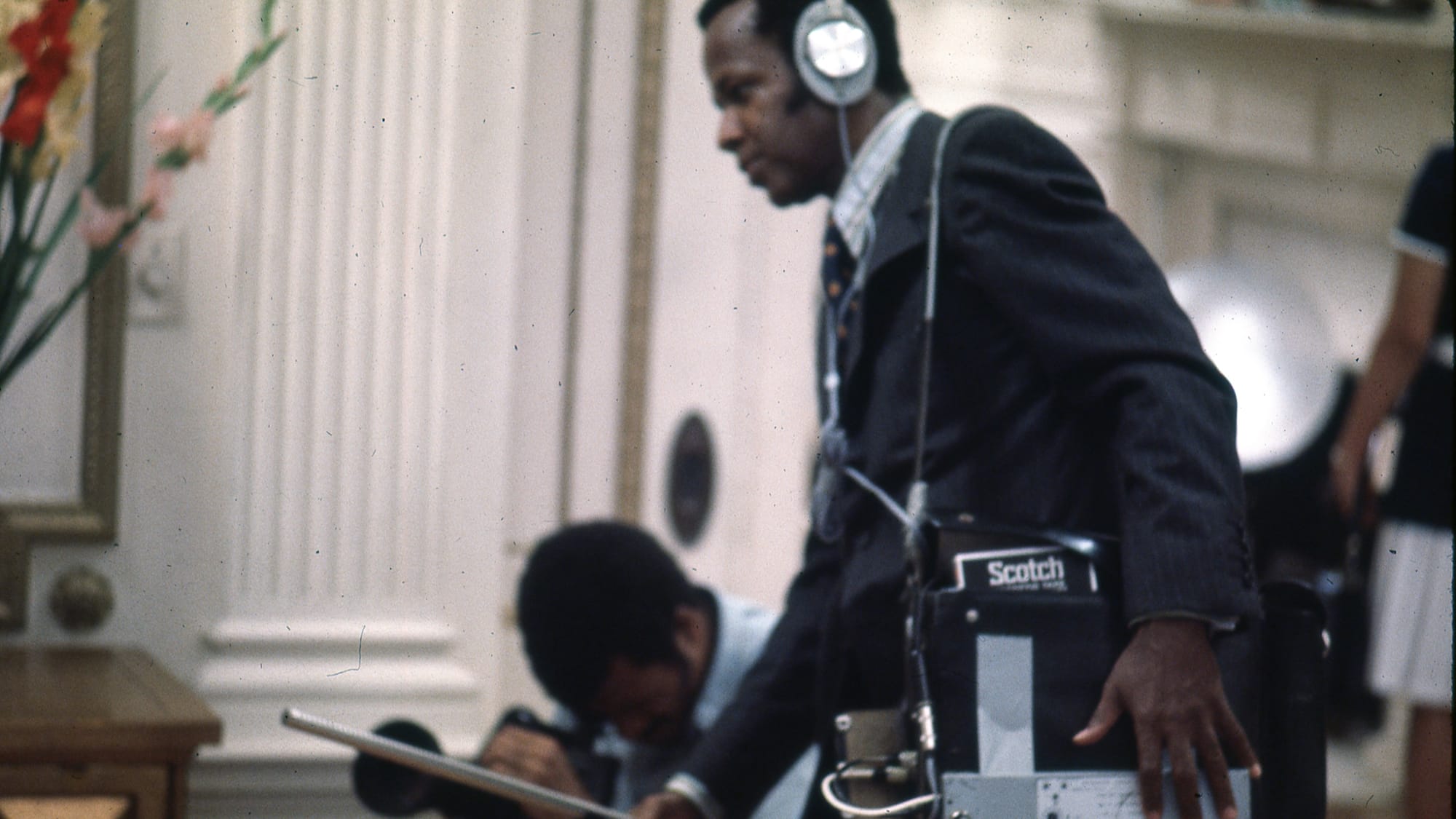
That the film exists at all is a small miracle, and that it took fifty-four years to arrive is the least surprising thing about it. William Greaves began as an actor, joining the Actors Studio in 1948 alongside Marlon Brando, Anthony Quinn and Shelley Winters. Frustrated by the roles available to him, he quit to direct, spending years making documentaries for the United Nations before becoming one of the essential chroniclers of Black America: host of the landmark news programme Black Journal, maker of clear-eyed PBS portraits of Ida B. Wells and Ralph Bunche, and author of the great metatextual puzzle-box Symbiopsychotaxiplasm, a version of which was a highlight of MIFF in 2023. He shot the Ellington party six months after making Nationtime: Gary, and never finished it. He died in 2014. His widow Louise, who produced his films for a lifetime, raised the funds to restore all 60,000 feet of the footage before her own death. The job of assembling it fell to their son David who had been one of the camera operators in that room, and to his daughter Liani, who produced.
The result runs a shade over an hour and a half, contains not a single talking-head expert, and premiered at Sundance in January to some of the warmest reviews of the festival. Within days, a bidding war briefly raged, with Neon winning the US rights. David and Liani Greaves spoke to Andy Hazel about the party, the poetry, and finishing a father's film.
Can I begin by thanking you for this film? It's a gift. But I have to ask, why did it take so long to arrive?
Liani Greaves: Because gifts take a long time?
David Greaves: Gifts take a long time to wrap! It took a while because originally it was meant to combine archival footage with live action. But the archival footage they'd shot they couldn't make work. There was so much black and white, and it didn't sit with the party. It interfered. My father had just made From These Roots, which won more than twenty awards on its own, and then he started looking at what became Once Upon a Time in Harlem.
LG: I should clarify that the 'they' is my grandmother, Louise Greaves, who was my grandfather's producer throughout his entire life.
DG: That's the 'they'. I was on a couple of those excursions into Harlem where he did interviews, and there are a lot of them. They wanted to see the effect of the Renaissance years and how it had shaped the present.
LG: They spent probably thirty years doing that. I have paper, paper, paper, files and camera footage of these interviews. It was only recently that my grandmother got the funding to restore all 60,000 feet of the 16mm film, and at that point she was thinking about maybe an immersive museum exhibit. Then she passed away, and we were left going, what do we do? The one thing we knew was that we had to share this footage. As you say, it's a gift. It had to go to the collective of humanity.
DG: I was asked by Marshall and Marcia Smith at Firelight Media, 'Okay, who's going to direct it?' I said, 'I will.' That was the first time we'd ever talked about it.
LG: And then we were like, okay, now we're making a movie and he's directing it. Now we've got a plan.
What's your personal connection to this film, and to your father through his films?
DG: Oh, gee whiz. I didn't meet my father until I was twelve. I started working with him after Syracuse. He'd just finished First World Festival, in 1966, and my first job was winding up the outtakes to send off to the UN, who he was making films for at the time. Listening to him talk, I thought, 'Gee, I'd rather do this than spend another few years getting a master's.' Although I did get a master's in film. I worked with him for the next fifteen years, and that's where we really bonded, father and son, in the editing room. Sometimes the editing room becomes like a cathedral. It's dark, the only thing in front of you are the screens. In that environment people tell you personal things. You absorb by osmosis the thinking of the person you're in a room with for fifteen years. You have to. Some of that has to happen.
I was struck by how well the film welcomes someone who knows nothing about this period and has never heard of these people. How did you approach editing all that footage?
DG: Anne de Mare and Lynn True were the editors. Lynn first divided the film into themes like community and politics, and from there we pulled out the sections we liked. The most surprising thing was that when I started to screen material and thought, 'Oh, I want to go back and look at something', my hand automatically shot out to the control panel on the editing table. The muscle memory just kicked right in. I think the same thing happened internally, because I wasn't intimidated by it. I thought, oh, this is what we do. This is what we did.
LG: Both editors were wonderful, but Anne came onto the project almost by accident, because we ran out of money to pay Lynn. Being out of money gave my father and Anne the chance to work directly together, and to take their time.
DG: It's a pleasure to work with somebody who understands what you're trying to do. There's a moment in the film with a reading of the Claude McKay poem 'The Lynching'. I wanted it in for personal reasons. But you can't simply drop that in, and I was thinking, oh God, it won't work … did I want it for the wrong reasons? Then Anne built a montage of photographs and headlines around it. Now it works like a charm.
You said it was edited by theme, but it also works chronologically.
DG: The party itself gives you the shape. They arrive, they mingle, they have a little punch, they loosen up, they go into the party, and then there's the exit. It follows that, with the interviews interspersed.
I’m curious how he felt, or how you both felt, it contributes to his legacy. He made around 200 films and this this may be his most widely seen.
DG: Well, he said this was his most important film.
LG: It's a big word, legacy. Inside this film, I think it's curiosity. Curious about history, about the people who came before us, about your own development, about the people immediately around you. Curiosity, and attention to what you're creating in the moment. Again and again in the film you hear these people say, 'We didn't know we were in the Renaissance. When you're living it, it's just the now.' So, pay attention to what we're doing right now because there's every possibility this is history we're making. All of us. Someone is going to look back on it. What are we leaving them?
DG: Consciousness-raising was one of his central concerns. Look at First World Festival, In the Company of Men, Still a Brother, or the film he made six months before this one, Nationtime: Gary, about the Black political convention in Gary, Indiana. He was capturing moments in Black history and, taken together, they give you a completely different perspective on what the African American experience actually was – things people in European countries may not know, things a lot of Americans don't know either. Screen them all back-to-back and you'd walk out saying, 'Now I know a little more about what the struggles were, what the internal thinking was.' That's his legacy.
LG: The consciousness-raising part, that's what my grandmother and I talked about. People don't know his process. He'd say his films were mostly about recognising excellence in all people. And he had this idea of creating media for social and mental health, for social reform, to raise the consciousness of the collective.
DG: This film does that. Shooting it was the culmination. Let's bring it all together, let me get these people, because if we don't do it now, they're gone forever. And they are gone forever. Nobody would know this era the way it's presented here. That happened because of his foresight and his brilliance.
One thing that separates this from so many documentaries about African American history is that it isn't about victims. It's about triumph. Do you think that was a conscious decision, or does it come with the material?
DG: It comes with the material. You don't have to sit there asking, 'Gee, how do we make these people look good?' You don't have to make them look like anything.
LG: And people see themselves in them. We can all see ourselves, see our grandparents, in those faces. It's been exciting to hear that people from very different backgrounds have been moved by this film and the stories in this film. There's also a thrill that comes with that discovery of this world. Some people have felt a sense of shame for not knowing about this. And the shame isn't theirs. These stories need to be told.
How was the guest list arrived at? Alongside these legends of literature and philosophy and dance and musicals, you have Regina Anderson Andrews who is a librarian, and who has some of the most memorable and insightful stories.
LG: The librarians were key.
DG: Jean Blackwell Hutson from the Schomburg Collection was one of the main advisors. Other than the historian David Levering Lewis, she was the first, in terms of bringing people together. Of course she knew Regina Andrews. They had that network.
LG: I have the typewritten correspondence between my grandfather and Jean Hutson – him asking, 'Do you know how to reach this person?' 'Do you have their phone number?' The library was always central. You hear it in the film, ‘The first place I went when I got to New York was the Harlem library’. They were the nucleus for all these people, and she had the contacts.
There's clearly enormous respect for William Greaves in that room. He says he's throwing a party, and these people come.
LG: They wanted to see each other. It was a reunion.
DG: When Arna Bontemps told Gerri Major about the party, she didn't want to go – she didn't want another event where she's put on stage. He said, ‘Well, come anyway’. She went, and she really enjoyed herself. If she hadn't been there, like everything else in this, it would have been a huge missing piece.
Once Upon a Time in Harlem is an unusual documentary, because you have this telescoping of time. It’s playing more than fifty years after it was filmed, when you have people talking about events that took place more than fifty years before then. Was there any influence or intention beyond simply wanting to get these people in one place and recording their conversations?
DG: I have not seen anything like it before or since. It was all his conception. I don't know that it could be duplicated. You couldn't gather a group now and say, 'Okay, these folks represent an era that has become legendary'. I don't know that you could find that group again.
One last thing. Throughout the film, they're always going to this big punch bowl. Do you know what was in the punch?
DG: I know! People are asking about this punch!
LG: I haven't found out. But that doesn't mean I never will. What I do know is that it was alcoholic.
DG: It was somewhat alcoholic. He'd said, let’s get them nice and loose. Let them have some fun.
Once Upon a Time in Harlem screens at the Melbourne International Film Festival on 8 & 14 August 2026. Tickets are available here: