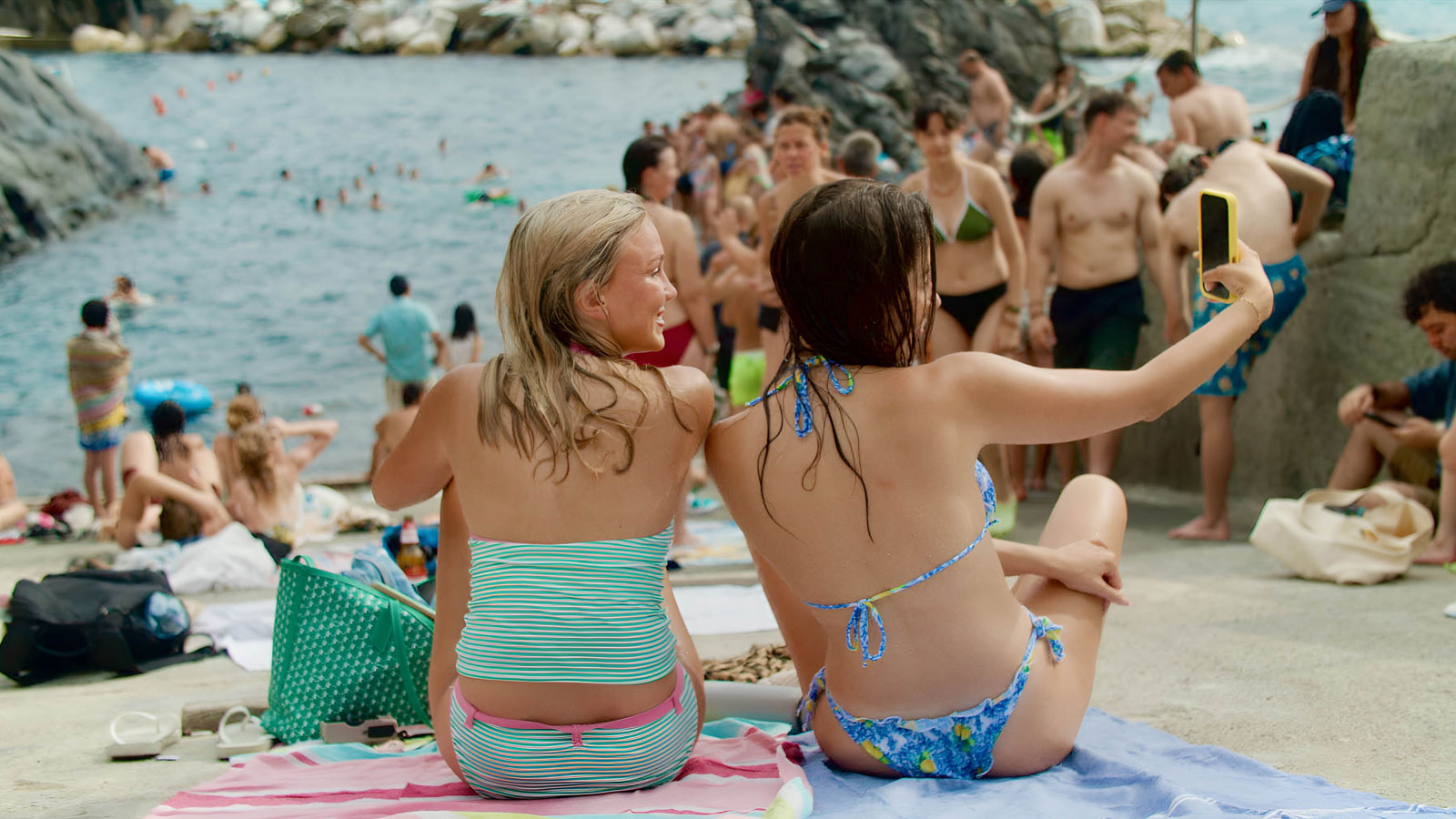
Perched along Italy’s dramatic Ligurian coastline, the five villages of Cinque Terre are home to fewer than 4,000 people. Yet every year, around four million tourists pour into their narrow streets, all of them seeking a postcard-perfect Mediterranean fantasy.
It’s an extraordinary demographic imbalance, and one that sits at the heart of Irish filmmaker Gar O’Rourke’s sumptuous new documentary The Siege of Paradise.
Rather than leaning into the standard outrage surrounding mass tourism, O’Rourke’s film chooses a more nuanced approach. It examines Cinque Terre not simply as a victim of overtourism, but as a living community trying to balance its character with an economy that now depends on the visitors it attracts.
It’s a portrait of a place living two lives in parallel: the Cinque Terre that’s imagined by visitors, and the one inhabited by those who reside there once the tourists leave.
Curating Utopia
Hours before the day-trippers arrive by ferry and rail, Cinque Terre’s tourism machine is already in motion. Café tables are dragged over its cobblestone paths, souvenir stalls are meticulously arranged, holiday apartments are turned over in silence, pasta ingredients are prepped. This is the unseen labour behind the image.
“Showing the morning preparation reminds you that none of this just happens on its own,” O’Rourke says. “There’s an enormous amount of work that goes into maintaining the version of Cinque Terre that people have travelled across the world to experience.”
But the film also explores the other side of the encounter: the expectations visitors bring with them, often shaped long before they set foot in Cinque Terre.
“So much of how we travel now is scripted before we’ve even left home,” O’Rourke says. “You’ve already seen the highlights, you know the best coffee spots and bars, you’ve planned the picture you’re going to post on Instagram. That doesn’t necessarily make the experience any less real, but it definitely impacts the way we engage with a place.”
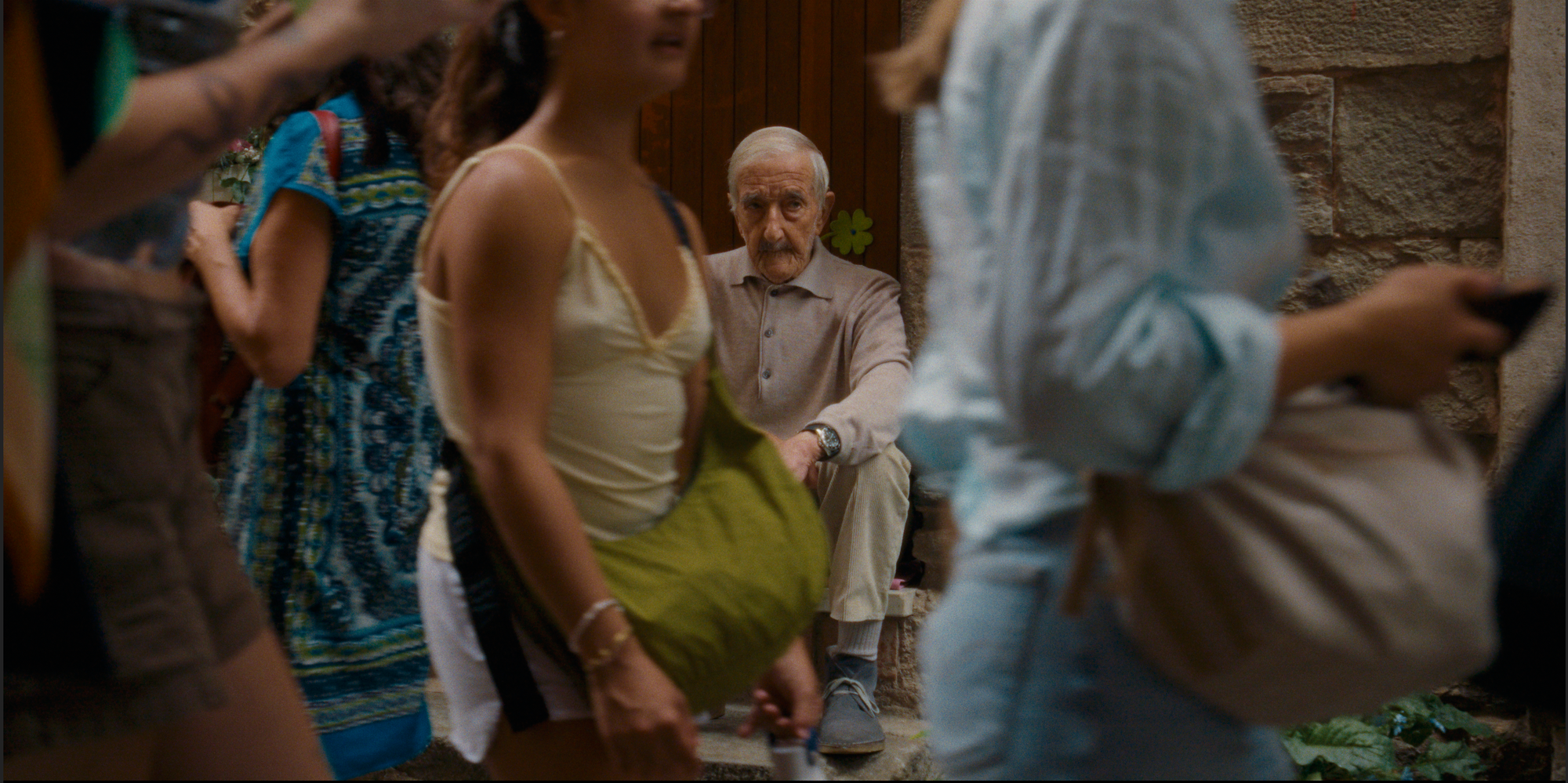
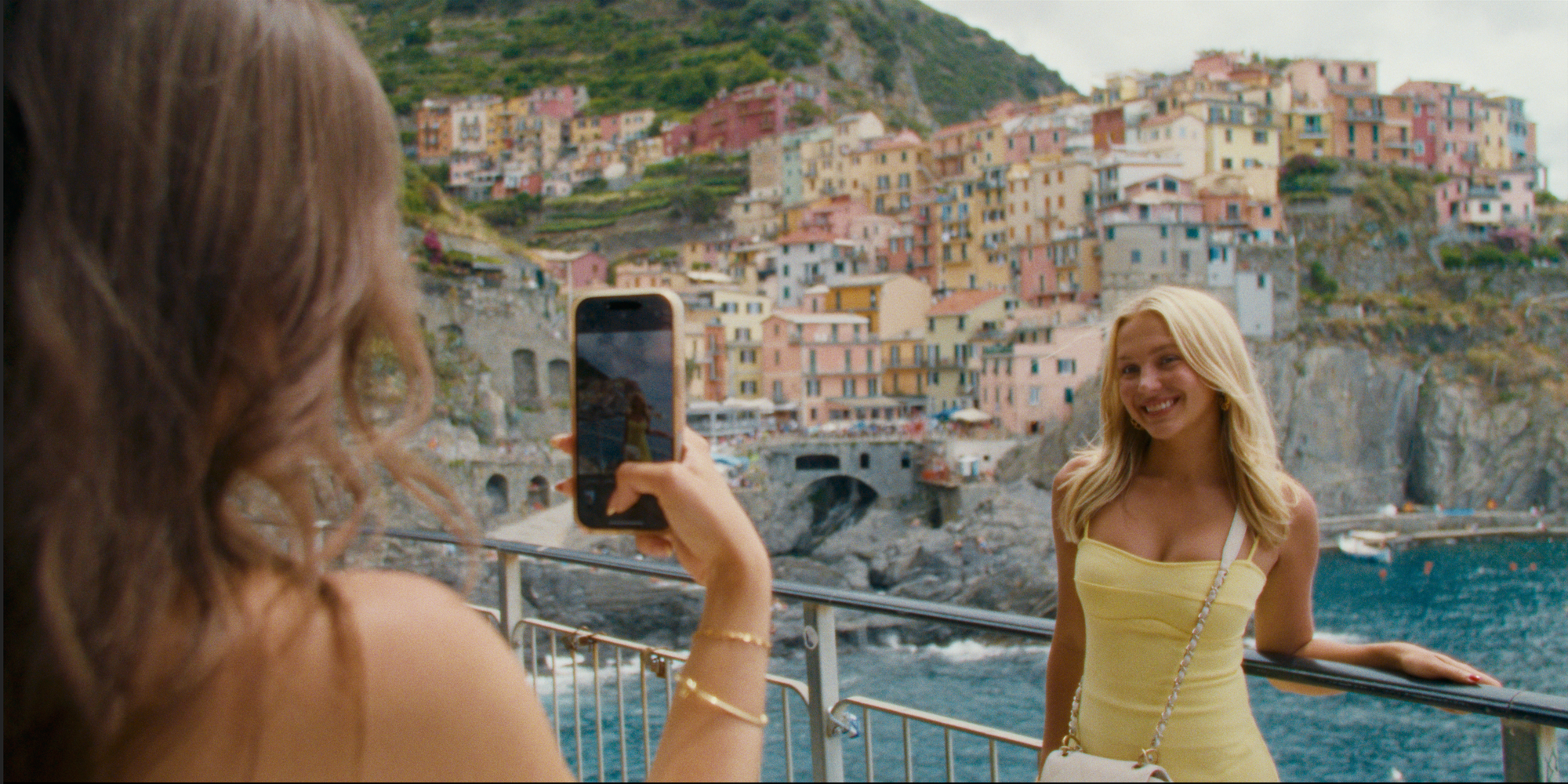
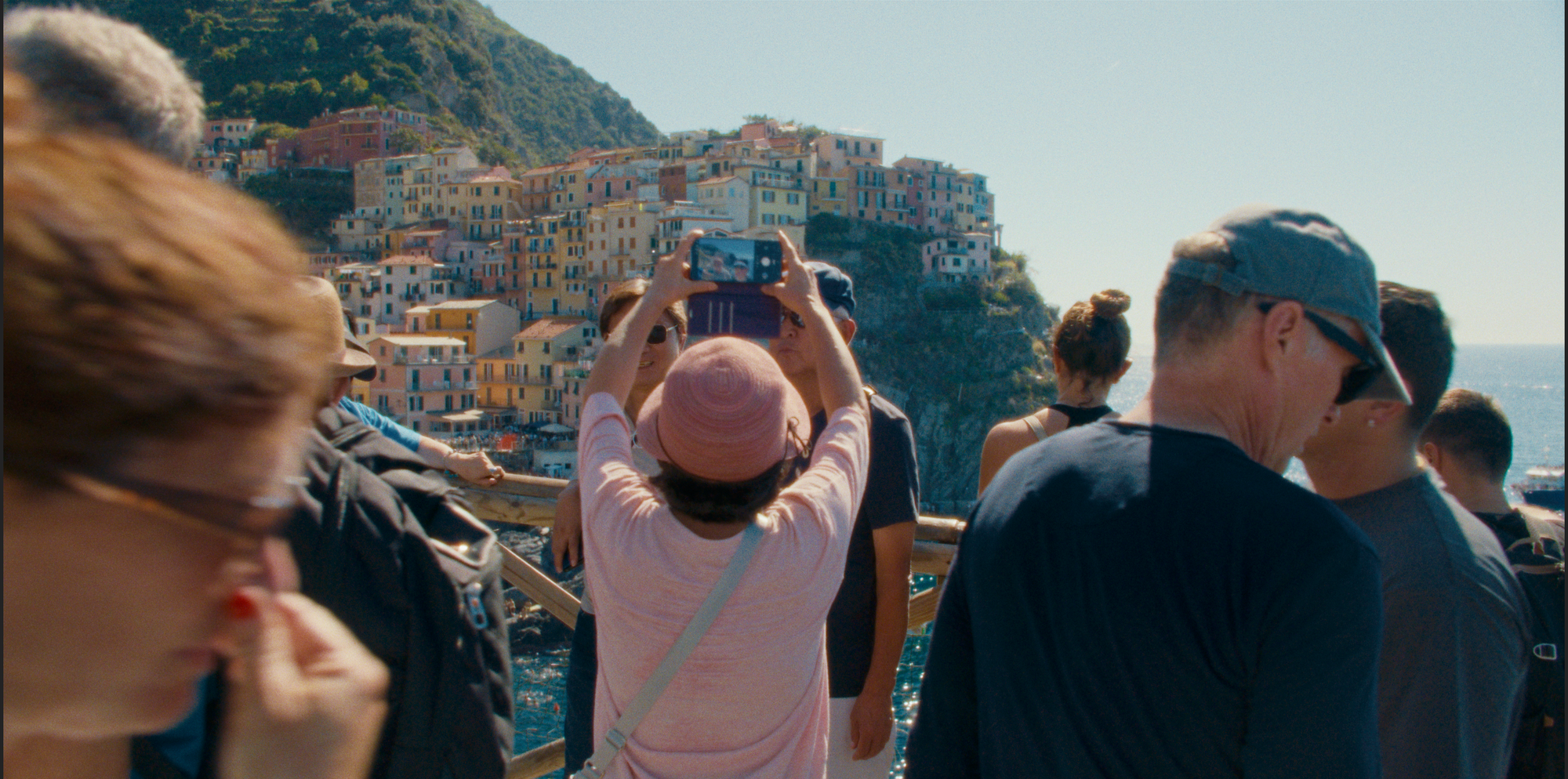
Still images from The Siege of Paradise.
Light and Dark
One of the things that makes O’Rourke’s directorial voice stand out is his refusal to let the seriousness of the subject dictate the tone of the film. He weaves moments of levity throughout without ever undercutting the weight of the story, using humour not as a distraction, but as a way of sharpening the friction.
It’s a delicate tonal balance, and one that indicates a filmmaker who has clear confidence in their own approach. The fact that O’Rourke maintains it so effortlessly throughout the film is all the more impressive given this is only his second feature-length documentary.
The clearest illustration comes when O’Rourke turns his attention to the arrival of the morning ferries. Rather than presenting them as a routine part of life in a popular tourist destination, he frames them like the opening salvo of a siege in a Western. Church bells toll like distress signals, Sergio Leone-inspired brass swells dramatically, locals warn one another with the gravity of soldiers preparing for battle. It’s a sequence that embodies the film’s finespun mix of humour, unease and affection.
“I never wanted the film to wag its finger,” O’Rourke says. “If you just show people a crowd of tourists and tell them why it’s a problem, they’re likely to switch off. And they’d be well within their rights to do so, because we’ve seen that film before.
“Humour can be powerful, but it can’t come at the expense of reality,” O’Rourke notes. “The audience still has to feel the scale of what’s happening, that thousands of new people turn up on people’s doorsteps every single morning. You can laugh at something and still understand the seriousness beneath it.”
The Cost of Survival
For centuries, Cinque Terre was isolated, largely reliant on the economy of “heroic agriculture” — carving steep terraces into cliffs to farm wine and olives — until the 1874 Genoa-Pisa railway connected it to the wider world.
When Italian post-war industrialisation led to mass depopulation, the region was forced to reinvent itself. The traditional livelihoods of farming and fishing gave way to tourism – a decisive economic shift that would, in just a few decades, transform Cinque Terre from a remote coastal community into one of Europe’s most recognisable destinations.
Cinque Terre engineered its own survival, but that legacy now faces a generational cliff-edge, and O’Rourke explores this uncertainty through the people attempting to navigate the region’s evolving identity. Figures like the undeniably charming Bartolo, who returned to the area to revive his family’s winemaking traditions, have found a way to balance the preservation of the past with the realities of a tourism-driven economy.
Others, such as traditional fisherman Guido, represent a more fragile connection to what came before, fighting to sustain a way of life that now exists on the margins. Their contrasting experiences are key to making the film so compelling: O’Rourke is less interested in whether change is good or bad than in how people attempt to live with it.
“Sometimes there’s a tendency to look backwards and imagine there was some perfect version of life before things changed,” O’Rourke says. “I’m definitely guilty of thinking that way; of remembering things through a pretty forgiving lens and letting the less appealing bits fade into the background.
“The truth is that towns and communities aren’t static,” O’Rourke adds. “Cinque Terre survived because its people adapted. The challenge is finding a way to change without losing the connection people have with where they came from.”
It’s a predicament that presents an obvious dilemma for a filmmaker: how do you document the pressures of overtourism without reinforcing the romantic image that fuels it?
Shot with intoxicating, Tribeca-honoured cinematography by Lukas Gut, The Siege of Paradise captures the Ligurian coast in all its beauty, allowing viewers to understand precisely why Cinque Terre has become such an enticing draw. And O’Rourke admits to being acutely aware of the contradiction at play, with every frame both a portrait of what’s at risk, and a reminder of why people keep coming.
“I couldn’t make this film from a moral high ground,” O’Rourke says. “I live in Lisbon, I grew up in Dublin, and I carried a camera crew into Cinque Terre. I’ve seen how places change, both as a traveller and a filmmaker, and I’m part of that footprint too.”
Similar pressures are playing out in destinations around the world, but O’Rourke avoids reducing the issue to a simple conflict between visitors and locals. Instead, The Siege of Paradise offers something more thoughtful: a portrait of a community adapting to change, and a reflection of how our own search for beauty can impact the places we visit.
The Siege of Paradise screens at MIFF 2026 on 10, 15 and 18 August. Tickets are available here: