When I think of the sounds of Western Australia, the licks of Wide Open Road by the Triffids hits my mind, or maybe The Waifs yearning to be back in London, or occasionally it'll be a wistful memory of a cleaner dancers in a mental health facility pop up in my mind.
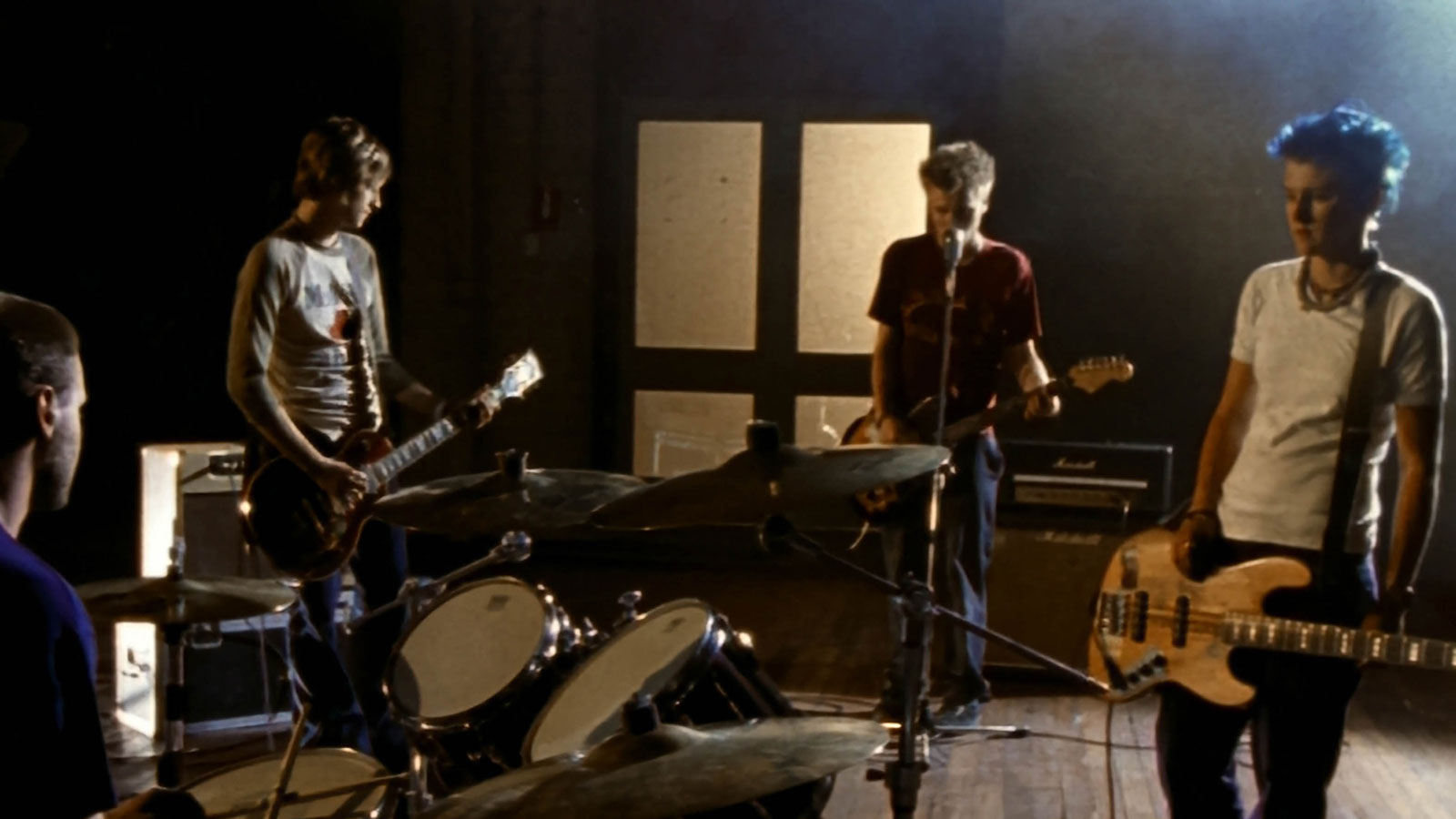
But drowning all of those sounds out is the infectious licks of guitars and bass from Chris Daymond, Kevin Mitchell, Ness Thornton, and the thumping drums of Brett Mitchell, all of whom make up Jebediah. Soundtracks to growing up don't get much better than the one-two punch of Slightly Odway and Of Someday Shambles, tracks that spoke to my youthful boredom and the malaise of growing up in Perth. Here was a language that I understood.
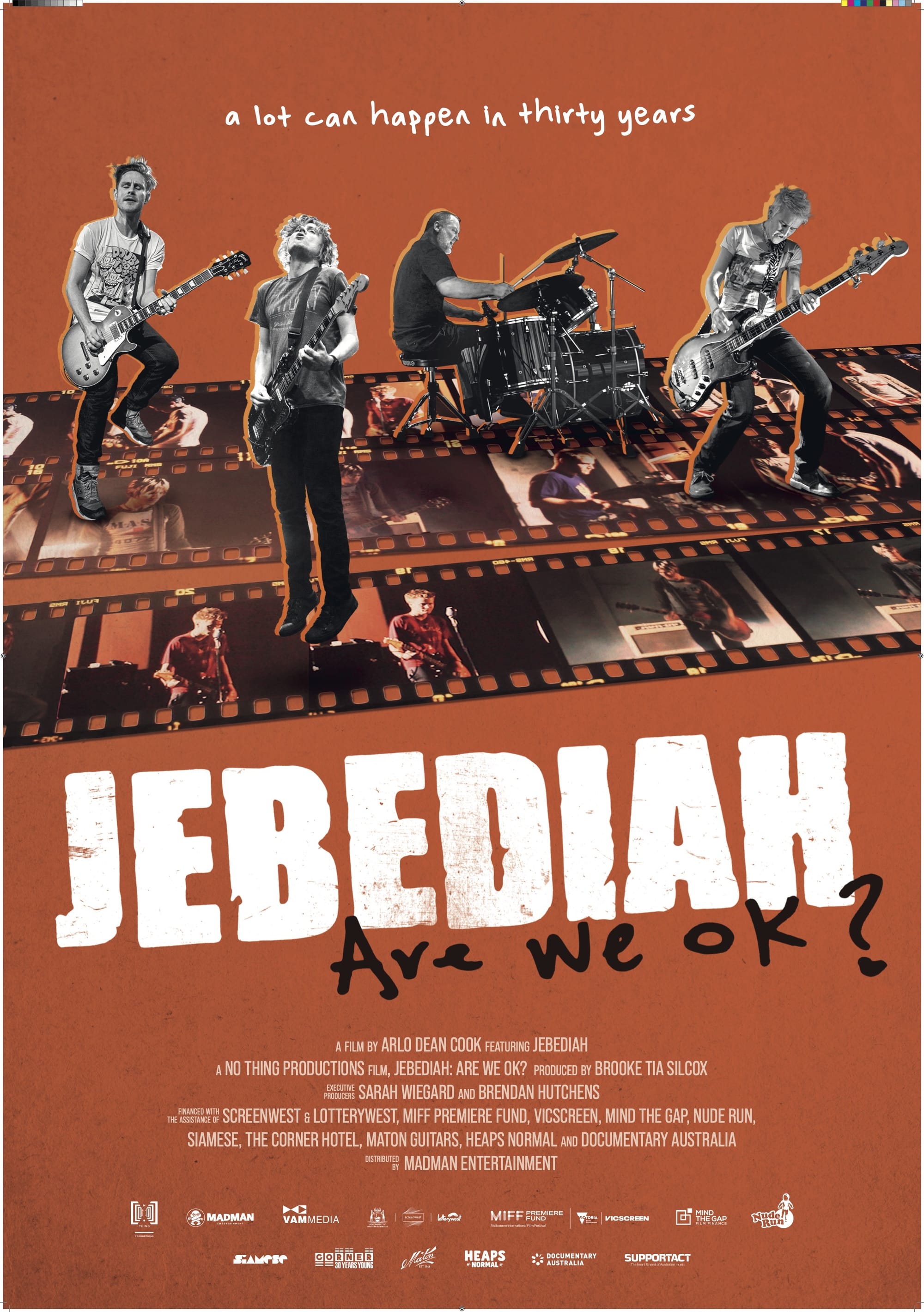
Thirty years on, and Jebediah are still going strong and still speaking a language many of us West Aussies - and the rest of Australia too, can't forget about them - speak. As a culmination of that longevity, filmmaker (and muso in his own right) Arlo Cook spent ten years following the band, interviewing them and capturing gigs, all the while combing through decades of archival material to pull together the brilliant doco Jebediah: Are We Ok?
This isn't just a documentary about the band Jebediah, but it takes us deep into the bands lives, following their path to success and then the subsequent reality shaking moments where, even though their music is being played on the radio, they've still gotta work a regular job, or have to deal with personal crises.
Arlo also firmly plants us in the mindset of what the Aussie music scene was like in the nineties, with bands like Spiderbait, Magic Dirt, Something for Kate, and many others, all forming the aural landscape of the nation at the time. No matter where you walked, people were on the lookout for monsters while they were out buying ponies in dirty jeans. We hear from the likes of Adalita, Phil Jamieson, Paul Dempsey, and others in the film, each of whom have played in some capacity with Jebediah (or, if you're Something for Kate, you traded covers with Jebediah).
Jebediah: Are We Ok? isn't a rose-tinted glasses nostalgia trip though. It's a film that's akin to a day out at a great gig, one where the musos chat about their lives in between tracks. At times, it's raw and emotional, but the band sticks together, supporting each other, making the great music we know. What eventuates is a bloody great film.
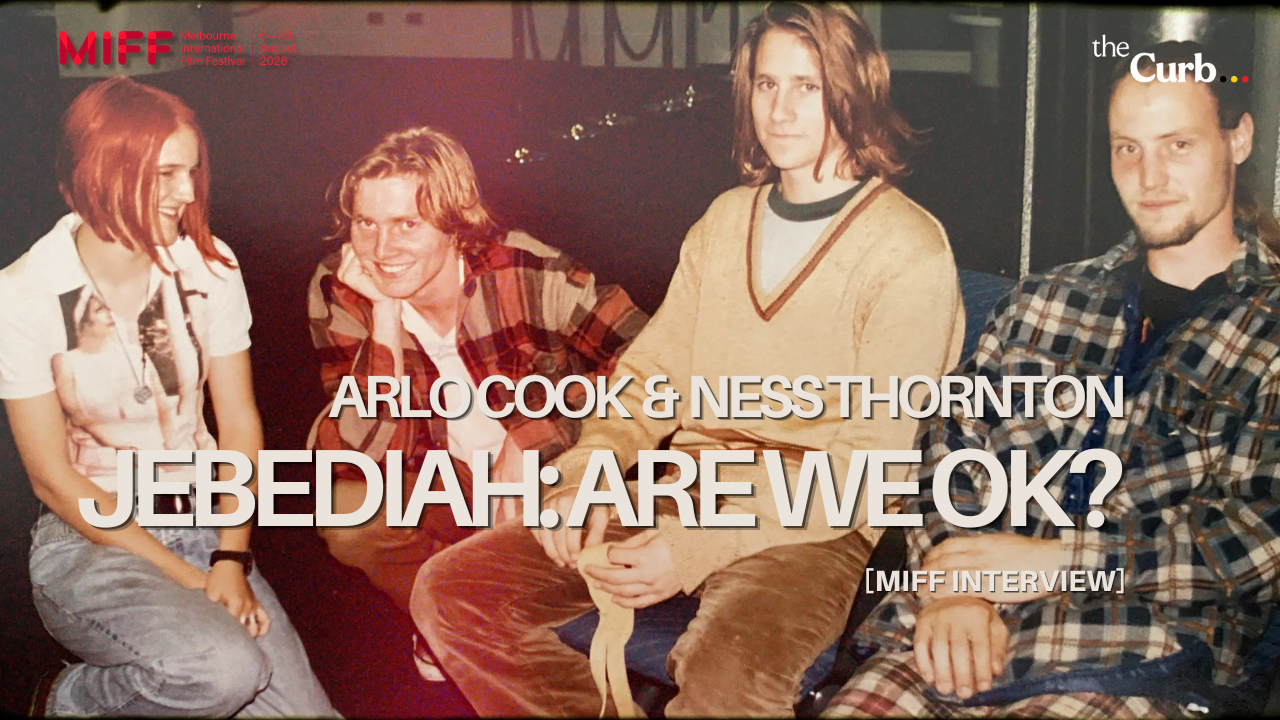
I caught up with Arlo Cook and Ness Thornton before the world premiere of Jebediah: Are We Ok? at the Melbourne International Film Festival.
This interview has been edited for conciseness.
This has been a 10-year journey. What was the first discussion about making a doco about Jebediah like?
Ness Thornton: We were we talking about an Axe Girl video clip at the old punters club, and then I think at the end of that meeting I was like, ‘oh, would you ever do anything like behind the scenes or candid kind of band stuff?’ Because at the time I think we were thinking about maybe putting a short little film together to play on our 2020 anniversary tour. We were playing two sets, so we thought maybe in between the two sets we could put something up on the screen, and it didn't quite work out that way, did it?
Arlo Cook: Yeah, that's the seed of it. I was such a big Jebs fan that even just getting to hang out with you on one of your other bands' film clips was a thrill. Then you mentioned the special ‘J-word’, and I was like, ‘oh, wouldn't it be fun to film something with Jebediah?’ Flash forward a few months later and we'd filmed a lot of stuff together. We travelled around and I was kind of folded in it all. It was just timing, really. What was the first gig?
NT: That was the Moomba Festival.
AC: So March 2015 was the first gig I filmed, and then you guys went to Sydney for a few days to do the promo tour, all the radio interviews, and to announce the compilation CD and the tour. I had a couple of days, and it was like living with you guys, hearing your story day in, day out, for a couple of days. It was at the end of that couple of days, I was like, ‘wow, these guys are amazing, they've got a really unique story. I wonder what it would be like to do that documentary’. I'd never thought of making a documentary before, but, I remember very clearly this one moment of going, 'that's a great story. If I was going to do one, I know exactly how I would want it to end, and it should feel like this, how I'm feeling right now.’ 10 years later…
I'd love to hear the journey of discovering the story through the archive. Ness, when you’re out on the road, filming and taking photos and all this kind of stuff, was there any sense that there might be a purpose for that in the future?
NT: I mean, when we first started touring, we didn't even have mobile phones. I think we might have got a good deal on a handy cam from Sony, obviously, because we were signed to them. I remember we lost those tapes for years and years. Arlo managed to find them eventually. I always felt like we were doing it for ourselves. I mean, Chris had a camera in his hand quite often over the years, even before the band started. His family were sort of big on the handicam thing, but it would just be to watch back for your own enjoyment, I guess.
AC: So, at some point, I think maybe a year or two in, Chris said, ‘I've got some old tapes that you could use.’ There's about 60 mini DV tapes. He had a little digitiser, that he would plug into the computer, but he hadn't done it yet, and I was like, ‘all right, I can do that for you.’ So I brought it back to Melbourne, and I had it set up to my laptop and just went through every tape and watched it in real time as it was digitising. It was all out of sequence, some of the tape names were really wacky, but it was really exciting. I'd never done anything like that before, it was just like treasure hunting or panning for gold, you knew straight away, ‘oh, that's in the film,’ or ‘this is in the film.’
That was like eight years ago, and then maybe a few years ago the film had changed quite a lot, and we were looking for different moments, and I went back through it all again, and so many of those moments on the second round found their way into the film, because you know what kind of film you're making by that point, and different things stand out to you at different times. So that was cool. It was a lot of footage.
NT: I don't think you could have paid me to look through all of that.
AC: No, look, if it was about myself, I wouldn't have done it either. But you could pay me to look through your book, for sure.
Have you watched it yet Ness?
NT: I've seen a few versions of it, but I haven't seen the finished version. It's probably been a couple of months since I've seen anything. I didn't want to watch it too many times before the film came out, and I could watch it in a cinema, because you know, I didn't want to be bored of it, or not that I'd be bored of it, so exciting.
AC: Ness was the first one I showed it to. I remember feeling very nervous about showing it to the band, but I thought ‘I'll show it to Ness first.’ Ness has such an incredible memory for shows and details and facts and things like that. So, Ness was my first pass of the fact check. Did I get it right? Is this factually accurate? Am I throwing one of them under the bus that didn't need to be?
30 years goes by in a flash. Ness, for someone who’s played so many gigs over the years, what was it like seeing all of these different shows that you were part of?
NT: I think the first time the kind of scope of what we were actually doing really hit me was watching back footage of the Big Day Out shows and just seeing the whole crowd. I know you can see them when you're on stage, but you're so in your own moment that it doesn't really... I mean, we knew at the time, ‘wow, this is a massive thing we're doing,’ but the feeling didn't sink in. You're having too much fun with your mates. Watching everything back, well, I guess it's just like handicam footage that your parents take, you know, it just looks much better when my parents are on the camera.
One of the aspects I really appreciate is that the film really exposes what working life is like for musicians in Australia. This notion when you're a successful artist, suddenly everybody thinks that you're millionaires, but the reality is that you've still got to apply for a job. It's so frank and open in the film. What does it mean to put that on film and show the reality of being a working musician right now?
NT: Well, unless you're like one of the top bands, and you sit anywhere below that, you're probably going to have to supplement your income to whatever degree, depending on what your lifestyle is, and where your band sits. I just feel so grateful that we've managed to be able to do this for so for so long. For a good chunk of that, we couldn't hold down other jobs because it's all we were doing. It's awesome, and you do it because you love it, not because you want to make money out of it. I feel like we knew that from very early on that we weren't going to be a massive band, and we weren't ever going to be like rolling in cash or anything, but yeah, I feel like we're probably one of the luckier bands. I mean, there's so many bands that can't even manage to do that without having to find another job or whatever.
AC: I've been a musician most of my life. I was in so many bands through my 20s and I was trying very, very hard to make a career out of it. It didn't quite work, and I kind of pivoted into film, which I'm actually quite thankful for. I knew how rare it was for anyone to be able to do this full time, and what it takes from you even to do it full time; this is your career and your sole career. I don't know if I could handle that. I'm not sure if I personally want to be on the road for nine months of the year.
I got to know each member of Jebs and saw how different their lives were and what they were each individually doing in their own lives to sustain themselves. Then I got to watch them all come back together, and saw how they all worked together, and how that hadn't changed over the years, even with how much had changed for them individually in their own lives, that was endlessly fascinating. I’m in awe of how they make it work having those two worlds living side by side.
There’s so many ways they could have broken up across like 30 years, and somehow they navigated it all really well. They avoided all these pitfalls. I fell into a bunch of them. As I interviewed them over and over again, I tried to figure out all these points and what decisions they were making for themselves and for the band. I mean, that's what interested me the most anyway.
One of the big aspects of life for WA musicians is the remoteness. I’m born and raised in Perth, and grew up with that deep connection of the environment and music. Jebs regularly puts their love for Perth front and centre, with iconography like the Futuro UFO house or the Bull Creek BMX track on the covers of albums. By doing that, it’s like you’re putting Perth on the map saying ‘we’re special, we’re important, pay attention to us.’ It means a lot to see and hear part of your home in this way. Ness, can you talk about what it means to represent Perth on this kind of level through the music and album covers?
NT: Oh, so I'm such a patriotic West Australian. For most of our career, any tour that we've headlined, we've always taken along a WA band as support just because we were so in love with playing music, and so in love with the actual music scene. We were out all the time, and if we weren't playing, we were going to gigs, and to so many great bands in WA. It just felt like something that we were able to do, so we should definitely do it, and try introduce all these cool bands to the east coast.
I mean, even just the number of bands that you’ve played in, each of them stand out as being top tier WA Music.
NT: It's what we do, it's great, you know?
Arlo, from an Adelaide and Melbourne view, looking in on WA, what's been your perspective of WA music?
AC: I was always a big fan of Jebediah, , Gyroscope, and Little Birdy, and a few other bands, growing up. You were aware of the WA thing, but through Ness and the documentary, I was able to come over and spend a lot of time in the music scene there.
NT: I feel like a little piece of your heart is in WA, Arlo.
AC: Definitely, you know, I don't think I could move back to Adelaide, but I could definitely move over to Perth. I think there was a period there where I think we were. I was coming out five or six times a year, and it definitely was always a plan to try and do it at some point, but it never eventuated. Ness alone playing in The Tommyhawks and Axe Girl, two bands that I love, and just going along and filming gigs for them and making movies for them, and meeting all the other bands that they were playing with in the scene, like I don't think I'd ever seen a bad local band. All the support bands at all these gigs, I was just like, ‘that's a great band. I'd love to go and see them.’ I felt really lucky to be invited into the inner circles of the WA Music scene pretty quickly, like I didn't have to work my way up. If you walk into the room with Ness, you get kind of dropped squarely in the middle. So that was pretty cool.
I mean, that's as somebody who's gone to, gosh, how many gigs I've gone to over the years. It's just the nature of WA music, and I'm sure Melbourne's bit the same.
AC: You see so many terrible bands in Adelaide and so many terrible bands in Melbourne, and there's so many horrible support bands and things like that. I'm sorry to say it, but it's true. When I was going to Perth and seeing these gigs, it feels like the bar was just set so high to do your first gig because of all the other bands you'd seen growing up. That's the kind of way I thought about this. It's like all of the bands that have come before you have set this sort of threshold, so anyone coming up just kind of knows where to pitch it, and it just seemed to be a little bit better.
Jebediah: Are We Ok? screens at the Melbourne International Film Festival on 13, 15, & 21 August 2026, with regional screenings occurring on 15, 26 & 22 August 2026. Tickets are available here: