
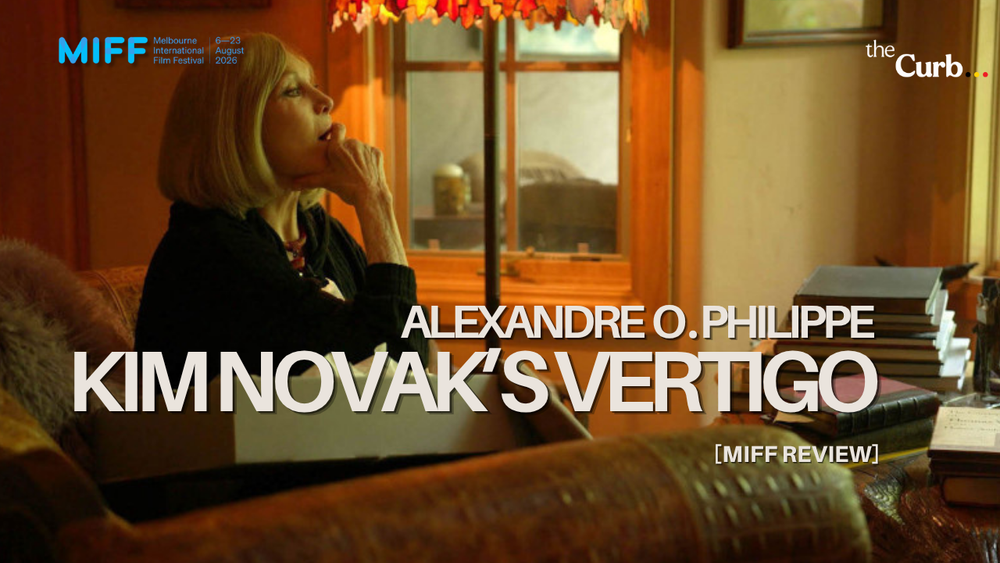
There is a double meaning in the title of Alexandre O. Philippe’s Kim Novak’s Vertigo. The most obvious is Novak’s experience and point of view about making Alfred Hitchcock’s 1958 masterpiece Vertigo. The less obvious meaning becomes clearer as Novak speaks more about her experience as a Hollywood “it girl” star. Kim Novak feared falling into the characters she played and losing Marilyn Novak (her birth name). She also felt she had to perform being Kim Novak – a person who was a creation, or more so a re-creation, of the studio system, especially overseen and controlled by Harry Cohn.
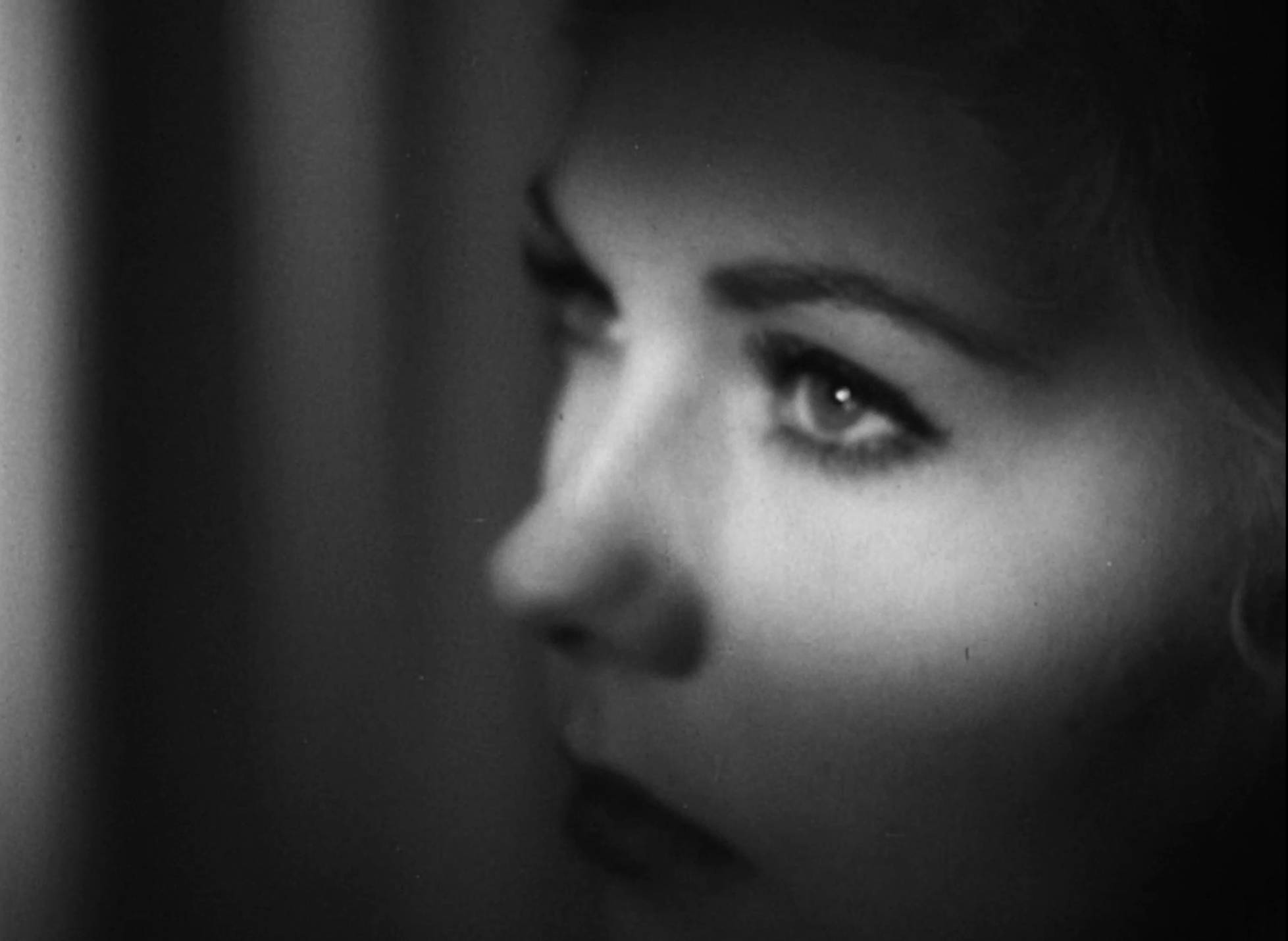
Philippe begins the film with black and white footage focused on Novak’s face. There’s no doubt that she’s a stunningly beautiful woman. In those few seconds we see the curves and angles of her cheeks and her lips parting as she leans her head backwards. It is an image of a star; but more than a star, an iconic face that “we” have watched as obsessively as Scottie watched Madeline in Vertigo trying to contain and capture her mystery. Then an audio recording of Kim from 2024 is played where she speaks to Alexandre about the project which she is excited to do, but within the conversation is trepidation: “What do I mean? What do I think? What do I feel?” she asks. Later we hear her crying that she feels close to the end and she’s afraid. The mystery and the reality merge as they will through the documentary. Novak is a nonagenarian who lives on a property in Oregon. She’s an accomplished artist and rider. She’s glamorous, grounded, guarded, and vulnerable.
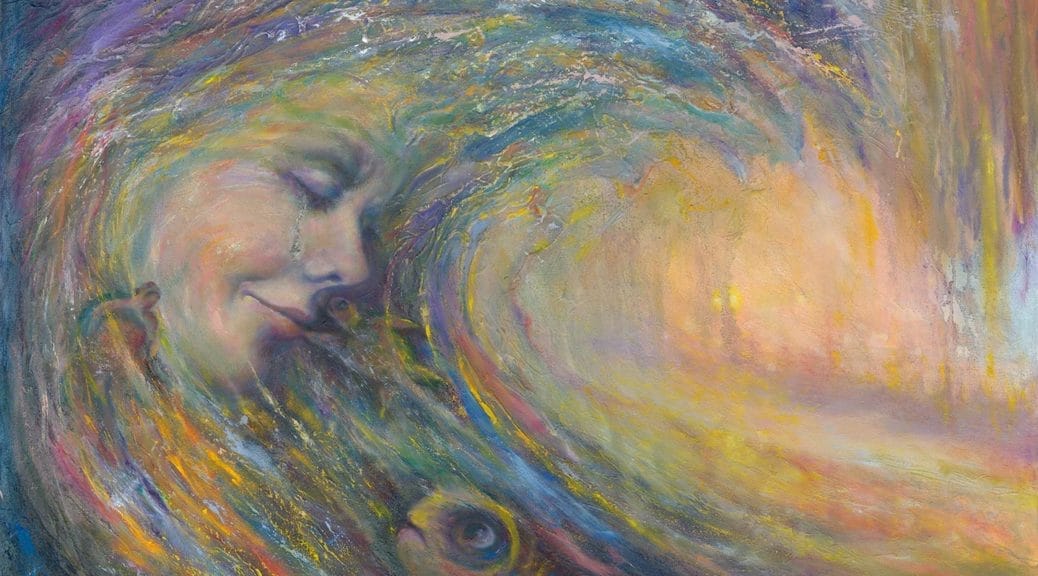
“I’ve been feeling the need to free something hiding in my mind,” Novak tells Philippe. Her memories seem to circle back to the same topics; her hauntings. When she was a child in Chicago her father kept a workshop in a basement. One day she noticed something in a jar amongst his collections of scientific interest. Her father told her it was the foetus of his son, her brother. She then casually muses on her breathing problems with the revelation that her mother, unable to terminate her pregnancy with Marilyn (Kim), tried to smother her with a pillow. 1930s and the depression, the Novaks a multi-generational family from Czechoslovakia living in a poor area. Little Marilyn born in 1933 and her clever older sister Andrea (who she sees in the character of Madge’s younger sister in Picnic) never quite mollify her father Joseph’s loss of a son. Her mother, Blanche, a happier presence. After high school Marilyn gets two scholarships to the School of the Art Institute of Chicago and in her final year is a photographic model for a deepfreeze. She travels across America as the spokesperson for the product and ends up in Hollywood. Untrained but with that certain “something” (a something that the studio tried to perfect to the point of her losing bodily autonomy) by 1954 Columbia were introducing their new sensation Kim Novak in noirs and romantic comedies.
Her first film with a featured role was Pushover in 1954 directed by Robert Quine who she says she fell utterly in love with (the feeling was mutual and they were together as a couple during her Hollywood years but never married). Soon, Novak relates, her job was to be “Kim Novak” and still in her early 20s she says, “I was afraid I’d become ‘Kim Novak’ and I didn’t know who she was”. Her natural brown hair was gone and replaced by a lilac blonde. Ironically, the role that made her a star was William Inge’s 1955 Picnic where she wore a red wig. Her role as Madge Owens is one she feels captured the pressure she felt as a beauty: “Being pretty is like wearing a crown of thorns.”
As Novak narrates Philippe chooses films that illustrate the mood and meaning of her words, more than once taking clips from Robert Aldrich’s The Legend of Lylah Clare (1968) where her character is continually berated by Peter Finch’s sour and cruel director Lewis Zarkan. Novak speaks of her favourite actress, Greta Garbo, who was able to captain her own ship in Hollywood. An actress of immense talent and mystique who successfully left Hollywood on her own terms. “She was born vulnerable,” Novak says and brought that vulnerability to her roles. “I was born vulnerable,” she relates, and never was that vulnerability so openly expressed as in her twin roles in Vertigo.
Novak asks what made Alexandre fall in love with the movies (for her it had been Garbo) and he explains with absolute certainty it was his memory of watching Vertigo when he was a child and seeing Madeline in Ernie’s which had the same kind of deep red flocked wallpaper as in the apartment he lived in. Seeing her in the green dress, watching her being watched – whatever it was, it was foundational for him.
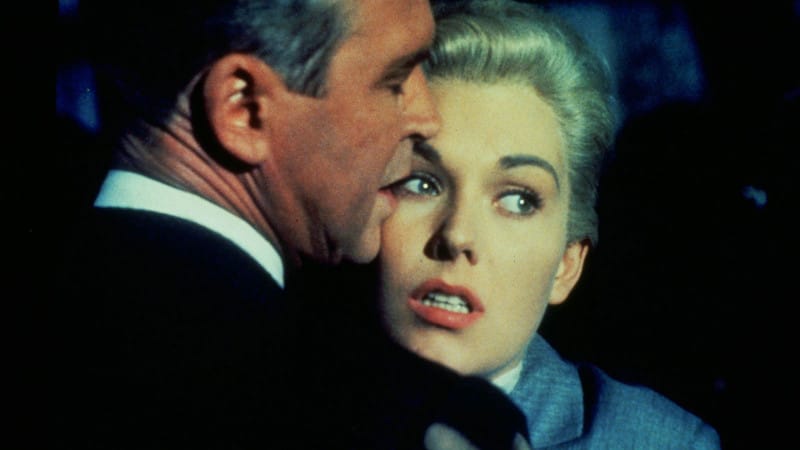
Alexandre O. Philippe is a cinephile who falls on the somewhat obsessive side (previous documentaries include Lynch/Oz, and 78/52 which analyses the shower scene from Psycho) and he’s also a fan. The trust between Philippe and Novak is authentic. She allows him to go through her attic room of memories and photo albums, talks to him about her love for painting and explains her technique. She speaks of her mental health, her numerous losses in fires and mudslides, her “early” exit from Hollywood, her friendship with Jimmy Stewart, and of course, how beguiled she still is by Vertigo and shows him the original script that she saved from two fires.
It’s also fair to say that Kim Novak is “haunted” by Vertigo. The film represents aspects of her personality in both the Madeline and Judy characters. To be loved for herself is something she longed for. “I’d sacrifice anything for love,” she tells Philippe. She also feels that the “creation” Madeline is a version of the “creation” of Kim Novak. The film is about a real woman being used as a puppet for the purposes of a man who wants to get away with murder and a man who wants to save a damsel-in-distress and then repeat the failed experiment on another. Everyone is drawn to the edge – everyone is destined to fall.
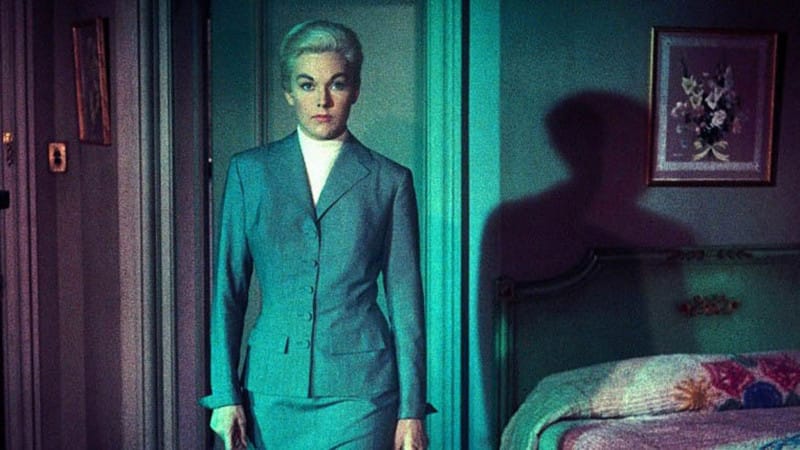
One of the best scenes, and the most emotional, in Kim Novak’s Vertigo is the unpacking of the Edith Head’s famous grey suit designed for Novak in Vertigo. Kim hasn’t unboxed it since she wore it in the film (and apparently did not like it). Her reacquaintance with the suit, which now feels softer, is like bringing a ghost into the light and realising that ghost is friendly. “You have given me permission to appreciate myself,” Kim tells Alexandre. It’s not only the vivid memory of Vertigo but a chance for her to think about her career in terms of what a good “reactor” she was and how there were many roles where she didn’t fall away or get lost. Kim Novak really was someone beyond the expectations set for her.
Kim Novak’s Vertigo is what happens when a documentary maker doesn’t push a subject, either the person or the topic. There are gaps, and there are reiterations. Kim doesn’t give her opinion on many of her co-stars (notably Frank Sinatra and Jack Lemmon) and she avoids the “tawdry” stories that followed her around. Kim Novak emerges from her memories as a fully realised human who is revitalised by the chance to speak openly about her biggest fear to find it overcome. Kim Novak discovers Kim Novak and she likes her, “It’s everything.”
Director and writer: Alexandre O. Philippe
Cast: Kim Novak, Alexandre O. Philippe
Cinematography: Robert Muratore
Editor: David Lawrence
Composer: Jon Hegel
Kim Novak’s Vertigo plays MIFF 2026 with director Alexandre O. Philippe present for each session.
Also showing at MIFF 2026 is the program strand Kim Novak: Hollywood Heretic featuring screenings of Bell, Book and Candle, Strangers When We Meet, The Legend of Lylah Clare, The Man With the Golden Arm, Middle of the Night, and Vertigo.