
Maiñ ik shikra yaar banaayaa
Choori kuttañ, te oh khaañdaa nai
Ohnuñ dil daa maas khavayaa
[I am in love with a shikra (bird of prey)
I made choori (crushed roti), but he wouldn’t eat it
So instead, I fed him the flesh of my heart].
The verses from 'Shikra' (above) by the great Punjabi poet of lament, Shiv Kumar Batalvi, echoed in my mind as I watched director Sarmad Sultan Khoosat’s Lali (2026). Batalvi died young at 37, yet his verses continue to captivate millions on both sides of the border, in India and Pakistan.
Batalvi’s poem can be read as an allegory of being trapped in abusive, self-destructive relationships. The lover appears as a ‘shikra’, a hawk native to the subcontinent. The narrator believes that showering the creature with unconditional love will change the bird’s innate predatory nature. This becomes a doomed metaphor for attempting to alter a partner’s abusive disposition. These efforts ultimately fail, and the shikra leaves with its symbolic pound of flesh.
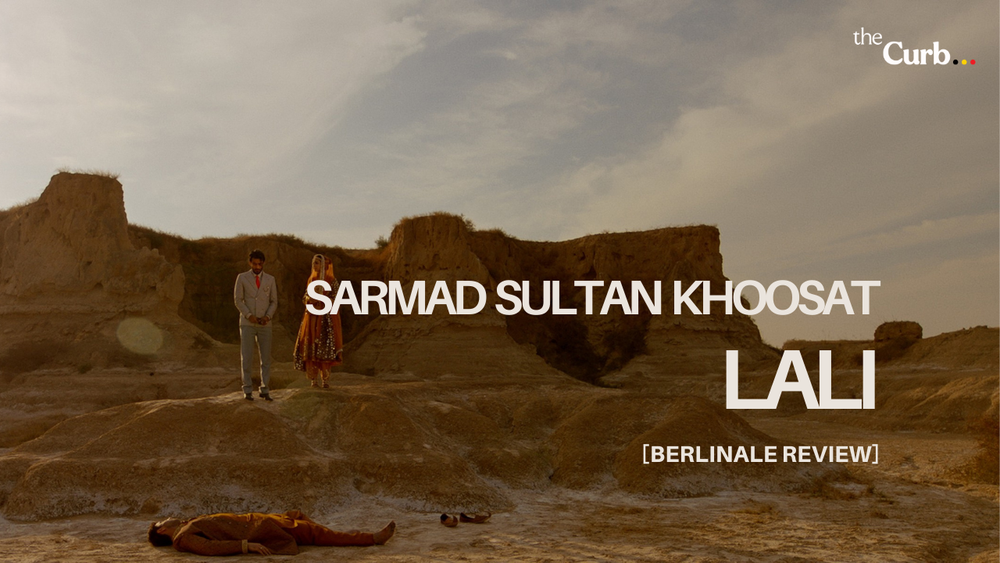
In Lali, Pakistan’s first fully domestic production to premiere at the Berlinale, Khoosat transposes the allegory of Batalvi’s poem of being consumed by a destructive partner against the backdrop of a marriage set in the agricultural city of Sahiwal, Punjab. Zeba (Mamya Shajaffar) is believed to be cursed, bringing ill omen wherever she goes. Her previous three suitors have died under mysterious circumstances. In her fourth attempt, she is married off to Sajawal (Channan Hanif), a towering beast of a man who communicates largely through grunts and monosyllables, harbouring intense, internalised shame about a large red scar on the side of his face.
Both Zeba and Sajawal believe they are ‘marked’ by fate and are driven to change how the rest of the world perceives them. Zeba wants her marriage with Sajawal to succeed, through which she wants to overcome the superstition that her presence spells death. Sajawal, on the other hand, is fighting his own inner demons. Deeply insecure about his appearance, he is convinced that everyone around him secretly makes fun of him behind his back. But when he finds a partner willing to look past his birthmark, he doesn’t quite know what to do with her. That’s because he has never truly reckoned with the immense weight of internalised shame he’s been silently carrying all these years. When the couple visit a shrine together, Sajawal asks Zeba what she prayed for. “That your sorrow and my misfortune would end,” Zeba replies.
Khoosat cleverly misdirects his audience with a fable-like setup that feels like a variation on The Beauty and the Beast. Zeba, a young, strikingly beautiful woman, is hitched to a reserved, physically intimidating man who believes his appearance inspires fear rather than love. You would be forgiven for being duped into thinking this is a modern fairy tale; that here is a story of two unlikely people coming together and healing themselves through a developing relationship.
The tone of the first forty-five minutes adds to this misdirection. Khoosat, who co-wrote the screenplay with Sundus Hashmi, reimagines Nasreen Qureshi’s short story “Kaala Kambal” with an original treatment. He adds moments of awkwardness found early in arranged marriages. In a home filled with family, the newlyweds have few private moments. Intimacy is often interrupted, played for comic effect. The first half feels like a domestic drama exploring the politics of shared space in South Asian homes, where many live in joint or extended families. Can desire and intimacy thrive in conservative settings, where privacy is rare, and space is constantly contested with elders, neighbours, or children?
Joyland (2022), which won the Jury Prize in the Un Certain Regard section at Cannes and for which Khoosat served as one of the producers, also explored how the lack of intimacy and repressed desires in extended family settings of conservative South Asian households can result in unexpected consequences, albeit through a much bleaker tone. In Lali, desire takes on a transcendental meaning. It becomes a medium for a couple who have nothing in common to find a language of shared expression. Zeba and Sajawal struggle to communicate with each other meaningfully, except when it comes to expressing their sexual desires and giving in to their passions. Sajawal is curious about Zeba’s sexual encounters with her past suitors, probing her to recount them in explicit detail, an act which turns him on, such that he is able to put his muscular frame and growling sounds to some productive use that doesn’t involve brooding or sulking. It’s only later we realise that Sajawal’s curiosity has a much darker connotation.
The film undergoes a decisive tonal shift in the second hour, and the full impact of Khoosat’s deliberate buildup comes to fruition. The audience realises this isn’t a fairy tale, but rather a cautionary one. The initial misdirection in the film allows Khoosat to pull the rug from under the viewer’s feet as the true intentions of the characters are gradually revealed. What felt like a dizzying fever dream of untapped desire transforms into a grotesque nightmare.
As the film develops darker shades, Lali transforms from a lightly comic domestic drama into a social critique of how women across the Indian subcontinent find themselves trapped in abusive relationships. The film explores how a number of women in arranged marriages are expected to ‘fix’ emotionally stunted and immature men as a lifelong project. The patriarchal mindset across South Asia continues to trivialise intergenerational trauma and harm caused by men who do not know how to express themselves emotionally and communicate without throwing a tantrum or sporadic outbursts of violence. Lali is a slap across a culture that leaves women imprisoned with violent men-children, expecting them to carry the full emotional and physical toll of a marriage, without any expectation for their partners to work on themselves. In the aftermath of a tiff between the couple, Sajawal's mother, Sohni Ammi (a delightful Farazeh Syed)—the matriarch of the family—brushes off Zeba’s concerns, saying that her son might come across as grumpy, but he "has a heart of gold.”
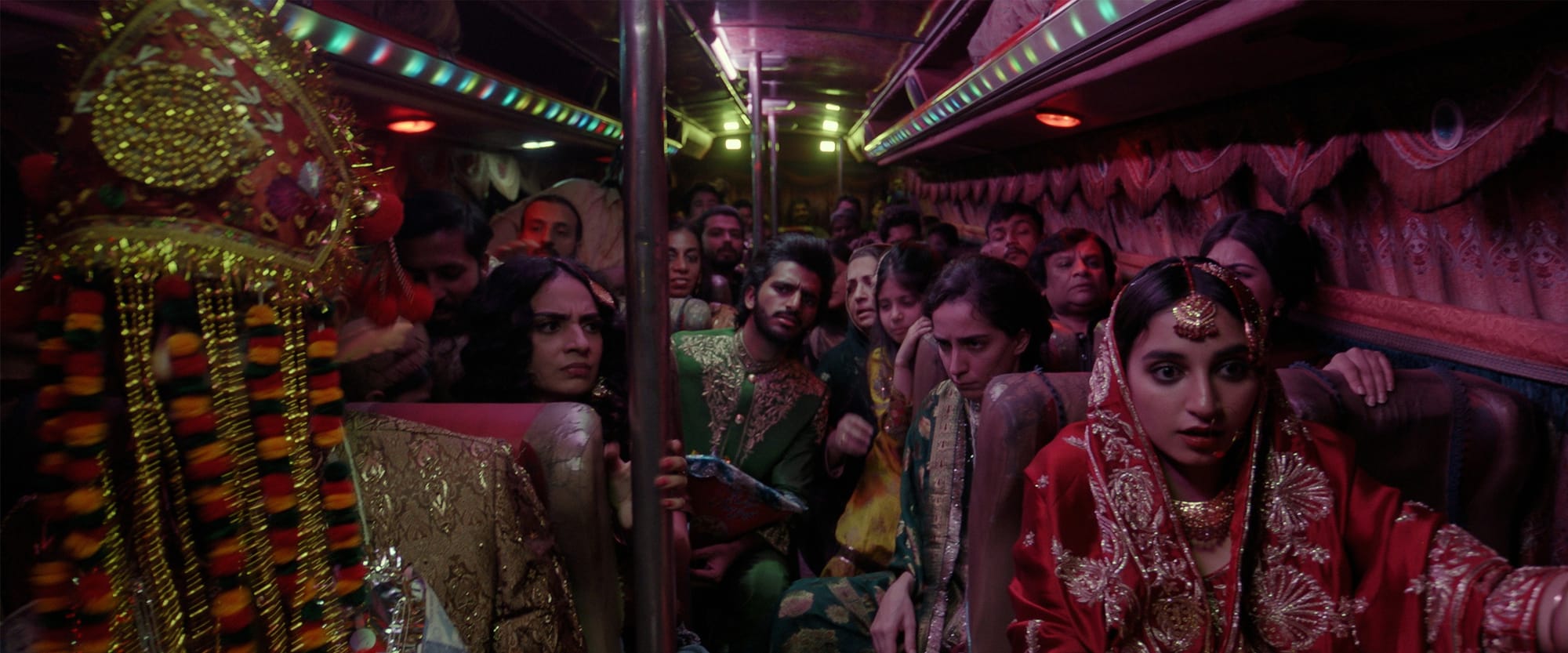
The shift towards a darker and more macabre tone in the second half also forces you, as the viewer, to reconsider what you’ve witnessed in the first hour. Khoosat leaves small clues about the ominous turn that awaits. Sajawal’s wedding procession, an otherwise joyous occasion, takes a scary turn when one of the celebratory gunshots accidentally hits and injures Sohni Ammi. On their wedding night, Sajawal tells Zeba he is allergic to strong-scented flowers and the bridal henna adorning her hands. That’s just the first of many truths that Zeba discovers about her new husband.
Music by composer Abdullah Siddiqui, who also composed the score for Joyland, adds to the film's sense of unease. He is one of the most exciting young talents in Pakistan’s independent music scene. Siddiqui uses a recurring harmonium note that is deliberately jarring, creating a foreboding atmosphere in early scenes. This discordant sound appears when Zeba and Sajawal sign their marriage certificate and when Sajawal reveals his scarred face. The harmonium’s use is simple but effective. The note creates intrigue in the first hour, when the film appears to be a light domestic drama. Still, you sense something more sinister lurking beneath the surface.
The word ‘lali’ (which lends itself to the film’s title) means a shade of red. Director of photography Khizer Idrees, production designer Kanwal Khoosat, and costume designers Zoya Hassan and Ayesha Imran Khoosat together ensure the film’s visuals are led by red hues and their meanings: danger, desire, and shame. The first time we see Zeba, she is in a red wedding dress. Sajawal’s scar, the source of his insecurity, is a shade of red. The scenes of Sajawal and Zeba in their bedroom are shot with a warm, reddish hue. Flashes of red appear everywhere—from Zeba’s henna-adorned hands to Sajawal’s wedding tie. It’s delightful to see how meticulously Khoosat and the team use each variation of red for symbolism and foreshadowing.
The biggest challenge for editor Saim Sadiq (the director of Joyland) was to maintain emotional continuity in a film that juggles tonal shifts, including surrealism and magical realism. This could’ve been tricky, but Sadiq manages the tonal changes with assuredness. The character of Zeba is by far the most layered one that Mamya Shajaffar has taken on in her relatively young acting career. Zeba’s arc is the emotional core of the film, from a newlywed bride who believes her love can heal her husband’s inner scars to a woman who must fight to free herself from the clutches of an abusive partner. Shajaffar’s haunting rendition of Batalvi’s poem “Raat chanani main turaan” (On a moonlit night I walk, my shadow walks with me) moved me immensely and was easily the highlight of the film. Channan Hanif as Sajawal uses his body language to convey the mercurial duality of his character: someone who can shapeshift from a gentle giant to a ruthless brute in the blink of an eye.
Talking about Shajaffar reciting “Raat chanani main turaan” brings me back to Batalvi. One of the major reasons fragments from Batalvi’s verses kept popping up in my brain is how central his poetry is as a motif in Lali's world-building. If you accept the film as a fable, then employing Batalvi’s poems of lament—from “Chambay di khushboo”, “Ambar lissay lissay” and “Vidwa rut”—universalises Zeba’s struggle in a social fabric that looks the other way when it comes to married women seeking freedom from their abusive partners. The pain and anguish in Batalvi’s poetry continue to resonate through the subcontinent, and this isn’t the first time that his poems have been rendered on the big screen. But in knitting the contours of his fable with Batalvi’s poetry, Khoosat gives his own homage to one of Punjab’s most beloved sons.
Not everything works in Lali. The film is divided into chapters, a creative choice that was unnecessary and adds nothing to the narrative, especially since the entire story unfolds as one cohesive whole rather than as different vignettes that might require clearer signposting. Rasti Farooq, who had a stellar turn in Joyland, is utterly wasted here as Bholi, a neighbour with a close bond with Sajawal and Zeba. Bholi is presented as someone who displays signs of learning and behavioural difficulties. To have a character who has undefined disability and give her nothing to do other than ‘act disabled’ cheapens the film and leaves a bad aftertaste. For the most part, this isn’t an emotionally manipulative film, but the underdeveloped character of Bholi is an avoidable misstep.
Despite a few misjudged choices, Lali is an unsettling and thought-provoking film that refuses easy catharsis. Khoosat’s fable exposes an ugly truth: the regularity with which women are expected to absorb male damage in marriages throughout the subcontinent. It’s an indictment of a culture that mistakes endurance for virtue. The question isn’t whether love can change a toxic or abusive partner. It’s why women are expected to try rather than walk away.
Lali had its World Premiere at the Berlinale in the Panorama sidebar.
Director: Sarmad Sultan Khoosat
Cast: Mamya Shajaffar, Channan Hanif, Rasti Farooq, Farazeh Syed, Mehr Bano
Writers: Sundus Hashmi, Sarmad Sultan Khoosat
Producer: Kanwal Khoosat, Khoosat Films
Director of Photography: Khizer Idrees
Editor: Saim Sadiq
Music: Abdullah Siddiqui