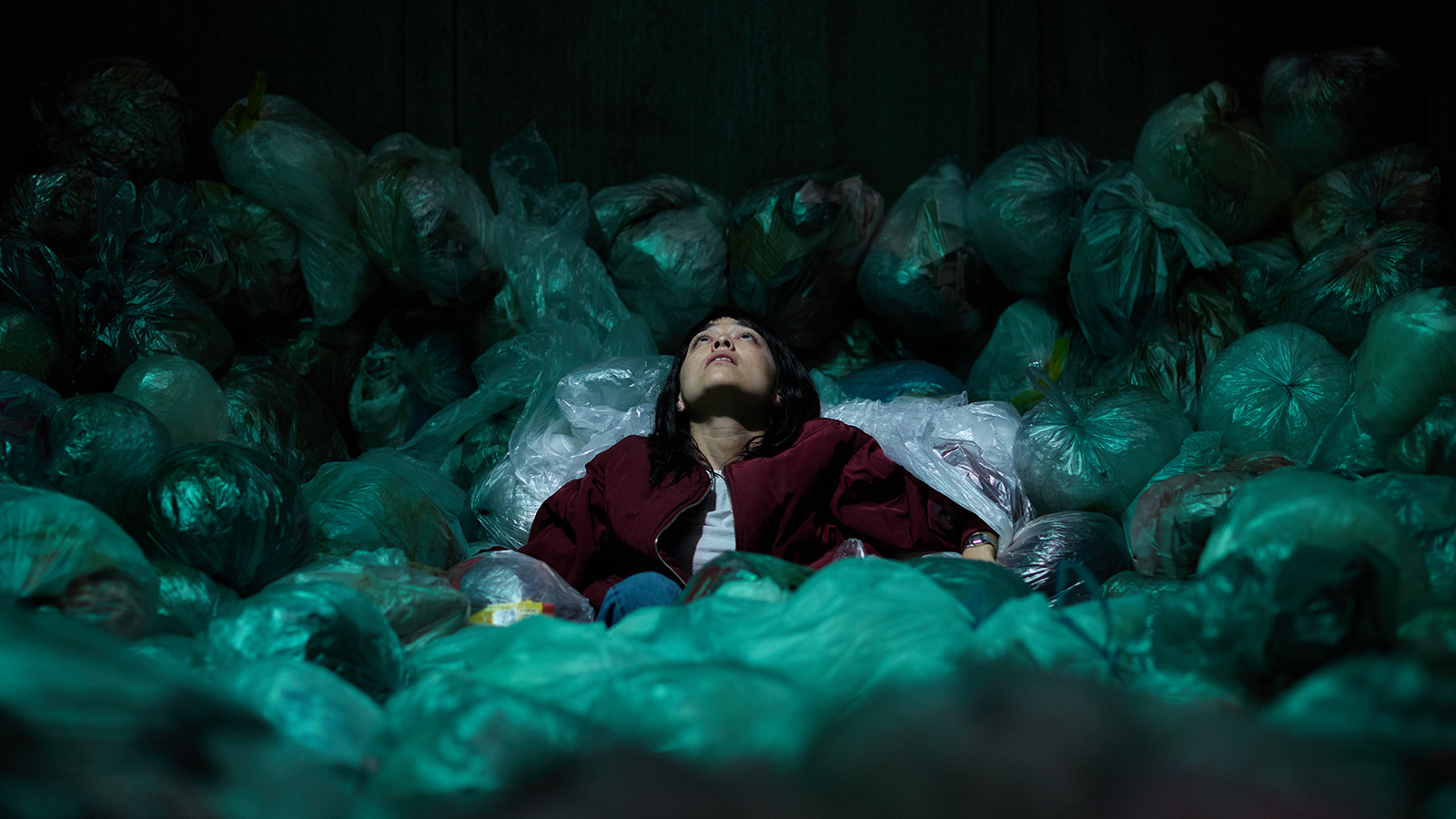
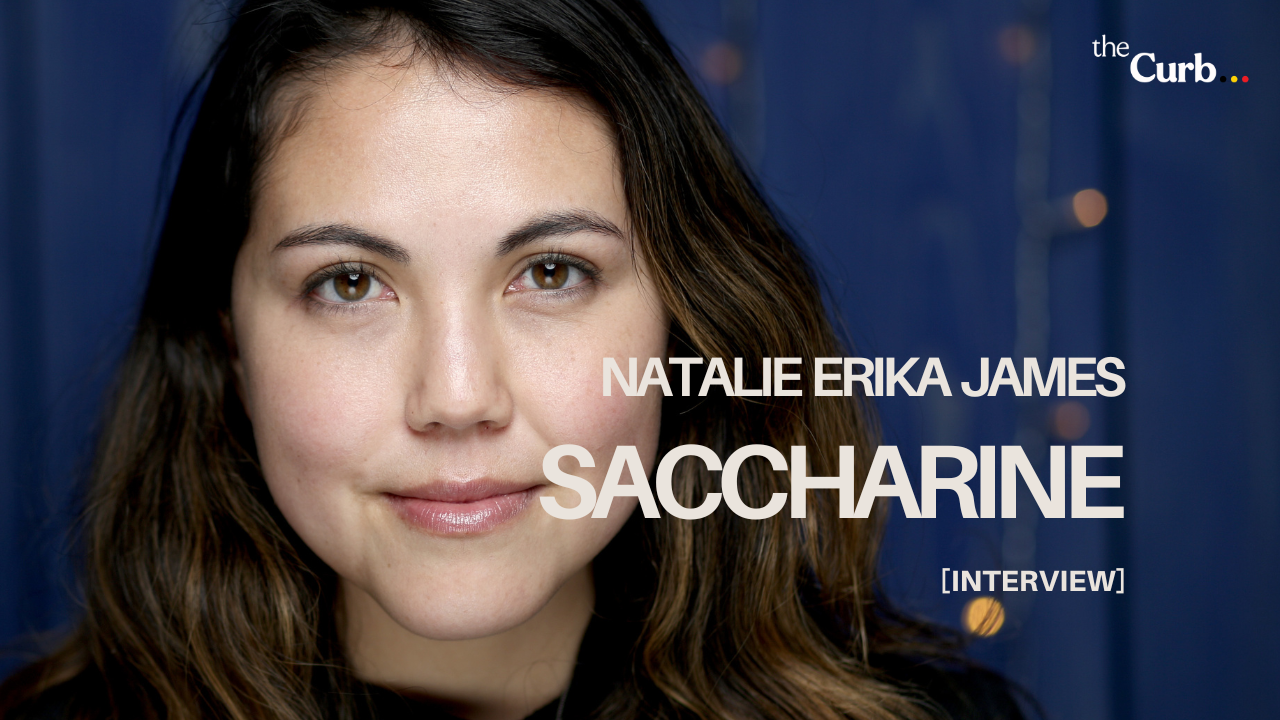
Australian/American director Natalie Erika James is becoming a rightfully essential voice in genre cinema. Her latest film Saccharine tells of a medical student named Hana (Midori Francis) who feels stymied by her weight and finds it hard to find a sense of self-confidence. A chance meeting with an old school acquaintance sets Hana on a dark path using an unusually sourced pill called “grey” which is made up of human ashes. Hana finds herself losing weight and her sanity as an unexpected and hungry force attaches itself to her.
Nadine Whitney had the chance to speak to Natalie about Saccharine and the creation of a cautionary tale filled with genuine scares and a pertinent message about shame and the body.
Hi Natalie. You’ve made and amazing film with so much to say about how people torture themselves to make themselves “fit” into social beauty standards. Can you tell me a little about why you decided to deal with this issue and what you’d like people to take from Saccharine?
Natalie Erika James: I think it’s several things, but maybe the first one is for people to interrogate their own beliefs about what the like the inherent worth of a human body is. And also, the diet culture and the weight stigma messaging that is rife in parts of our culture. I think nowadays that messaging kind of masquerades under different language, in that it's very different to the early noughties where women’s bodies were dissected and like pulled apart in tabloids. Yet, I think the sentiment is much the same the kind of casual fat phobia is everywhere and impacts upon how we value a person.
I hope it prompts people to really interrogate that for themselves and how they relate to culture, that diet culture within their own bodies. At the same time, I see it as a very hopeful film even if it is a cautionary tale. I guess my biggest hope would be that people take on the idea of like compassion and connection being away out of that particular type of pain.
One of the main characters, Hana’s friend at medical school, Josie (Danielle MacDonald) is somebody who is completely fine with her body and she's the one who's trying to connect most with Hana while she’s losing weight and large aspects of her personality.
NEJ: Josie’s the foil to Hana's character and an operates in the world in a way that Hana would love to, she dreams of being able operate like her. She is ideal of how Hana would like to kind of interact with the world, but she's going about it like the completely opposite direction. It’s kind of tragic.
At one point in the film, you have Hana’s love interest Alanya (Madeleine Miller) saying to Hana things along the lines of “You're beautiful, you're intelligent, you're all these amazing things. So, what's the matter, what's wrong?” Hana has no answer to her question.
NEJ: It’s a real moment in which Hana can kind of lay herself bare and it's a moment in which Alanya is inviting her to let herself be seen. Yet in that moment at least she lets the overwhelming sense of shame consume her and it leads to disastrous consequences.
Your visual design for the film is deeply disquieting especially the colour palette that uses the contrast in greens and pinks. Can you tell me what made you think of those two colours specifically?
NEJ: I definitely was thinking of in our approach to the visuals wanting to convey the dopamine highs and the real sense of a sugar rush with the pinks. That intoxicating thrill that signals a part of that pleasure. We knew we wanted to have really vivid colours but then offset them with this sense of what we called “candy and grime,” so that there was a kind of underbelly represented by the greens and the blacks. Colours that give this kind of almost grotesque like nauseating feel amongst the pops of colour.
Pink itself is just so tied to that sense of something sweet and cloying. Almost romantic in a way and girlish. The appearance of something that's very much like the title, saccharine; heavy sweetness but then unveiling the rot underneath.
Hana’s fridge especially has the colour of bile coming out of it. Those two contrasting colour palettes are like a haunting in themselves. Everything around Hana has a specific sense of that diametric.
NEJ: I wanted to externalise what's internal for her. Through the lighting just as much as we do in the sound design.
Also, the way that you shoot the city; for example, all the laneways where everything's very contained and oppressive. It’s like she's in this space which is too narrow for her amplifying the pressure to be smaller and smaller and smaller.
NEJ: We tried keep the setting almost ambiguous. We really wanted it to feel like an unnamed metropolitan city. Taking snippets of a city which feel the most claustrophobic.
Can you tell me a bit about creating Hana and working with Midori to embody both the internal and external pressures around her?
NEJ: It’s interesting; through the process of some of this press I was hearing Midori reflect on stuff earlier this week. She was talking about how she's never worked on a character where she's gone from the outside in. Because there's such a transformation that takes place for Hana.
We set the transformations out over seven stages. That’s just the physical presence in terms of prosthetics and what she's wearing just as much as her physicality and how she carries herself. The self-consciousness or self-awareness of her body within a space that she has at the start of the film versus the end of the film. That’s a credit to Midori because there's a real technical ability that comes through in her performance.
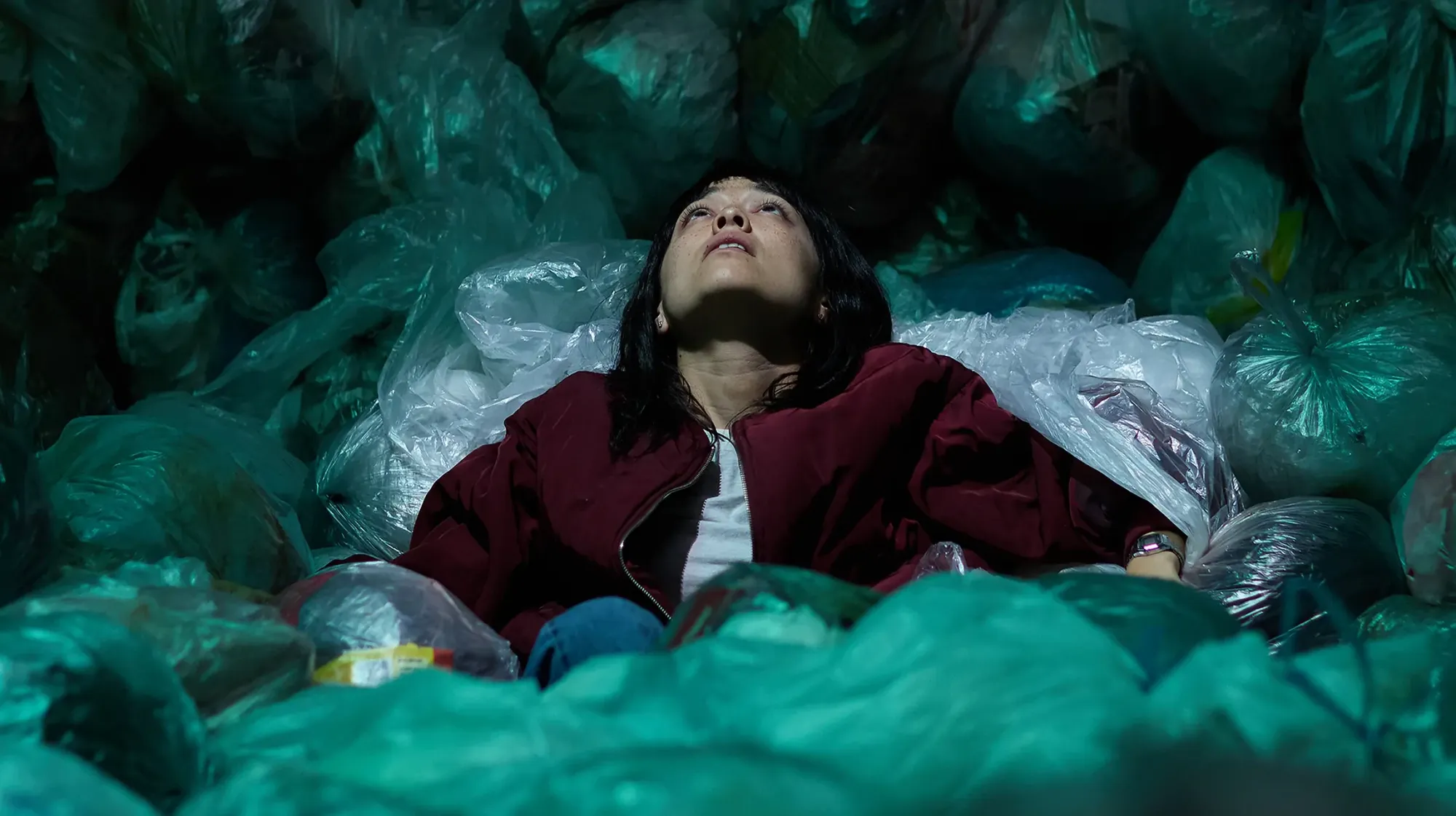
We did a lot of breaking down in the script before she came to Australia to shoot where we worked on ideas about the journey that the character is going on and what are the turning points and so on. But, really, when she rocked up and we did our first camera test and she just snapped into character and that was that was pretty amazing. She had done so much work on her own to bring that physicality to the screen.
It was a really incredible collaboration. And then her ability to deal with a constant recalibration because obviously we shot out order, so having to track those stages and we used prosthetics in that journey.
Prosthetics and practical effects are a big part of the film, and I think that aspect is one of the things that sells the concept extremely well. The prosthetics just don't look like prosthetics. There's a scene where Hana standing on the scales and shoot from below capturing her legs. Her legs look distinctly like person of that weight.
NEJ: Scare Crew Studios! They had such an important and crucial job on Saccharine because it's one of those things that the film either sinks or swims based on that particular kind of transformation. So much care and thought went into the designing of it just to make sure that we weren't overdoing it. Obviously it's a very sensitive thing to convey someone at different stages of weight loss and traditionally or historically it's been done in a punchline kind of fat phobic way.
It was just about trying to make it as seamless and as natural as possible and to really be able to see Midori as Hana consistently in a way that almost feels like the whole thing is like creeping up on you. When people do lose weight in real life like it's such a gradual thing. I think I really wanted to convey the in like the slow creep of that as well.
One of the aspects that stood out for me is the gendering of medicine especially through the Anatomical Venus. That they are called Venuses in the first place describes them well. These beautifully composed medical displays that are almost sexualized bodies showing perfectly clean organs. Then you have the inverse with Bertha's cadaver.
NEJ: I think the Anatomical Venus was an endlessly fascinating slice of history in the 18th century. How they used to put these on display and they were at once tools for like education as well in terms of like how the body is composed but at the same time, as you say, very erotic and strangely almost religious in the way that they're crafted. So that intersection of the being a source of knowledge but also this kind of titillating object you. To me there was a parallel in how Hana projects her desire on to Alanya in such a way that really objectifies her. There might be glimmers of a real connection but there's this sense of this ideal feminine form. As the ideal Alanya is put on this pedestal and so the end point of that objectification to me was to become like an Anatomical Venus, to become doll-like and by extension a perfect corpse. Which is the darkest aspect.
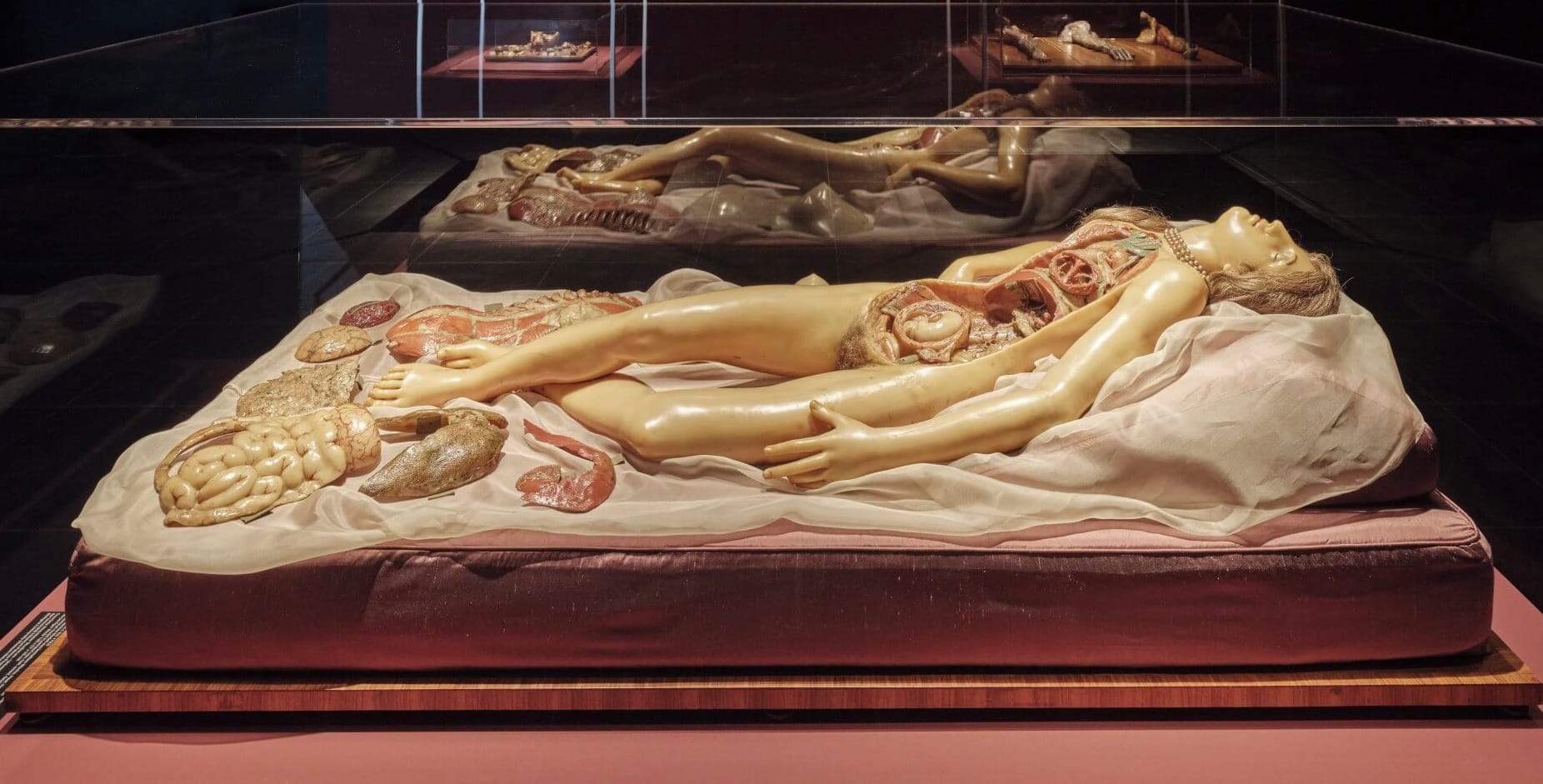
The Anatomical Venuses have on their face an almost ecstatic vision; like they’re beyond death and beyond life. They’re something “beyond” which is something I've always found fascinating about them and renders them creepy as hell.
NEJ: Exactly. I think that's something that we tried to put in the score as well in terms of the highs that Hana experiences through the pleasure of the binges or the lust that she feels. It is kind of obsessive romantic fixation there is something like ecstatic fervour to it a euphoric feeling at times. That was Hannah Peel the composer and I were looking at. There’s a choral element that builds.
I’d like to talk about the pre-end credits which are an artwork within themselves. They remind me of Cindy Sherman’s trash photography. Was that a reference that you went for?
NEJ: I'm a huge fan of her work. I was definitely drawing from a lot of surrealist photography as well you know; where you're combining very graphic ideas with uncanny visuals. So much of the film is talking about is about pain and pleasure, beauty and anger – so I wanted end credits that really encapsulated the creep of consumption. To explore all the textures that make up the film.
We shot that sequence after the film. My partner and I shot it just in our dining room we made a space and kind of drove ourselves crazy just shooting because when it’s just the two of you and you don't have a crew who need to go home you're just like, “let's just keep going!” It’s mania!
Saccharine is currently playing in U.S. cinemas via IFC/Shudder and will be featured in the Sydney Film Festival Program.