“Call my name and I’ll come home.”
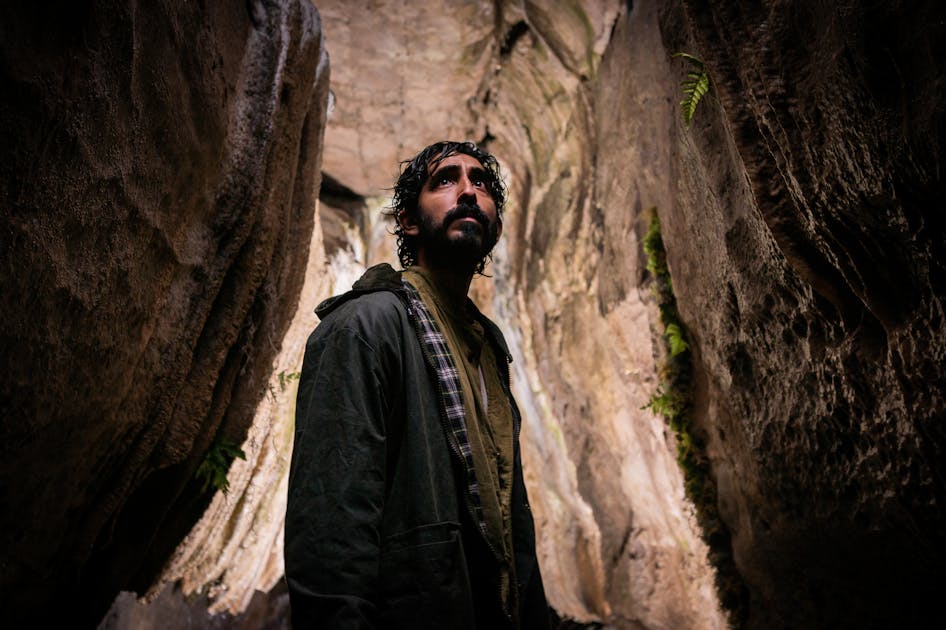
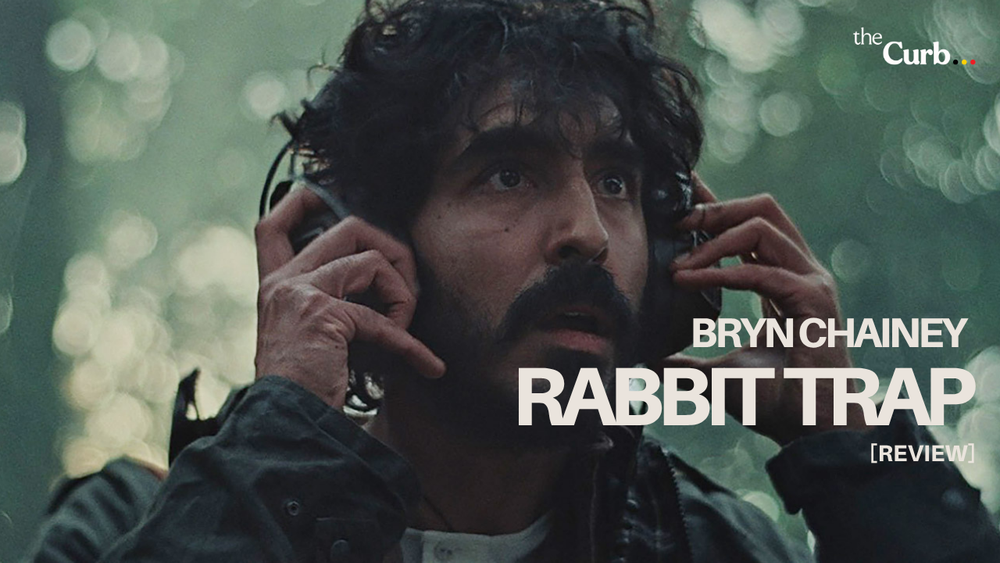
Bryn Chainey’s faerie folk-horror Rabbit Trap is narratively uneven but atmospherically effective. Set in 1973 in Cymru (Wales) a married couple have moved from London to finish their experimental analogue electronica album. Daphne (Rosy McEwen) is the voice and face of the music while Darcy (Dev Patel) is the sound collector scouring the landscape for the noise of nature. The landscape is plentiful and rich – rural Wales providing everything from the murmuration of birds to sounds trapped by the soil and moss. Daphne hopes to capture the eternal hum of the terra firma and weave it into her spoken word art. The sounds are sublime; thrumming with mysterious patterns and echoes. When Darcy crosses into a faerie circle in the forest he unwittingly records the tylwyth teg (fae folk, old ones) and opens the couple up to the approach of a nameless and mysterious child (Jade Croot) who attaches themselves to Darcy and especially Daphne.
At first, the child appears to offer Darcy a guide through the moody and mysterious landscape offering an intimate understanding of the forest and its ways. The lonely child is a hunter who captures their own food and tells Darcy the secret to trapping a rabbit. “Find what they’re hungry for and offer it as a gift… and they will trap themselves.” What the child is really offering, however, is themselves as a part of the family gifting them with the lore of the gorse blossom outside the house (a protection from the fae) and bringing them a rabbit to eat. The child spends more and more time with Daphne who is enchanted by their stories and earnestness. The child also understands that Darcy has something eating away at him, something that has made him feel “tainted” – a trauma that causes Darcy to have nightmares and dream paralysis about a figure he can’t talk to his wife about. The child’s intimacy with the couple grows until Darcy asks them to leave early one morning after they have woken him with insistent knocking. Distressing and angering the child leads the couple into a dark space where the veil between worlds is pierced and their reality shatters.
What works in Rabbit Trap with the most power is the incredible sound design by Graham Reznick and the music by Lucrecia Dalt. Mixing the ancient with the analogue has a haunting effect that acts as poetic resonance. The beauty of the Welsh forests, caves, and haunting paths is soundtracked by echoes of the loam, flow, and ancient growth. “Sound is memory, carved into the ear. It’s a ghost. Just a desperate sad creature looking for a place to hide. When you hear a sound, you become the sound. Your body is the place it haunts,” Darcy tells the child and those words are the anchor that Bryn Chainey weights the best of the film with.
What is less successful in Rabbit Trap is the narrative. Chainey over explains in places and leaves other essential character and motivation beats opaque. Are Daphne and Darcy unhappy or content together? What is it that each wants the most? What do they hunger for? Chainey devotes more to the desperation of the child and what they want and leaves the tension of Darcy’s trauma to muddiness. It’s also difficult to establish Daphne as a rounded person with Chainey’s script proving her to be underwritten.
Both Dev Patel and Rosy McEwen give the script the most committed performance they can, but it becomes difficult to discern whether there is enough for them to inhabit or if the goal was to keep their coupledom vague. Conversely, Jade Croot becomes ostensibly the lead character as the child who is seeking a home awakened by the music. While Jade is capable, especially portraying a need-driven old wandering soul, she’s not frightening enough to warrant the film preferencing her.
Rabbit Trap does seem a case of style over substance. However, that style is abundantly mesmerising at its best and charged with the mystery of dark and deep places. Those aspects alone make Rabbit Trap interesting and, despite the flaws, a worthwhile folk horror.
Director: Bryn Chainey
Cast: Dev Patel, Rosy McEwen, Jade Croot
Writers: Bryn Chainey
Cinematographer: Andreas Johannessen
Sound: Graham Reznick
Rabbit Trap screens at Fantastic Film Festival Australia on 28 April, 3 & 5 May 2026. Tickets are available via the website here: