
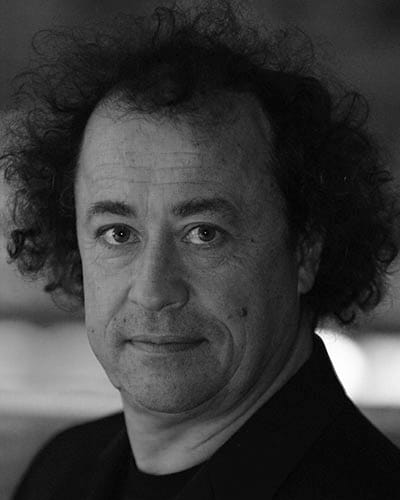
Revelation Film Festival Interview:
Subscribe to The Curb podcast via RSS feed, Apple Podcasts, Spotify, or iHeart Radio. Download the episode directly here.
Co-directors Richard Moore and John Doggett Williams invite audiences into the space of pain, discomfort, and body exploration with their searing, curiously tender, and wonderfully life-enriching documentary Stelarc Suspending Disbelief. This occasionally profound experience follows performance artist Stelarc, a Cyprus-born Australian artist who was raised in the suburbs of Melbourne and found a path towards exploring mortality, death, and what it means to be alive through artwork that many might consider extreme or provocative, but for this pain-experiencing audience member, I found his artwork all embracing in its presentation of discomfort and finding peace within that space.
See, Stelarc is an artist who uses the art of physical augmentation or body performance to explore humanity. An early scene sees Richard attend one of Stelarc's performances in Canberra, footage shows a curious crowd looking on as the artist hangs in a tree by hooks which support his naked body, with the array becoming a form of malicious nurturing or support. If Elphaba thought she was defying gravity, then she needs to take a look at the work of Stelarc. Yet, this conflicted relationship with pain, discomfort and the art that he presents is something that's integral to Stelarc's work. Quotes throughout the documentary present the question of existence being a form of continued suicide, as if life is a pantomime that we all play just to make our deaths feel valued, worthwhile, or as if they carry weight.
But mortality isn't the sole purpose of Stelarc's work. In fact, it's almost an antithesis of his work, one that sees him utilise his physicality to interrogate the relationship with machine and flesh, with the artist utilising all manner of digital and mechanical creations to accentuate and further his own physicality, ultimately then pushing forward and asking deep, philosophical questions about how the body can link with machines in a cohesive and almost supportive manner. That notion of support is one that sees Stelarc engage with the disabled community, with some of his creations going on to give mobility to disabled folks. This notion is then amplified by excerpts of the deeply fascinating and engaging interview between Stelarc and comedian and disability activist Liz Carr, with the two talking about the relationship between body art and disability.
Linking that conversation back to my relationship with pain has been a curious one. We see acts of extreme body modification take place throughout the film, and while some audience members might find the hooks, the dismemberment, or surgical modification distressing or uncomfortable, I personally found those moments freeing and surprisingly relaxing. See, for some of us who live with a chronic illness or with pain, that relationship with our body becomes a complicated one. We live with it - we have no choice but to - and endure daily existence of discomfort and physical distress, and while medication does go a long way to help relieve the pain, it's often not enough, leading us to engage in mental practices to push through a day. Seeing the Zen-like state of Stelarc as he lays naked underneath a swinging boulder hung from the ceiling is just about the most real, pure presentation of what living with pain is like. It's there, constant, and can crush you, but so often it doesn't. I'm not saying that mental sanctuaries are the way out of pain, but rather, this kind of mental fortitude is something that many of us with chronic illness need to engage in to get through the day.
As an added layer to this, for those who control their body and their physical existence through means of body modification - and it is important to note that this is distinctly body modification and not self infliction of pain and suffering, more on that in a moment - it then becomes a way of dominating that pain, or even their own disability. The reason why I make the distinction between this being body modification and self infliction of pain and suffering is that Stelarc and his fellow body modification artists aren't engaging in acts of extreme pain for the purpose of hurting ones self, processing anger or emotional pain, or worse, but instead they're finding solitude and sanctuary in pain and discomfort, and through inviting an audience to witness that pain and discomfort, they then open themselves up for others to engage in a similar experience. This, for me, is where the profound nature of this documentary and Stelarc's work come into play.
Those things, and many more, sit behind this conversation with Richard Moore, recorded ahead of the documentaries screenings at Perth's Revelation Film Festival on 9th and 11th of July, and the Castlemaine Documentary Festival on 4 July 2025. Links are in the show notes for both festivals.
Follow us on Instagram, Facebook, and Bluesky @thecurbau. We are a completely independent and ad free website that lives on the support of listeners and readers just like you. Visit Patreon.com/thecurbau, where you can support our work from as little as $1 a month. If you are unable to financially support us, then please consider sharing this interview with your podcast loving friends.
We’d also love it if you could rate and review us on the podcast player of your choice. Every review helps amplify the interviews and stories to a wider audience.