
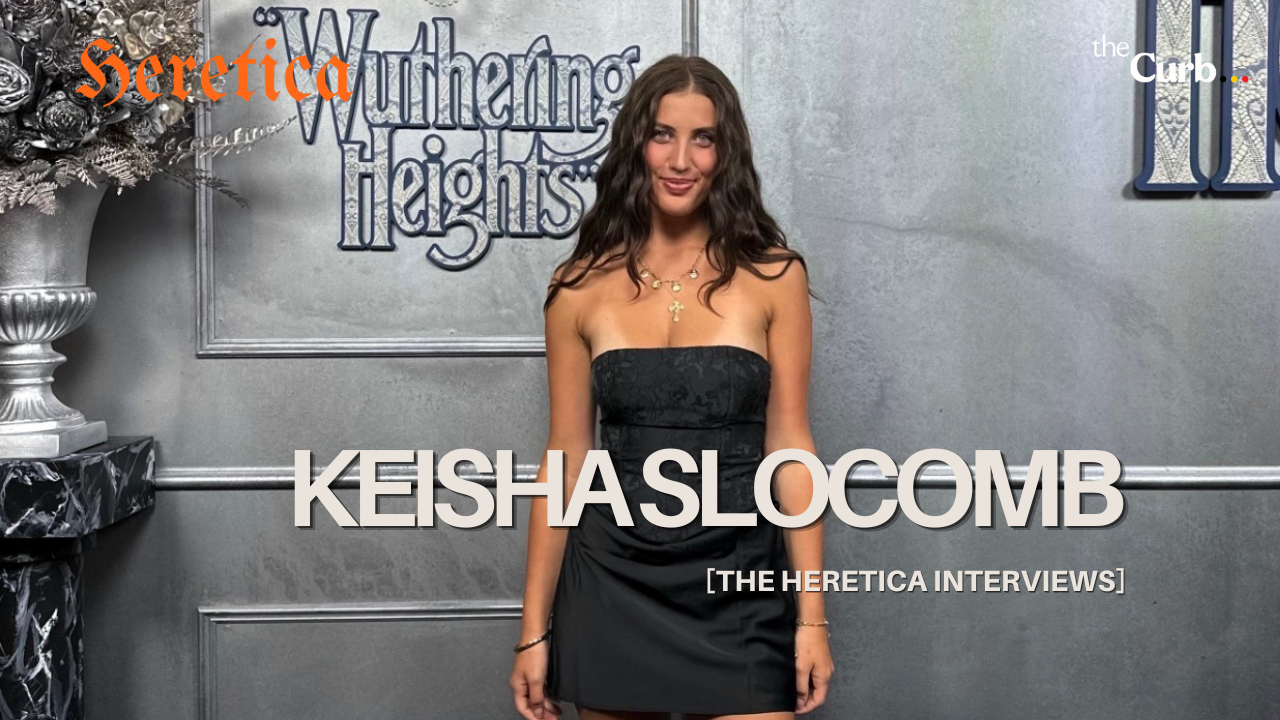
Keisha Slocomb is an emerging filmmaker who is looking to leave a mark on the world by utilising grounded performances alongside compelling visual storytelling. As a writer-director, Keisha is already hard at work on building a filmography that puts her voice front and centre while also maintaining a strong collaborative mindset.
This is best evidenced with her short film The Other Couple, a four hander relationship drama that acts like an emotional rollercoaster over a five minute runtime. It's already got people talking online, no doubt buzz that will help lead into Keisha's next film, One Day.
In the below interview, Keisha talks about her creative inspirations, what her vision is as a filmmaker, while also exploring her growing filmography.
Heretica is a platform for discovering and hiring Female and Non-Binary film crew and creatives currently working today.
If you're interested in working with Keisha, follow her on Instagram here or find out more via her profile on Heretica here:


Where did your interest in filmmaking and storytelling start?
Keisha Slocomb: I grew up loving movies and was always filming, recording and making music videos and home videos. I'd film my brothers a lot and I'd make stories through that. I always loved acting and working behind the camera as well.
Funnily enough, I started off wanting to be a YouTuber because I could create everything at once. I could make my own videos, write them, be in them, shoot them, edit them, and then put them out there. So I started doing that, and then as I did that more, I realised that I wanted to be a lot more intentful with the stories that I was telling, and to grow as a storyteller.
I trained as an actor, which I found really useful, but whenever I was on set, I was always wanting to know what was going on behind the camera. I was so much more fascinated with how you bring a film to life. So, I started out by directing my best friend's music videos, just to see if I could do it, she was like, "Come on!’ There was no pressure. Then I just fell in love with it. So I was like, "I have to keep going.” Then I moved into short films, and it took off from there.
Wanting to be a YouTuber creates an avenue for reaching an audience without going through anybody or asking for permission. You are in direct conversation with your audience. Were there people that you looked up to that had already gone through that process of making a name for themselves and building their audience?
KS: This is gonna sound so childish, but growing up, I was obsessed with Bethany Mota. I loved how close she was with her followers and how she made little movies out of ‘my morning routine’ or ‘my night routine’. She made something so mundane seem so exciting.
I loved the idea of taking normal everyday situations and transforming them into something you would want to watch and recreate yourself, and also how those stories could affect others and help make their day a little better. I loved how Bethany Mota did that. I also loved Jay Alvarez in 2015 with his travel videos. So I kind of incorporated both of their ways of storytelling into my own YouTube channel, and I grew from there. That's how I met my best friend, who I then started directing music videos for and that kind of took off. So, it was all meant to be.
Does it give you hope then when you see, for example, the Philippou brothers and how successful they have been? Granted, what you're doing is a little bit different than what they're doing, but their success as Australians on YouTube and then stepping over into filmmaking has been huge. It’s this playground of learning and testing out ideas.
KS: Absolutely. I mean, everything's learning as well. It's the same with Curry Barker. He was posting skits for years before he did Obsession. I think everything is good practice, and if you can tell a story within five minutes with no money and hook an audience in and make them care about what you have to say, that is a skill in itself and that's what will carry over into directing. When people give you money, you've got all this proof behind you of being able to build an audience and a visual style and a name for yourself that way. I think it's all tied in together for sure.
I watched your short film, The Other Couple, which is really strong. It's a fantastic, simple idea, right? You’re working in a small space and you're putting forward your story that you want to tell. Can you talk about making that and working within limitations and figuring out ‘how do I tell this story on a budget but make it look like it's a million bucks’?
KS: We came up with the idea to post something and put it directly on YouTube because when you do films like short films, especially through the film festival circuit, it can take years to get it out there. And a big thing for me was that I wanted my portfolio to showcase what I can do now because the work that's coming out was from years ago and I've learned and grown so much as a filmmaker since then. Also, I wanted to give an opportunity to actors to showcase their more recent work, because a lot of the time they don't get their work back for years too. So I wanted to create an opportunity for everyone where we write and then we shoot a film and get it out straight away so that everyone can benefit from it.
It was all about how you can tell a story in a contained space, and build up these characters and hook the audience in. We started with the inciting incident. So straight away, we’re not building up the relationships we were exploring, it's straight into the story. I find that really strong, especially in the micro short films under five minutes. You really need to hook the audience in straight away. But there's a way to do it where you can still give backstory, and that's all done through subtext. I'm a huge, huge believer in the power of what's not being said, and where the characters are looking, and how they feel when they're not speaking.
I am a big believer that great storytelling is told through looks and emotions. As humans, a lot of the time we don't say what we truly mean and I feel like that's when you can tell bad dialogue straight away when things are over explained; “I am really sad and frustrated that I didn't get to go to dinner last night but my friend did and that’s not fair.” But all of that can be said with just a look, and that is really powerful.
I really focused on that in The Other Couple, and then also having three big bombshells, three big beat shifts. You’ve got four characters sitting around a table. The dinner's over. They finished. How do you build up and establish a long-term friendship? All these secrets that have come to the surface and make the audience laugh. Even the end is still up to interpretation. People have been messaging me, ‘did they sleep together? Did they not?’ I'm like, ‘you tell me.’ I love films that are open ended or leave the audience with a question. Those are the most powerful and thought provoking.
It's character forward as well, right? Everything that you're saying is about building characters and making sure that that's the connection point to the story. How do you find building those characters with the actors for a micro-short film?
KS: I'm a huge believer in collaboration. Film is a collaborative art form, and I really believe in bringing the actors in as early as possible and building the characters with them. I think it also gives them more stock in the film and their creative choices, but also gives them the freedom to experiment and try different things and know that it's okay to make a creative choice, and then if it doesn't hit, that's okay. We just go again. That’s the beauty of film! We can just go again. It's all about exploring.
As soon as I cast my actors, I bring them in straight away, and we're discussing everything even down to the costumes and what the colours they’re wearing represents. Each actor is different. Some people like to go in depth with backstory, where did they grow up? What was their relationship like with their parents? Do they have any siblings? Because that helps them make creative choices throughout the film. Other people like to just come in and not have to think about anything else and be in the moment.
My way of working is all about open communication and collaboration, also every actor is different. I'll always jump on the phone straight away once I've cast someone and talk to them about their process and their interpretation of the character. I've really found through the projects that I've done that that's the best approach because it allows them to have more stock in the film we are making. As long as everyone shows up prepared and they know what they're doing, how they get to that point, can differ from actor to actor and I welcome that.
Watching this short and reading about One Day, relationships seem to be a big creative touchstone for you. What is it about exploring relationships between one another on screen that draws you to that kind of storytelling?
KS: Relationships are so complicated and complex, but also so beautiful, and I feel like you can see things differently from an outside perspective versus when you're in it. I love to explore different people. I love to put myself in other people's shoes. That's something that I've done my whole life. I'm really interested in how other people view themselves and the world. So I like to bring that into my storytelling.
My favourite films are always about deep connections and deep relationships. I think that's a fundamental part of what makes us human. We're social beings. I love to explore different ways people connect with one another. I always take inspiration from people in my life, and sometimes I'll dramatise it like in The Other Couple and make it a bit bigger than what it really is. But it’s always grounded in truth, and I feel like you can feel that. Well, I hope that the audience feels that coming away from any of my films, that it's based off of real people, because I feel like people relate to that a lot more when they go, "Oh, I’ve felt like that before, but I haven't been able to articulate it in the way that you've just shown me.”
Can you talk about films you have seen where they really hit home for you? Like, oh gosh, I can relate to this quite a lot.
KS: One of my favourite films is About Time. It's not particularly shot beautifully or anything but it's so raw. I love the way Richard Curtis uses time travel as an exploration of being present and not taking the people you love for granted. I love that film so much because it reminds you to be grateful for what you have and how lucky you are to have people in your life that you love and care about. It reminds you to cherish the time you have with them, to be present, and to live each moment with intent. I'm a huge believer in that.
It's a great film. Tell me about One Day.
KS: One Day is my big passion project. We filmed it in September last year, and I'm putting it in festivals this month, which is really exciting. It's been a long, long journey. This one is very loosely based on my life. It follows a mother and a daughter told through both of their perspectives. Which was something I have always wanted to explore.
With Luna, I really wanted to explore that transition into adulthood. When you’re young, you’re so eager to grow up, but then adulthood comes with responsibility, difficult choices, and the realisation that things aren’t always as simple as they once seemed. We initially see Luna’s mum in a certain way through Luna’s eyes, but when the film shifts to her mum’s perspective, our understanding of her changes. I wanted to explore that moment of growing up when you begin to see your parents not just as your parents, but as people with their own struggles, choices and complexities.
I really want to leave the audience with the feeling of you never know what someone else is going through. I hope at the end someone in the audience will pick up their phone and text their mum or their dad to see how they're going or a friend they haven't spoken to in ages, maybe they were going through something that you just couldn't see.
I put in a lot of real-life experience because my parents went through a divorce. It was something that you never think is going to happen to you, and then when you're an adult, you think even if it did, it would affect you as much, but it does. I was 18 when it happened, so I was stepping into adulthood myself, and trying to figure out what relationships meant to me and how I was going to step forth into the world, choosing what to do with my life. You go to school, and you're told where to be and what to do, and then as soon as that's over, you're like, ‘oh my god! I want to make films, but I have no idea how I'm gonna make that happen. What do I do?’ And then my parents were going through their divorce and it changed the way I viewed relationships. But you also don't know how it affects them and what happened to get them to that place. So, there was a lot there.
In One Day, Luna feels so distant from her mother, but they are so similar and go through parallel struggles. I wanted to explore the idea that sometimes the people we feel furthest from are actually the ones who understand us the most, and that distance can come not from a lack of love, but from how little we truly know about what another person is carrying.
Let's also talk about Heretica and what that means for you as a creative person going forward.
KS: I think it's priceless to have a resource like this. Especially giving voice to women and non-binary people in the industry. I think sometimes it can be hard to network, especially in this industry, people like through Instagram and stuff, but having like a website where everything's all together and in one place, and being able to connect with like-minded people and help give opportunities to more women and non-binary folks, I'm so for something like that. It's really incredible and I haven't seen anything like it, especially in the Australian industry, so I'm really excited to be part of it.
I've created a profile and I went to the launch event, which was really nice. I met a lot of people that I had heard of and knew through social media, but hadn't met in real life. It was a beautiful opportunity to really make connections and talk about a love for film, which I always love to do. It's such a beautiful thing to do to create a platform for everyone.
To work with Keisha, visit her Heretica profile here: