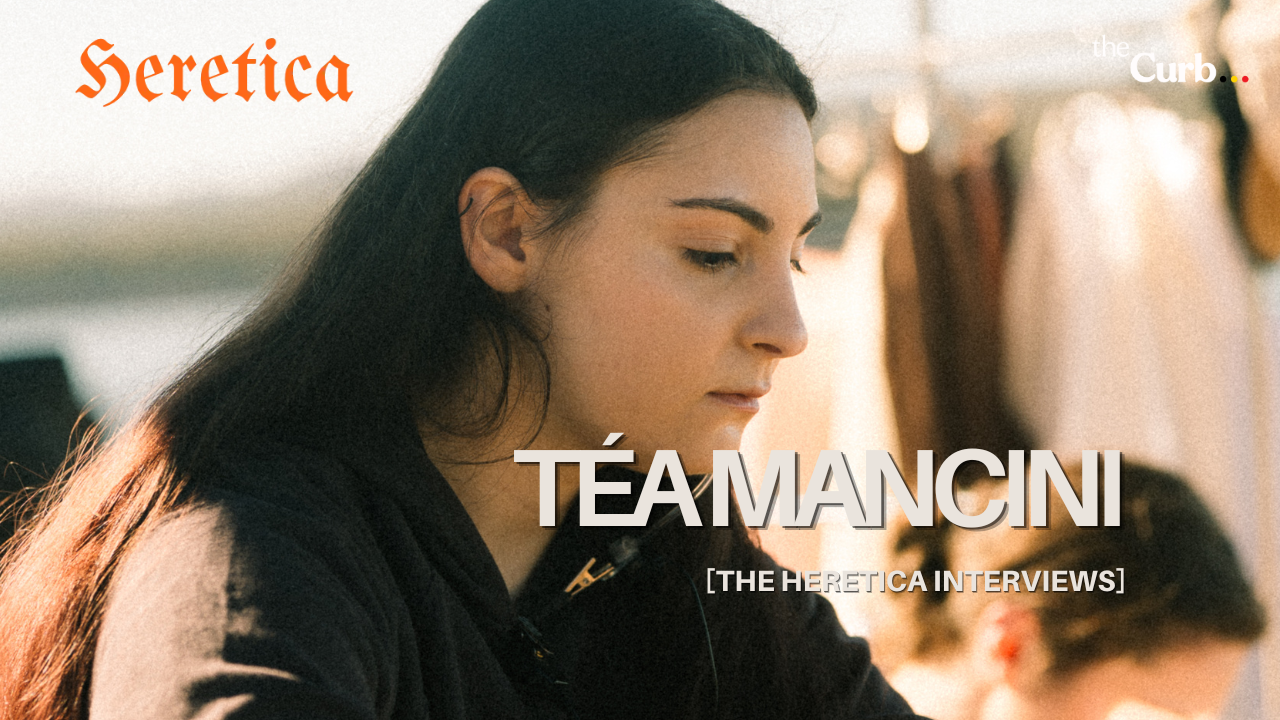
Téa Mancini (she/her) is a multi-hyphenate creative whose filmic body of work is growing in the realm of the art department and wardrobe, specialising in production design, while also building up a filmography as a writer and director. Téa holds a First Class Honours degree in Film, Television and Animation at Deakin University.
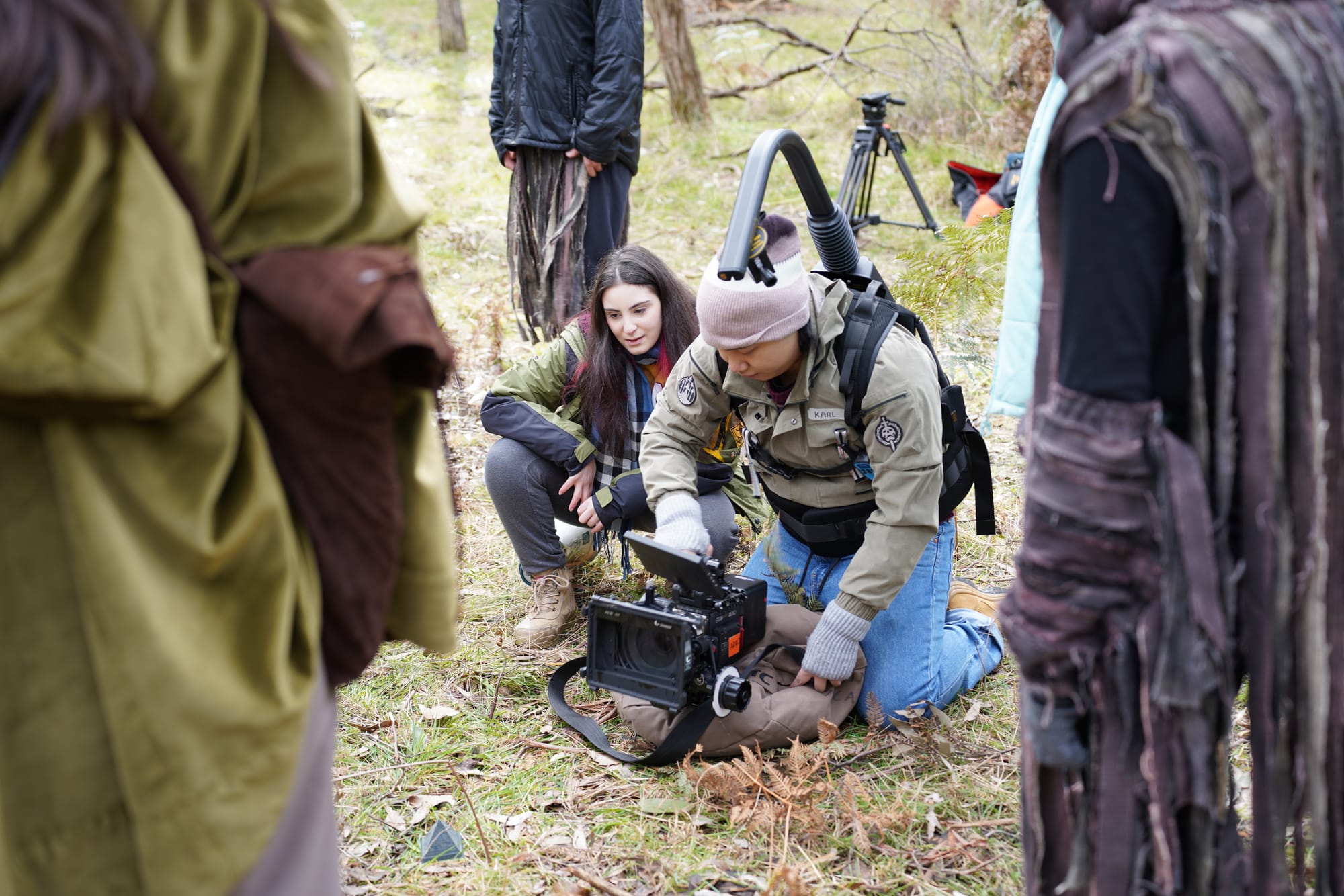
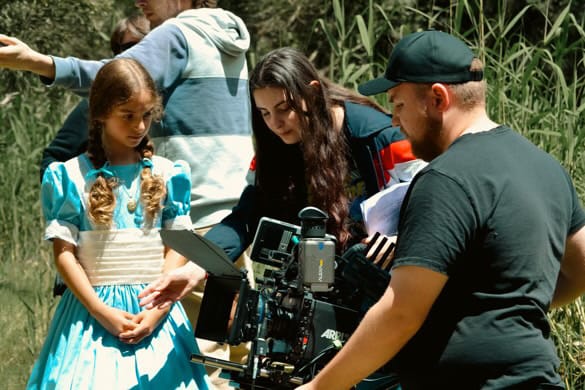
Téa's work as a director has been recognised at the 2026 Young Australian Film Festival with her short film Following the Ribbon Trail receiving nominations for Superb Sound and Incredible Youth Performance, while she has also worked on acclaimed series The Clearing and The Newsreader.
In the below interview, Téa talks about her journey into filmmaking, the production designers and creatives she has learned from, and how she works to weave a story through her craft.
Heretica is a platform for discovering and hiring Female and Non-Binary film crew and creatives currently working today.
If you are interested in working with Téa, contact her through Heretica profile here:


Where did your interest in creative art and filmmaking start?
Téa Mancini: That's a great question and almost a really hard one for me to answer because I don't actually ever know where it really began. I just know that I was always creative as a kid. I was always drawing. There was always painting. My mum used to say that my kinder teachers would always complain that they'll get everybody to run to the mat, and I would still be like painting something in the corner. They'd have to get me over. I've just always loved art in general. In primary school I took up violin, so I got into music as well. All kinds of areas of art were just my thing, and movies are part of everybody's life, right? Who doesn't watch movies? I've just always been in love with all the animated movies as a kid and then growing up and seeing some really awesome live action movies.
I have the films that I am interested in, and the ones that have inspired me. The first time I really got into film was when I dabbled in a media elective in Uni, and thought, ‘oh, this is really cool. I can take art and use all my skills and put it into one thing, and everyone can see it.’ I thought that was really, really cool. From then on, every time I would go to uni expos, I would always look at the media pamphlet and flick through them and look at the unis. So pretty much from the end of high school, I was just like that was what I was gonna do. Nothing else was gonna tempt me.
I saw you did a degree in Film Television and Animation Honours at Deakin. Where did your interest in production design and makeup come from?
TM: That came a little later on. The first year of uni was very broad. You do a bit history, you do a little bit of camera work, it's all kind of like tasting every little platter that they have to offer. At first I was like, ‘I'm just interested in everything. I'll just learn everything.’ It wasn't until I got to second year where we could start specialising with our electives that I chose a production design class. From that very first class, I was like, "Oh, that's what I want to do.” It was instant from then on. I wasn't really that interested in camera, and writing and directing is awesome, but I haven't really started doing much of that yet because it comes later in the course, and yeah. I was never really into the technical aspects, and then when I got into the production design class, and it was a bit of interior design, a lot of colour theory, which I'd learnt through all my painting and art classes, and there was a bit of the fashion design with a costume element as well. It was like, ‘oh, that's actually what I want to do.’ I think I was a production designer before I even knew it. I mean, even in my VCE media film, the big aspect was not story; it was what the set looked like.
There is a nature of telling story through production design. Did you find that as you were going through that you learned how to reinforce a story through production design?
TM: It's like any aspect of film, at the end of the day, it all leads to story. It's an interesting one to learn, and it's actually kind of difficult when you have to think about how to do it, going beyond ‘oh, it's just an aesthetic.’ But we're still telling a story, so what do we have to put in here? I feel like I'm still very much learning that with my process. It also depends on the films you work on, I think, and how strong of a direction the director has got for it. I find the ones where they're kind of a little bit blasé, "Oh, you know, I just kind of want it to look like this, and I'm not too fussed with the colours and stuff.” I think those are the ones where I struggle a little bit because I need to know what we're really getting at here in order to even make a design.
I've learnt a lot about how production design informs the audience so much about the story and the characters through the time period its set in, the objects, trinkets, artworks, furniture etc that the characters keep in their space, the colours used in the design and how they make the audience feel, what props the characters interact with, the state of the set; is it a neat little apartment or is it a trashy share house? All of those aspects, big and small, all have to be cohesive and well thought out in order to help tell the story. Something I'm still learning is how to incorporate a visual metaphone into my production design and use the themes and feelings that come from the story to inform the design.
With that in mind, let's talk about costume designing too, because the relationship between production design and costume design is intricately related. Can you talk about finding the difference between those two different roles and exploring your creativity through them?
TM: When I did that production design unit, I didn't actually realise that costume wasn’t part of production design. They're two separate areas. They just kind of meet in the middle and share ideas. A lot of the time on student films, it's a small crew. Your production designer just does all the things. For ages, I was just like, ‘yeah, I do costume too,’ and they're like, ‘but aren't you a production designer?’ ‘Don't you also do costumes?’ ‘No, no, no, that's a separate person.’ I don't think it was until I did my internships that I realised there's a whole different unit base for costume as well. I would rarely see them do meetings. I'm sure they absolutely did, but I thought that they would all just be in one space.
So I think being the one girl band on a lot of sets meant that I had to learn a little bit of that as well. I always had a bit of an interest in fashion since I was little, so it came naturally to be like, ‘what clothes should we pick out for this character?’ I think it's probably easier to do costume for characters than it is to do production design for characters because you're thinking really specifically about that person and what they like, and when you dress yourself, you dress yourself with exactly what you like. But in your house, you might have a bunch of random things. I find costume sometimes like a little easier to do than production design. But the more indie projects I've done and the bigger they've gotten, the less I've been doing costume, because it's a bit more separate.
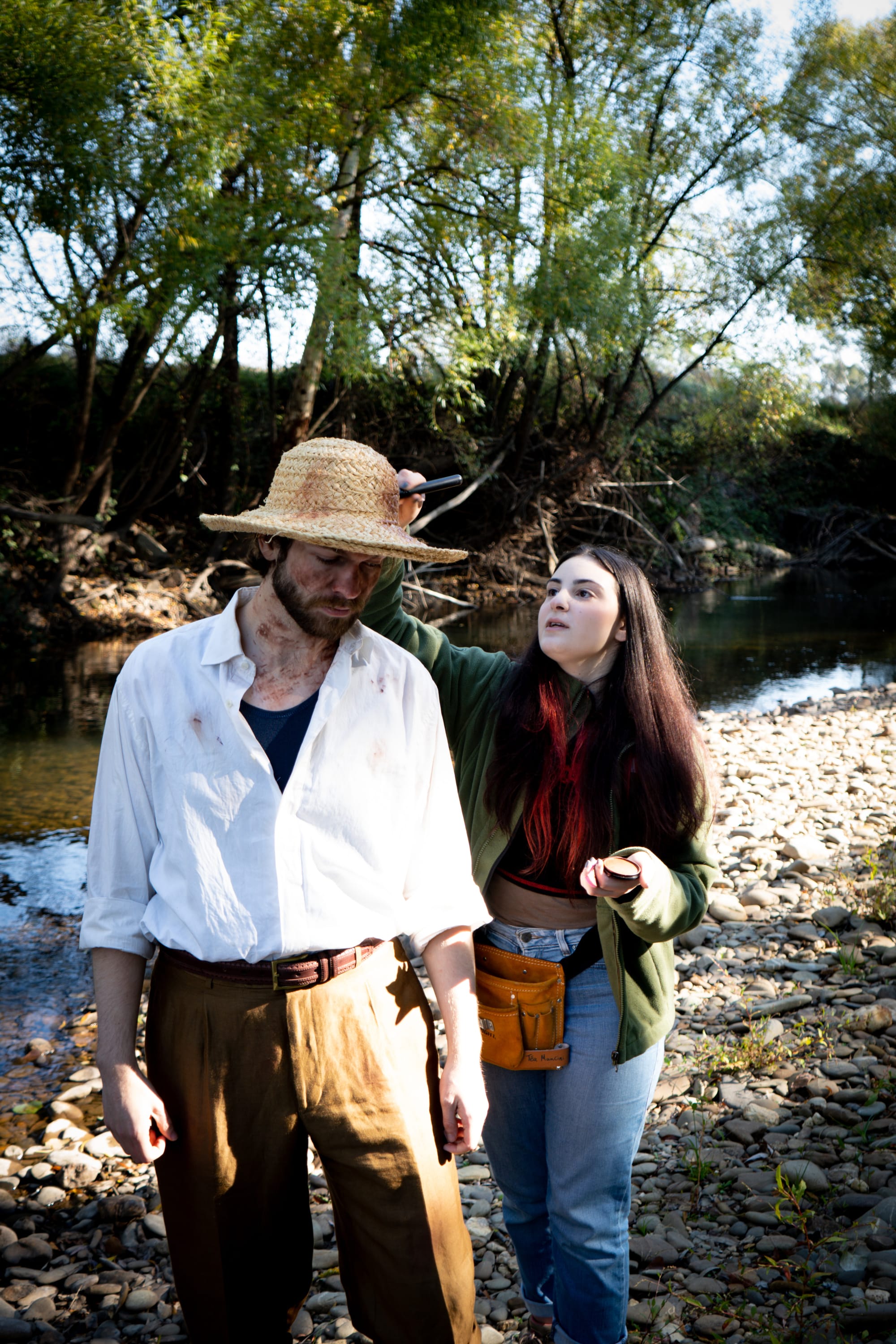
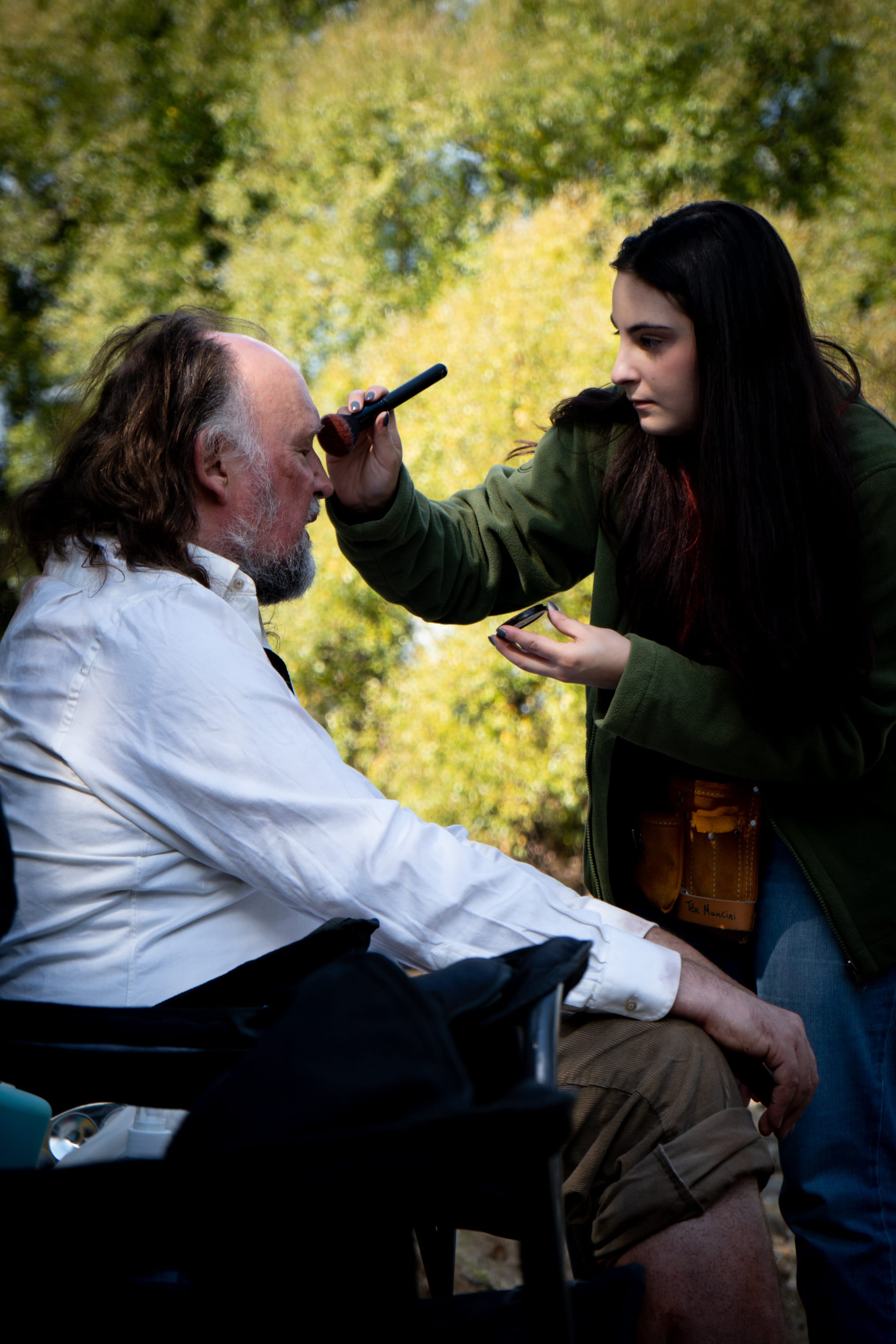
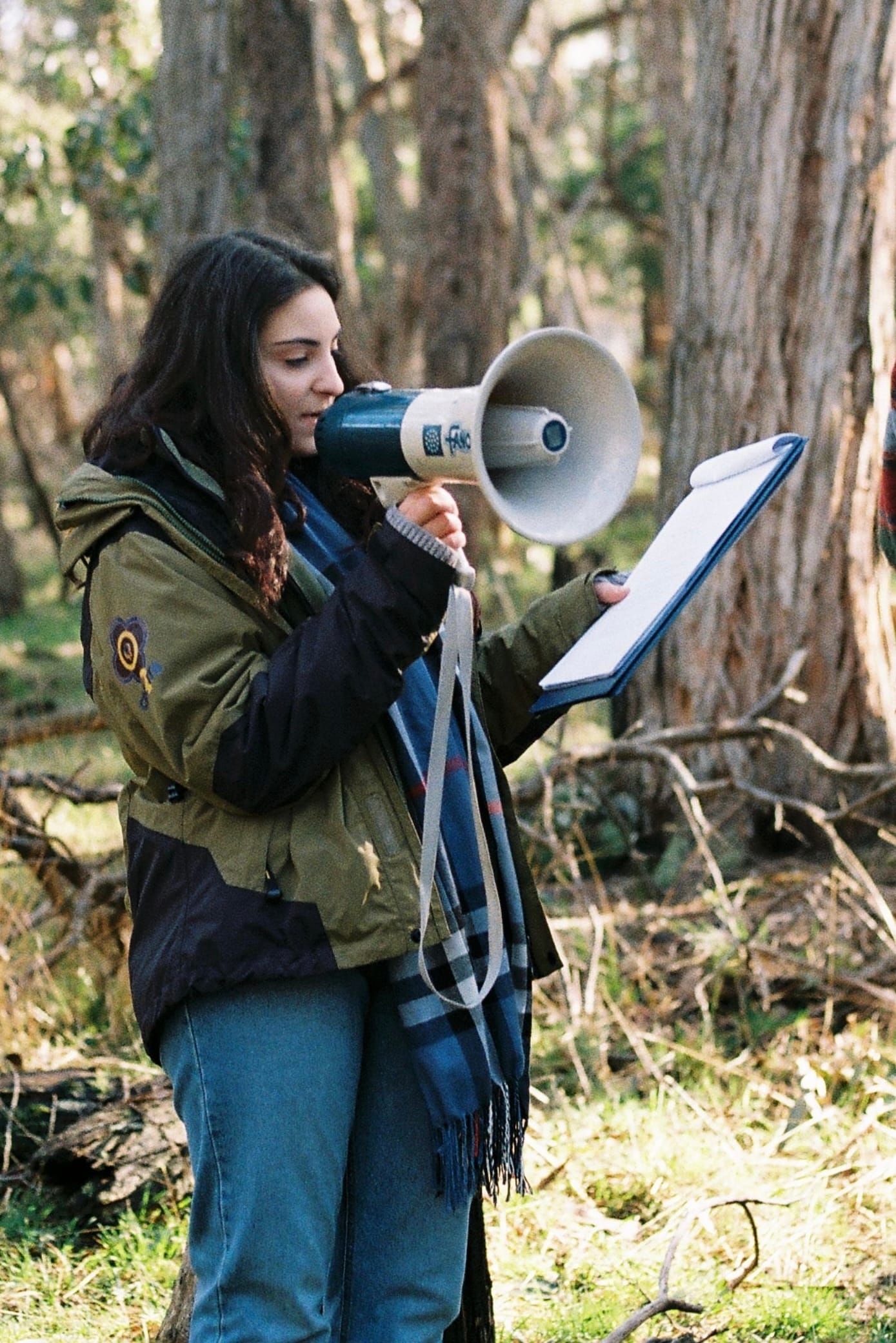
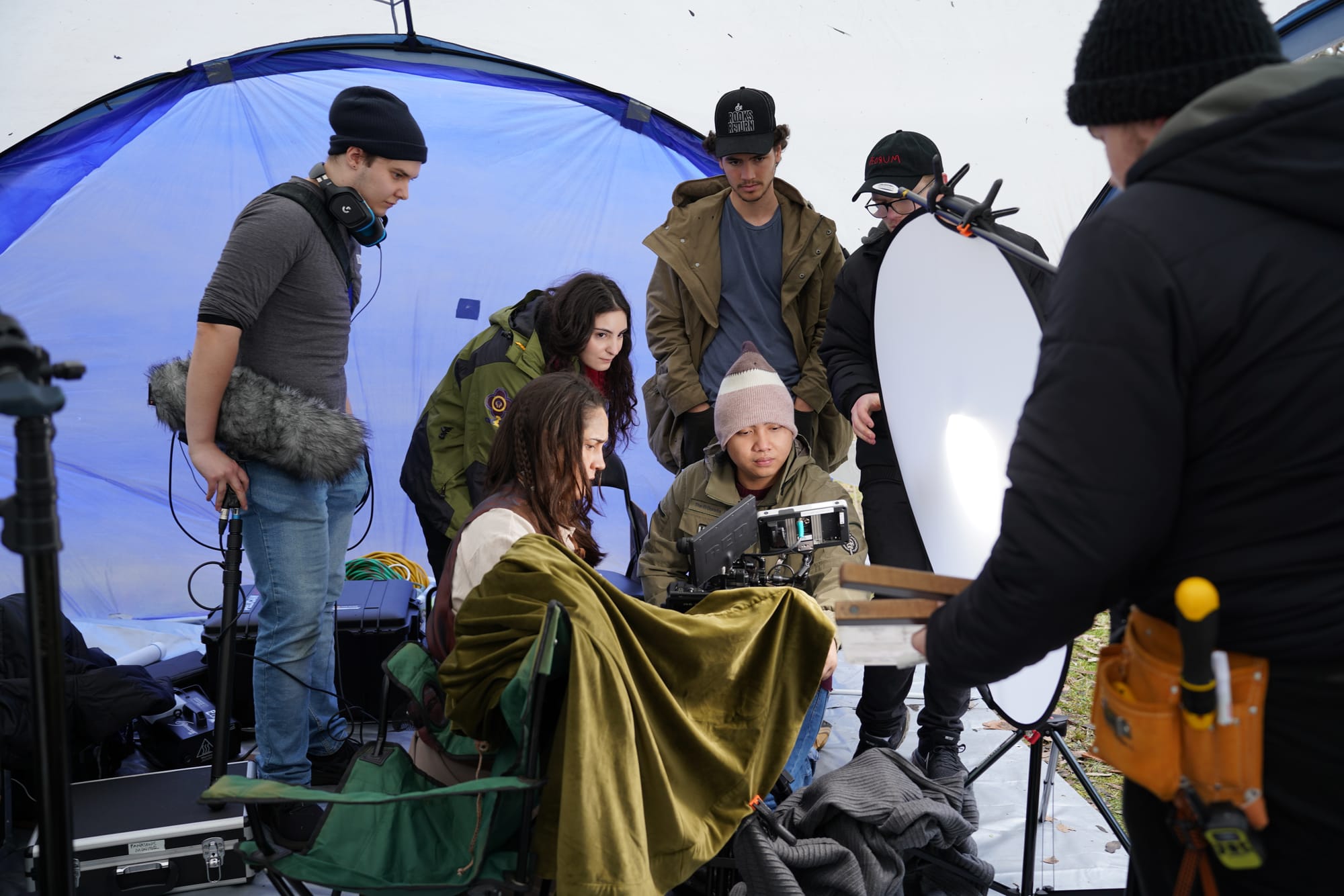
What kind of stories do you want to tell through production design or costume design?
TM: I've always really loved fantasy and anything that has a stylised aspect of it. I mentioned before that I really love animation. Even thinking about how stylised those movies are, and how you can create like these wacky, colourful worlds. I really like when there's like a strong aesthetic to a film. Fantasy is a great example of that because usually there's a really strong aesthetic that comes with that.
I did one recently that the aesthetic was a very grungy Melbourne art world, and I'm not really a part of the grungy art world, but it was really fun to look specifically at what kind of things they'd have in their space, and then when you go to the op shop, you can be like ‘not that one, that one.’ It's so much more fun when you can really get in there and create rather than ‘it's just a house and they just have things in their house.’
Do you feel it's an expression of yourself as well or your vision in that regard?
TM: Absolutely. Even in my own art, painting and drawing, I feel like it was always very stylised. Looking at the sets that I've done, I can always see where me is in it, especially because when we don't have a lot of budget, a lot of my props I just reuse for lots of different sets. There's definitely a lot of me in those sets, and I think you can really tell when we're working with a little, but we've managed to pull it off.
Tell me about some of the productions you’ve worked on and people you’ve learned from.
TM: I worked on The Clearing (Disney+), and I also worked on The Newsreader season three, and both of those were quite stylised shows. One was set across a bunch of different eras, but very much in that kind of spooky cult sort of scene. They had that really dark kind of a schtick to it, and then The Newsreader, which is all set in the '80s and all very like newsroom formal. It was really cool seeing how those production designers created the world. I wouldn't work too much with the production designer specifically on my internships, I'd work with other people in the team, so with props and the set dressers, and just thinking how cool it was that they can work off this brief, and then they just go out shopping all day and looking for everything that works for the scene.
I also did a paper on Jacinta Leong, who did Shang Chi and Mad Max; she works on a lot of massive Hollywood productions like Pirates of the Caribbean, Star Wars, and The Great Gatsby, and she does a lot of drafting for sets. She's got the more engineering sort of architecture brain where she'll actually fully draw out how to construct the set. I don't work like that at all, but I think that's really cool she can. Seeing Australians working overseas on those big movies gives me hope that one day I might do the same.
The time lapse video of building the set on Shang Chi and presenting the production design that went into it, was so impressive. Getting to know that Australians worked on that and built it was massive. What does it mean for you as somebody who's stepping into the industry knowing that something like Shang Chi and these other massive budget films get made here?
TM: I'm really excited. I cross all my fingers and toes that I'll be able to get there. I’m working towards it, but this is where the disappointment in the film industry comes in. Sometimes it's hard to keep up the hope and think ‘I can get there.’ I think a lot of it's just trial and error and just hoping you fall into the right place at the right time eventually or do the right project that gets noticed. That also goes with production design being underappreciated. They were talking about Obsession and how much of a big phenomenon that became, but then in an interview the art director mentioned that she didn't get paid much to be there. At the end of the day, [the director] gets all the fame and the glory and the money, and she's just looking for the next job. So sometimes you hear things like that, and you're like, ‘is it going to work out?’ I definitely have hope, but I'm not going to say it's not hard.
As you mentioned, you did your first professional paid role as a production designer for Mimco. That’s a brand you get to play with as a production designer. What was that like working on a corporate level especially for a 30th birthday collection too?
TM: When I got the email, it took me by surprise. I had just come off a Deakin Masters film that turned out really great, but it was really hard. There was so many moving parts and we only had two weeks to pull it together. I was completely burnt out from coming off that. I think then a week later, I jumped onto another film where the production designer was absent for the last week of pre-production. So then suddenly, I had to step up after being absent from the production to get everything together. So after all that, of ‘oh my gosh, back to normal life working in retail,’ then I got an email asking if I wanted to work with Mimco. It took me a little while to realise what they were even asking. I asked a few questions about what was expected of me. They mentioned that they were gonna pay me.
Knowing again there was only a week before we had to film, I called the producer and we had a nice chat about it, and I ‘okay, looking at everything, it didn't seem as difficult as that Masters film I was working on. We can do this.’ Everybody that we worked with at Mimco was super lovely, and they were just very casual about it. It's a big deal, but it wasn't like you have all this pressure on you and you need to make it perfect. It was like ‘we're all just gonna have fun together.’ That was a great environment to be a part of, and it definitely took the pressure off, and it also motivated me to do well for them because I wanted to make them happy. It wasn't case of ‘oh, I have this corporate production, and I've just got to work hard because I'm getting paid for it.’ It was also like these people are all really great, and we're going to work together and it's going to be so fun.
We used their office in Melbourne. A lot of actors were people that worked there. We went in and decorated their office spaces. I had a lot of the employees saying like, "Oh, I wish our office looked like this all the time.” That was the ultimate compliment when people who don't know anything about film compliment it because it means they can appreciate your work. Even the general manager, Jennie, who plays the main character, I dressed up her office, and as I was taking it down, she comes in and she was like, "Oh, did you take all the posters down? You can keep them up.” So I put them all back up. That was a really fun one. I love seeing all the episodes come out weekly and being like, "Oh yes, that little thing I did. I'll repost them and share them to everybody.
It was really fun working with all the girls pulling out all these bags and all the jewellery and be like, "Oh, this is shiny, sparkly,” and just being able to throw it around everywhere. I didn't even really think that I would get into corporate video because I feel like they never really do production design for any sort of corporate video, so it's really cool that they're exploring the narrative advertising route.
On your CV, you've got a couple of referees, so Donna McRae and Juliet John, I’m familiar with their work and role in Australian film and. I imagine you would have learnt from both of them. What's it like knowing that you've got people who have been around for a long time, passing on knowledge to you?
TM: Oh, it's super awesome having them as my lecturers. Juliette John was my production design teacher, and Donna McRae was my supervisor for my honours project. With Donna, I learned more of the writing and directing side of things, and then with Juliet I learned the production design. It's awesome being in a classroom where the teachers have been in the industry. It's not all just theory, they're telling you this because they’ve done it multiple times before.
Juliet straight away saw my interest in the class and that I was really trying with my assignments, and immediately said, ‘if you're considering internships, let me know and we can have a discussion and I can help you out a bit.’ That's how I got my first internship, and I'm really grateful for that. It also led to the second internship as well. She went through all the different resources for how to find people in the industry, and going onto the Vic Screen website and looking up the directory, and then going to the Screen Australia and looking at what films are on. She told me to pick five production designers and art directors from the industry directory, and then select a few films that look interesting that are in development, and then she could go, ‘that person you selected is working on that one, so I'll send them an email.’
The knowledge and experience from both of them, and then even just getting to see their own work on screen, was important. They’ve both made memorable Australian productions that have even gone overseas. They've made a lasting impact on film and TV in Australia.
You talk about researching on the Screen Australia website and seeing the different directories of who's around, what's going on, that kind of stuff, and we’re talking in relation to Heretica, so I'm curious what a directory like Heretica means for you as a creative person?
TM: I'm super excited to see where Heretica goes and how it all works out. Heretica being specifically for female and gender diverse creators narrows down the pool. Even when I've been crewing, sometimes like I'll look at my crew and be like, ‘they're all just dudes,’ which absolutely no offence, but we do really need to uplift our female and gender diverse creators because we're still entering what used to be a very male dominated field, and we're still fighting to make ourselves relevant.
It's awesome that we have this new platform. I'm really excited to see where it goes and how recruiters use it as well because I think it’s one thing having a platform that's similar to like a Facebook thing where people go ‘I have all this unpaid work, who wants to do it?’ Then everyone looks at it and goes like, "Oh, I thought we're supposed to be paid on here?” I'm really hoping that the recruiters take it seriously and really see its value and use as a resource to hire us as well.
As we wrap up, what other aspects of your work would you like people to know about?
TM: It's funny because it's kind of almost become a stereotypical thing at film school, when women come into the scene, they all want to be writers and directors, and they're like, "Oh, there's not enough women in camera.” I can kind of see what people mean, but then it also kind of then makes it worse for the women that are trying to write and direct because it's like, wait a second, now you're stereotyping and it's setting us back again, you know? I really hate when I say, ‘I'm a writer director,’ and then some guy goes ‘of course you are.’
I am primarily a production designer, but I also write and direct. I've written and directed four shorts over my uni career so far, not counting the ones I did in my teens and childhood and really love doing it. It's way more stressful than being a production head because you have to think about everybody. I love being able to tell a story and use all your life experiences and put it into something, whether it's you know realistic or if it is complete work or fantasy. I'm definitely still developing it, and I feel learning how to write is a lot harder than we all think when we go into school for it. Learning about how your audience is going to react to things and learning that you can have an open ended short but you still need to like give some sort of resolution which is something I'm definitely still learning.
I know that I'm not going to become some big director straight away. It’s always going to be something I do maybe once a year, and the rest of the year's production design. I really do hope that one day I can possibly direct a feature or even a series and be able to get myself out there in that way as well.
If you would like to work with Téa Mancini, then reach out to her via Heretica here: