
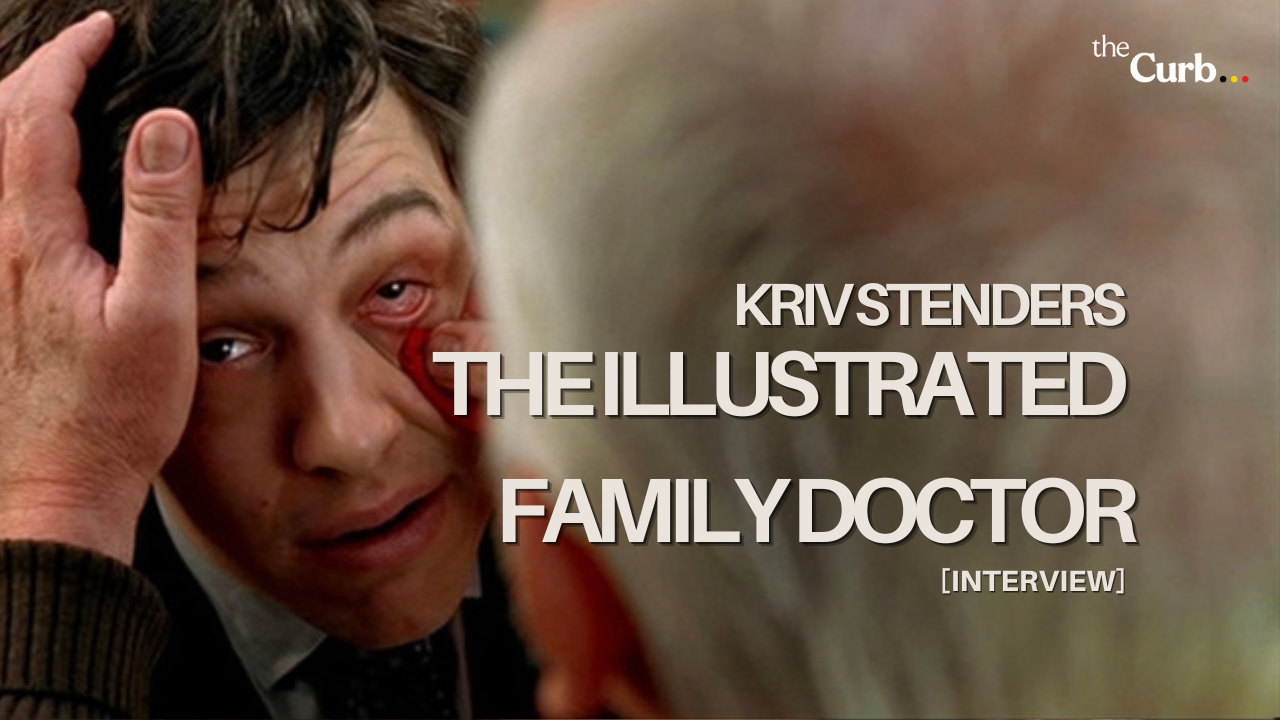
The Illustrated Family Doctor almost ended Kriv Stenders' career before it got started. A surreal comedy about white-collar office life with subtle body-horror elements. Doctor was unusual in Australian cinema, confusion in how to market the picture and middling reviews meant it got pulled from cinemas before finding an audience. Yet in retrospect, it’s a fascinating first film, an enthusiastic grab-bag of genres and proudly cinephilic. It also sits at the end of the celluloid era, giving it a tactile edge that we can no longer take for granted.
What's also interesting is the way Stenders dealt with the critical and commercial failure. Doctor had a budget of $3 million, but the director was prepared to use guerrilla filmmaking tactics and go micro-budget (with Blacktown and Boxing Day) to put himself back in the game. This ultimately led to directing Red Dog (2011), one of the most successful Australian films ever.
But as movies have gotten dumber and more visually homogenised, Doctor is an ambitious curio aging nicely in the cellar. Currently seen as a cult film for those in the know, it sits ready for critical revision and exploration again. But we must first go back to the director’s personal heartbreak on release.. Kriv Stenders kindly sat on the therapy couch to explore what happened and his thoughts on IFD 20 years later.
Mike Retter interviewed Kriv to reflecting on resurrecting The Illustrated Family Doctor.
This interview was originally published on Pure Shit on Sep 29, 2026. © Mike Retter and Kriv Stenders 2026. Visit the link below to read other great in-depth pieces like this one.

Before going into the making of the film and your artistic intentions, let's go straight to Doctor's release, its reception and where that put you in your career. What happened?
Kriv Stenders: Back in 2005, even though we had Palace Films distributing it, who at that point were the champion of Australian films, despite them trying to work out how to market the film and connect with an audience, it failed spectacularly at the box office. It made something like $34,000 in its first week of release on a budget of $3m. When you make those sort of numbers, it becomes a self-fulfilling prophecy, the film ends up losing screens straight away, then again the following week and it's just a death by a thousand cuts or death by a hundred screens.
At that point in time, there was a lot of hand-wringing and self-flagellation about the state of the Australian film industry. A lot of self-hatred and I think the film became a bit of a whipping boy. I'll never forget there was a front cover of The Age or Sydney Morning Herald magazine insert where they had a picture of Samuel Johnson on the cover looking really quite unwell and the headline was "Why is our film industry so sick?" And I remember reading that thinking, "Oh my God, I am toast." And it was a very dark, dark couple of weeks.
I was young when it came out, but I do remember some of the reviews, they weren’t all super-negative, but a bit middling.
KS: I think they were middling, it was often given threes out of five.
(Author's note: It is commonly perceived by the Australian public that locally-made films are championed and get overly positive reviews, which could equate to an extra star out of five. Thus a three-star review in the public's eyes could mean two.)
I'll never forget, I remember David Stratton telling me on the way to an interview in an elevator at the ABC building saying, "Oh, by the way, I didn't like your film. I'm not going to give it a good review, but I just want you to know that, because I'd hate to have met and interviewed you, then you see the review and it's a bad one. I just want to pre-warn you.” and that was a bit devastating for me because then I had to do an interview with them which was a bit surreal.
It was when I realised that there are three certain things in life, death, taxes and film reviews. And I've learnt not to read them now because for every good review there's a bad one and for every bad review there's a good one and they kind of cancel each other out. So, you know, you can't expect every review to be great and you can't expect every review to be bad. So why put yourself through that pain? I'm just trying to look at it all very philosophically now.
For me, it was probably more a dismantling of my own expectations. I was a little bit taken aback and naive about how people would respond to it. My assumption was that everyone would understand the tone, appreciate the style and find it funny. That's when I realised, audiences don't owe you anything. You owe the audience everything. And whilst the films that influenced it are ones I love, I realised it's a diverse audience and not everyone likes what you like. Tastes can be very diverse. And I think sometimes IFD was maybe a little bit too clever for its own good.
The reviews sort of shocked me a little bit and I went, "Wow, people have got an opinion and there's nothing I can do about that." I realised I had to really expand my wheelhouse. It was important to look at different styles and genres. Eventually I made Red Dog, a family film, which ended up connecting with audiences on a huge level. You grow and learn from your films, from your experience, you learn from reviews, you begin to understand how audiences and the market works, how culture works and where you sit within that universe.
Samuel Johnson gives a great, sickly and cuckolded performance. But at the time in 2005, his voice was burned into our brains as the narrator of Channel Ten's drama The Secret Life of Us and voice-over for Hungry Jacks whopper commercials. Could this have affected the initial release, audiences and critics finding it hard to accept the guy who said “The Burgers Are Better at Hungry Jacks” as the lead in an intellectual body horror?
KS: Maybe, maybe. Yeah.
Before you answer that question - I would say it probably did effect things, but this is a case of where the film dates really well as those TV memories diminish and we can now view the film on its own terms.
KS: Thanks for that.
Look, I really liked Sam. He just had a quality about him, this gormless quality that I thought was perfect for the character. To me 99% of directing is casting. I like casting that subverts people's expectations and he just has a physicality, his lankiness, he just personified Gary for me. As to whether the public perceived him in a different way, whether that had any effect on the box office, I'm not quite sure. I just think people didn't know about the film. The film was released, those that didn't like it gave it a really bad rap and whoever liked it were few and far between.
So what did that do for your career? Where were you standing as a film director after its release?
KS: Well, it was a dark couple of months. It was my first movie. Its a pretty brutal industry, you really only get one shot or chance. Even though there was a lot of love for the film in obscure quarters, there was a certain contingent of people who really enjoyed the film and appreciated what it was doing, I just think that overall there was a general consensus that the film was a failure and that I had my shot, that was it, that was my attempt and I blew it.
But interestingly and thankfully I had already shot a micro budget, dogma95 style film before I'd made The Illustrated Family Doctor, a film called Blacktown, so my editor Gabby Muir decided to say, “Hey, listen Kriv, let's finish Blacktown.” She kind of grabbed me by the scruff of the neck, dragged me out of my depression and said let's complete the film. So we finished editing this picture I had shot in 2002, cut it on Final Cut Pro Three, got it ready, spat it out on DVD, sent it to the Sydney Film Festival where it screened as part of the Australian sidebar in the festival that year and ended up winning the Audience Award.
So in the space of a few months I'd gone from zero to hero and that film rescued me. It put me back on the rails and the fact that the film was made for virtually no money and was a very different kind of picture to The Illustrated Family Doctor really reset or recalibrated my position, which I think threw a lot of people.
Folk thought they'd given up on me and I was able to come back with this other film that subsequently led to a whole bunch of other opportunities, namely Boxing Day (2007) which is a film that the Adelaide Film Festival commissioned because they really loved Blacktown. They wanted me to apply the same kind of methodologies I had done previously. And then Boxing Day, ironically for some weird reason, led to me getting a chance at directing Red Dog. And so there you go. It's a very funny, mercurial, strange business that we're in - this thing called “shows”. So that's the story in a nutshell.
The supporting cast is an interesting mix of comic and the enigmatic. Kestie Morassi has a gaze that just slices up Samuel Johnson's indecisiveness.
KS: I’d seen Kestie in Wolf Creek and loved her distinctive on-screen quality. She just had the right kind of strength and attitude for the character and was able to tune into the script’s darkly ironic tone.
Her overt sexuality is almost like a femme fatale in reverse as she makes space for the more troubled Jessica Napier as Johnson's muse.
KS: Jessica was very brave and wanted to push herself into new territory and I think really took a chance on me and the film. I loved the way she accessed a very raw vulnerability, as well as a specific and very credible sense of self-hatred that was needed for the character.
Colin Friels is the mysterious and ambiguous heart of the film. Probably an actor taken for granted with his many film appearances, but here he gets a chance to do something very subtle and worth pondering afterwards.
KS: Yes, I always knew I wanted an iconic Australian actor in that role. Someone with gravitas and a kind of laconic wisdom. I just felt Colin imbued that perfectly and very naturally.
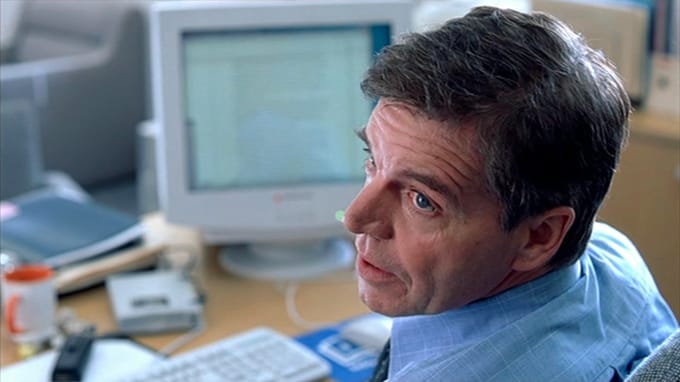
Brian Meegan gets to poke fun at office protocols, fake sincerity.
KS: I’d first worked with Brian when I was a cinematographer on a student film back in the late '80s and was really impressed by his range. He was able to do both comedy and drama effortlessly and again, I knew he would be able to bring his innate comedic timing to the writing and really elevate it.
There are examples of some really good first films, where people fail to follow-up with anything at all. Literally no more filmmaking.. They never make another movie. Maybe because they want to do something on a bigger scale. You kind of went the other way, partly by fortune of having another film in the can that you had shot prior. So do you think there is this mistake directors make where they are afraid to go lower budget, maybe feel like they deserve a big opportunity? Analysis paralysis? Because a lot of talented people seem stuck at a certain point, yet you got out of this situation quite quickly.
KS: I can't really speak for other filmmakers - I don't know. There's a sophomore problem; it can be paralysing for a lot of people. And also it is very hard to get that second chance. It's very hard to even get the first chance. I had to shove my way in. Blacktown was a self-financed film. So in a way, it was this kind of insurance policy, this contingency plan that I had inadvertently set up for myself. It just happened to be a micro-budget film, because that's all I could afford. I mean, it wasn't no budget. There was a very, very small budget. It was basically my tax money, I was able to use it as a tax write-off. But this film shot on a Sony camcorder rescued me.
It was in many ways pragmatic but also driven by passion and obsession because I love films, I love making them, my ambition has always been to have a career in film. I had to force my way into the industry repeatedly a couple of times because of this love. A lot of people find it hard to get that second film up, not only because of what their ambitions are, but it's really difficult to get that second chance. Unless your first film is a huge success commercially, although it might be successful creatively/critically, it can still be a challenge to get back in the game. It's still very hard to get all those elements together again the second time.
Illustrated Family Doctor felt akin to various American white-collar satires like Office Space, Glengarry Glenn-Ross, Fight Club, In the Company of Men, Clockwatchers. And was not the norm for an Australian film. Did this affect its reception and release, was it a case of people not quite knowing what to do with it?
KS: Definitely, I don't think Palace knew who the audience was. This is 20 years ago now. And even then, audiences were beginning to fracture. Everyone laments now about audiences not going to see Australian films. But in a way, it was just as bad back then. It was just as existentially terrifying back then, because even though streaming hadn't hit, cinema was changing, Australian audiences were changing and fracturing. And to be honest, I just don't think Palace knew how to market it. We had a lot of say in the poster and the way we thought it should be marketed. But like every Australian film that suffers at the box office, its not necessarily because the film is bad. It's just that they don't have the marketing spend that American films or Hollywood have.
Hardly anyone knew that the film existed, let alone the target audience that was right for it. A younger, more cinema-literate audience, one that was conscious of those American films you mentioned. It wasn't really for the office workers being depicted in the film, it was for the younger generation that was beginning to question and challenge all of that corporate thinking and culture. It was very much also a satire. We could have found that audience if it was marketed correctly.
But hey, filmmakers always blame the distributor and I was grateful that Palace came onboard so I don't want to come off sounding like I've got sour grapes or that I'm bitter about Palace. They were great, they did what they could and for them it's a business, I understand they had to spend the money they thought they could afford without losing their shirts, so it was like as I said, a self-fulfilling prophecy. You get condemned or tarred or locked into the marketing campaign you have. But without Palace, I wouldn't have made the film. So there you go, both things cancel each other out and I remain grateful.
Any attempts to crack the US indie market?
KS: We had a foreign distributer, but they were connected to the UK and not the US. And at the time in America, the independent film arms of the studios were closing down too. There was a real seismic shift happening in Hollywood at that point, which was the beginning of what I call the end of that sort of Hollywood. It's definitely over now, but we were sort of at the beginnings of that dismantling of the independent studio apparatus.
What are your feelings about these modern office environment aesthetics? They seem to be reaching new levels of absurdity with visual ideas (plus protocols and sign-in rituals) that quickly get replaced in a disposable cycle.
KS: I actually find them a little bit absurd. We've grown up with a lot of brutalism. Being born in the 1960s, I've grown up going to institutions that have that architecture like universities, libraries, doctor surgeries, supermarkets. It's sort of these liminal spaces that we are all very, very familiar with. And I find them so goddamn ugly.. Yet they're kind of beautiful in a weird way, you know?
These locations are great for me as a filmmaker and I tried to use such environments allegorically. They're great settings for stories. It's very interesting how a film like Backrooms (2026) is now resonating with audiences that idea of these sterile, flatly lit, spaces. There's something haunting about them. There is something very, very powerful about them alchemically, which has only happened over time, where they have become these common or haunted grounds.
TV does not feature much in the film, sort of predating younger generations rejection of traditional and mainstream media. But two striking scenes have an elderly mother fixated and enthralled by it, completely under its spell, one moment being hypnotised by a shopping channel and the other an outpouring of emotion at on-screen tragedy. What do you think this says about the different generations and how they perceive authority? Your film shows TV as God for the baby-boomers and I think this generational fragmentation has only increased since.
KS: Television for a certain generation, especially in the suburbs, for elderly people who suddenly find themselves alone through losing their partner or family moving out becomes a companion. Television before the internet really was often the only real companion around for people. It was this ubiquitous noise or hole in the world that would always be in every suburban house. It's also bizarrely not just part of Western culture, but it's very Australian too. I don't know why, but just daytime television, the Mike Walsh show, the TV constantly on, and someone watching it, half watching it or using it as a sort of an anodyne, to me just feels again really archetypal and really spoke to that elderly character's loneliness.
The film centres on neurotic over-thinking about illness as the protagonist is forced to condense a lengthy health encyclopaedia into a shorter volume. I felt this predated the “Dr Google” phenomena where people are constantly putting symptoms into search engines and becoming convinced they have major illnesses. How do you think the themes, commentaries and possibly predictions in the film have aged? And did you think of this film as being science fiction (or speculative fiction) when you made it?
KS: I definitely didn't think it was science fiction, but more in the realms of allegory. The film has dated interestingly in that respect, that we've become more and more obsessed or fixated upon the body and what can happen to it. The study and obsession of illness is an illness in itself. And the internet only amplifies that. The film was heralding a new age in a weird kind of way. The Info Digest company that Gary worked for was obviously a comment on companies like Readers Digest but in a way it does foresee significance of the internet and these sites that claim to be the ultimate source. So I think this idea of condensing and of being able to summarise things is very, very prescient.
Having not read the original book the film is based on, I felt it shared similarities with the work of JG Ballard and also the body-horror of David Cronenberg.
KS: Oh, very much so I grew up reading J.G. Ballard and watching David Cronenberg. So, in a way, maybe the film is a little bit sci-fi. Or I would say more dystopian, sort of alternate futurism, set in a parallel world in which this sort of company could exist and this way of thinking and corporatisation were clear influences and inspirations.
Female rape fantasy is used to break-up the domesticated middle-class monotony and sterility for the characters. But our protagonist has no instinct for his partner's desire. He is dumbfounded and confused. It's his down-to-earth busker friend that essentially takes over and has an innate understanding in how to make her happy. Your production company that made this is called “Pod Films”, was your protagonist living a futuristic pod existence as a sort of emasculated proto-bug-man?
KS: So what's the question? (Laughs) I think that’s more of an observation.
I suppose I do answer my own question there. Would you like to comment on that observation?
KS: I guess the protagonist was living like that. The film is a black comedy. A very dark comedy and it's what I loved about the David Snell book on which it's based. David writes with this really wry, very dark, ironic humour, which I find extremely funny. I don't know why, it's just the way I'm wired and that rape fantasy scene is pretty much verbatim from the book. It was really unusual, quite creepy and was a great way of showing the emotional differences and disconnection that Gary and his girlfriend have.
A lot of times we go through life in relationships where people are totally unsuited for each other in so many ways. Some men and women will never read each other the right way. They'll never be on the same page and Gary's friend who comes in, played by Jason Gann, just sort of completely hijacks Gary's relationship and I just find all of that inherently very funny. So hey, just put it down to my sick sense of humour.
Your protagonist is quite domesticated, whereas the busker character is a freer, more of a masculine rolling stone, right?
KS: Yeah, he is liberated, he's the guy that doesn't really give a fuck and I think Gary's girlfriend finds that very attractive. While Gary Kelp, our lead, is completely neurotic, paranoid about everything, hung up and kind of constipated. While his busker friend is liberated and free and I think the only sane character in the whole film.
One moment that dates the picture because of its edginess is when the Colin Friels character talks about how everyone that got fired (much of the staff in the office lose their positions) was because their jobs are being outsourced to immigrants working for slashed salaries. This critique by Friels would have been an old Laborite position, but political correctness now seems to back capital rather than workers. We would never see a commentary like this in a film these days. Was it in the original book?
KS: Yes it was. It was very much a reflection of the time when there was outsourcing, companies like Telstra would outsource all their call centres to India and it was the beginning of that era. So you know now it's the norm. You know back then it was sort of the beginning of the end.
As the movie becomes more dark and surreal, there seem to be more wide angle lenses used. What was your plan of attack in terms of how to shoot Doctor and why?
KS: The film did evolve, we did have a lens strategy, starting the film with longer focal length lenses and having them distort more as Gary became increasingly ill. So with those sorts of things as a filmmaker, I always look at film as a piece of music, as a symphony, it has movements, rhythms, shapes, longueurs, climaxes, quiet and demonstrative violent moments. So you apply all of that contouring to the film across the board, from the art direction to the wardrobe, lens choices, lighting and colour schemes. So it was all part of that schematic of creating this sort of entropy that Gary goes through in life, as he gets sicker and his life becomes more and more out of control, the film becomes a little bit more unhinged and out of control.
There are moments in this film that visually soar, not just in the framing, movement or lens choices, but on the granular level. Doctor was shot on 35mm film and brings all that's alchemical with that process. Despite being twenty years old, Doctor still feels modern and contemporary in its visual style, but being shot on film negative does set it apart and give it a tactile edge. Do you think the magic of film has successfully transferred to the digital era, or are we missing something now?
KS: I grew up loving film, loving cameras, trained as a cinematographer, went to film school, graduated with a cinematography degree, started my career shooting/directing music videos and TV commercials all on film. So the film camera and celluloid were my engine into the craft. I loved everything to do with lenses, cameras and film.
But once digital arrived, it was like there was no turning back. To me digital was the natural evolution of the technology. And I shot Blacktown on a digital camera, the Sony PD-150, before there was progressive scan, therefore it was interlaced video. But once the Red camera arrived and I shot Red Dog on digital, it was like a revelation. This digital medium was made for me because I could then really flex my muscles and not be held back by what I think are a lot of restraints when using film.
I think film is an archaic format and I don't have any romance or nostalgia about it. It served its purpose at that point in time, across those 70 or 80 years. But digital for me is such a great canvas and tool.
I see a correlation with the adoption of digital and a loss of cinema’s relevance to people. It has become too democratised and lost its magic. Projecting from celluloid is imperfect, but it's still something many would describe at times as being “magic”. I never hear someone in the digital era come out of the cinema and say, “That was a magic aesthetic and feeling I was in”. So, I have to push back on that.
KS: I have to disagree with you. There's an analogue element in digital, and that's the lens, it's still light going through a projector onto a wall. I think this idea of it being on a scratchy bit of plastic, celluloid that's rattling through a gate, that's weaving and scratching and getting worse every time you project it, to me that's not magic. That's just bad technology. I've had epiphanous experiences watching digital films in the cinema.
To me, I think we get caught up in the form and mechanics of something when it's really the spirit that’s important, a narrative and the way it's connecting with you emotionally. A digital film is just as valid, just as powerful, if not more so sometimes, than a film on celluloid. I really find it a bit of an absurd discussion really, because digital is just so much better!
It's also so much better for the environment. We're not producing miles and miles of this celluloid plastic that takes all these chemicals to produce and then it's this imperfect material that can rip and tear and scratch and fade. While with digital you always have a constant, consistent, sharp, rock-solid image that is going to translate and work no matter where you screen it. You are protecting the alchemy and the magic of what your story is far more in digital than you are in film.
Well, the correlation is still there for me. There is s drop off in magic for people. I think it's observable and measurable.
KS: Sorry, I have to push back as well. I don't know about that. Just look at what's happened recently in America with Backrooms (2026) and Obsession (2026). Both films shot on digital, both by really young filmmakers. And young audiences are going back to the cinema in droves. It's like just when everyone thinks cinema is dead, it comes back.
I liken it to gold or other commodities. They always have value. The value goes up and down but there's always value and I think cinema is never going to die. Yes, it's going to shrink, adapt, splinter and be constantly be challenged or reformed. But I don't think the actual act of watching a film with an audience in a dark church, which is what the cinema is – a church – is ever, ever going to go away. I think the recent period in Hollywood and America have just proven that, I'm feeling very optimistic and excited about the future of cinema.
But there's something about streaming that I think is harming cinema. I'm more angry and terrified of streaming and of what's happened with storytelling in that long serialised form. It's completely killing and stupefying audiences. Filmmakers themselves are becoming lazier and lazier with the vernacular of two-camera coverage and episodic storytelling. There's nothing better than when you're sitting down, being immersed in a story from start to finish in two hours and then you're done. That's the power of cinema and it will never, ever change, no matter if it's shot on film or digital or on hessian. It doesn't matter as long as it's a story that sustains and holds you and keeps you in that seat and takes you somewhere for that two hours. That is never ever going to die.
There's a lot I agree with you on there. I'm writing another article at the moment (TraumaZone) where I describe cinemas as “cathedrals for film”. I also see long-form as a “bastardised” version of cinema. suffering from its length and inability to tell an uncompromising story. If a show keeps on making money capitalism demands it keeps going, which diminishes the whole. Even if a series were good for a period of time, it more often than not shits the bed in the end.
In terms of contemporary film, I would be more excited and interested in the short-form stuff that young people make in meme culture. Youtube. and platforms I have never heard of. That’s where the freshest filmmaking is.
KS: It's interesting with the YouTube generation now, there's that animation, The Digital Circus on YouTube and now it's just been released theatrically in America where it's made $31 million. The guy who made Iron Lung last year, who has 2 million YouTube followers and released a self-distributed film in cinemas made $40 million.
What I think is really interesting is that no one can predict, no one knows anything in this industry. I'm continually surprised in how just when everyone thinks they know it all, where it's at, or this demarcation point of where modern culture is at etc, suddenly something happens that no one expected to happen and it resets the entire game board again. So I think what's exciting about the medium is its dynamism and mercurial nature. Cinema is always gonna respond and react to what's just happening before it. That's why I think it's always going to be sort of a very cyclical evolution.
My original point was that film had lost aesthetic magic, not that it cannot still make money or tell a story. You are focussing more on story here, not so much cinematic style.
Yes there are contemporary examples of successful films. But I would still contest their aesthetic and say seldom are people coming out of that experience and moved aesthetically quite the same way they did in the film era (not including lo-fi digital, which is rarely used on the big screen). An image being crisper has utility, but does not equate to magic. Digital grading avoids baking-in moments or being truly impressionistic.
So to clarify, are you saying modern digital cinema looks “as good if not better” than Trouble in Mind, Twin Peaks: Fire Walk with Me, The Godfather, Chungking Express, Maximum Force, Suspiria, Beau Travail or even Alien Resurrection as random examples?
KS: Your question assumes there's a fixed aesthetic ideal that cinema should be measured against. The look of cinema has never been static. It's been in constant evolution from the beginning. The grainy orthochromatic images of silent films gave way to panchromatic stock, then Technicolor, then Eastmancolor, then the faster, finer T-grain stocks of the '80s and '90s. Every generation lamented what had been lost while embracing what had become possible.
Digital is simply the next step in that evolution. It isn't replacing some sacred, immutable aesthetic—it's expanding the language of cinema, just as every technological shift has before it. To pin the identity of cinema to one particular medium almost contradicts what cinema has always been: an art form driven by experimentation, innovation and the pursuit of new ways of seeing.
As for the films you mention—Trouble in Mind, Twin Peaks: Fire Walk With Me, The Godfather, Chungking Express, Suspiria, Beau Travail—they're all visually extraordinary. But they're extraordinary because of the filmmakers behind them, not because light happened to be recorded on celluloid. Gordon Willis, Christopher Doyle, Darius Khondji, Luciano Tovoli and Agnès Godard created those images through lighting, composition, colour, movement and taste. Film stock was one ingredient, not the source of the artistry.
Ironically, if someone wanted to recreate those exact aesthetics today, they'd probably do it digitally. Modern digital cameras, combined with lenses, filtration, lighting and digital colour grading, can emulate almost any photochemical stock more convincingly than shooting contemporary film stocks themselves. In many respects it's now easier to create a convincing period "film look" digitally than it is by shooting on film.
So no, I'm not arguing that every modern digital film looks "better" than those classics. That's a subjective question, and many of those films remain unmatched. What I'm saying is that their greatness isn't evidence that celluloid was the endpoint of cinematic aesthetics. They're masterpieces from one moment in cinema's ongoing evolution. Just as those films looked radically different from The Red Shoes, Citizen Kane or The Cabinet of Dr. Caligari, today's films will eventually become another chapter in that same continuum. Cinema has always changed. Its tools change, its look changes, and its language changes. That's not the loss of cinema's identity—it's the very thing that has kept cinema alive for over a century and hopefully will continue to.
I'm not assuming there is a “fixed aesthetic ideal” of film, I just don’t think prestige pictures have the same tangible power they once did. And that the film era is objectively more beautiful and immersive in a dreamlike way compared to the current digital one.
Digital emulation of an analogue aesthetic is not the same thing, it doesn’t mean the same thing in terms of language or substance. My argument isn’t that film negative was the source of all artistry or that we should emulate the past necessarily either, but to continually look forward with the use of celluloid (and digital). That film-stock and the treatment of it was fundamentally part of the artistry. Digital painting is not oil painting and I don’t think paintings on a computer have taken us anywhere that makes it worth leaving oil paint behind (like we largely have done with film).
Its just an observation, that movies have lost an aesthetic magic and relevance, much of which is technologically driven. If this era were as aesthetically good or better, I think we could easily name ten mainstream titles from the current era that aesthetically blow us away as much as the film-films I mentioned. Yet people don’t (or cant) do this, because the argument for digital is more of a rational and economic one. Not one of real improvement.
So to come full circle, how do you feel about The Illustrated Family Doctor being shot on 35mm film and the results you got with that?
KS: At that point in time, we shot that in 2003, digital was still five years away. I shot it on 35mm. It was a dream come true. I'm very, very proud of the film and love the way it looks. For that point in time in movie-making, it was the best medium, it was fantastic and I don't look back on it in any kind of negative way. The fidelity of it, the colours, the textures of it were exactly what I intended with my DP. We worked very, very hard to establish that look and be consistent with it. So for me, it's a great time capsule of not only that point in my life, but of that point of where cinema got to.
Sterile white, occasionally punctuated by saturated primary plains of feature walls was art-direction partly inspired by medication boxes, pharmaceutical labels and branding. If you walk through an area where junkies live, the tear-away backing to a syringe packet, white, green and orange spring to mind. And inside the whites are often steely-cold blue tones.
How much of this look was achieved through colour timing in the lab and digital grading? Did the 35mm cinema release go through a digital intermediate, or was it instead done the old fashioned way or a bit in-between?
KS: We did a digital intermediate for IFD. It was at that point where digital grading had sort of established itself. But we didn't really push it too far. All of that art direction, all of those colour schemes, those colour ways were very much designed in camera, to be in camera.
When I got a chance to make IFD, it was really a chance to play on that canvas, make everything inherently in camera and just capture it on film without having to sort of be too clever or too tricksy with the grading. So it was a combination of lighting and art direction, which is what all great filmmaking teams do. They collaborate. The DOP, the director and the product designer all work in tandem, all work in unison to create a look using their disciplines together in combination, in concert, to create that look. And that was very much the case with IFD.
For a while, it was quite in vogue to wear cinephilic passions on one's sleeve when making work. This French New Wave ethos seemed to have been revived from the post-Tarantino era right through to the last gasps of DVD before streaming essentially killed film culture.
Clayton Jacobson comedically riffs about you in the DVD extra feature documentary that your DVD collection was so big that you needed to make a new film to keep it growing.
There are several things that jump out in your film, like your traffic jam tunnel sequence nod to Fellini's 8½ and the Snapper Thompson character appearing in the toilet like the bartender from The Shining. What other influences and references were there? What was most swimming around your mind when making this film twenty years ago?
KS: The big spectre that was swimming around and hovering over me was Stanley Kubrick. You mentioned The Shining there. 2001: A Space Odyssey for me is just a towering masterpiece of a film and the use of colour and architecture and the sort of sterility and the graphic quality of that film was something that seared itself into my mind and into my brain from a very young age.
There was a film also by Lindsay Anderson called O Lucky Man! (1973) that I loved. Again, a kind of allegorical film about class and British society that I just really got into. It was a sequel to his first film – If.. (1968). So that was very much an influence and something of another spectre hovering around me.
I was also a big fan of Catch-22 (1970), both the book and the film. That kind of absurd dark humour was something I grew up loving as a young boy, I loved Catch-22, even though I couldn't understand it, but I would come back to it more and more, the film became more and more meaningful to me as I got older.
IFD was a real amalgam of all those really strange films that I loved as a kid. And that sort of just pointed the absurdity and the strange horror of the real world, the adult world, the hypocrisies and just bizarre, strange characters that populate the planet like Snapper Thompson. These sort of criminals, the way the grown-up world to me always just felt strange and terrifying.
I was in my late 30s when I made IFD, the film was an amazing opportunity, so I swung for the fences. I made the film I wanted to make, didn't give a fuck about who was going to see it or whether it was commercial or not. My desire was to make the kind of film that inspired me when I was young. Those films that I mentioned were some of my influences but I hoped to put forward something genuinely new beyond those influences. So the film was a real wonderful gift for me, an opportunity where I could just do whatever I wanted. And I kind of paid a price for it. But looking back now, 20 or so years later, I'm immensely proud of it.
Do you still have a big DVD collection?
KS: I do. Its all in storage. I used to have a huge Laser Disc collection too. And then I moved onto DVDs. The DVD/Bluray collection is in storage because my home cinema is broken down right now and I've got to get it fixed. But yeah, I've kept all my physical media, I've kept all my books. A lot of them are in storage. But the beauty is that physical media is getting resurgence now as is cinema. So its swings and roundabouts. This is what I love about filmmaking, that if you hang around long enough, everything comes back full-circle again.
After Doctor's lack of commercial success, you dug deep and completed two lower-budget come-back films inspired by the Dogme95 movement. Blacktown (shot prior to but edited after IFD) and Boxing Day. The latter inspiring a funding program within the SAFC called Filmlab to generate innovative low-budget work (which included The Infinite Man).
If Doctor had instead been financially successful, assuming your plan was to continue making conventionally budgeted films, what concepts were you ready to hit the ground running with? Was the style of Doctor a mode you wanted to continue working in? It's almost nothing like Blacktown or Boxing Day stylistically or thematically.
KS: The Illustrated Family Doctor was a bit of a purging of everything that I loved about cinema up until that point in time. It was very much a singular piece of work. Either way I wanted to obviously work on bigger canvases and reach different kinds of audiences.
Prior to even developing The Illustrated Family Doctor and Blacktown I had been working for years on a period film set in Victorian England about the photographer Julia Margaret Cameron. That film almost got up actually. I secured Brenda Blethon and John Hurt to play the leads. John Hurt was going to play Alfred Tennyson and Brenda Blethon was going to play Julia Margaret Cameron. I went to Cannes and we had a production company attached in a deal memo. But the whole thing went up in flames when the production company attached ended up being fraudsters, so that film collapsed and that's what actually motivated me to start developing The Illustrated Family Doctor. So, if IFD would have been a success, I could have resurrected that project, made it in England and tried to have more of an international career.
But look, that's sort of a strange question to answer because it didn't happen and what I find really interesting about this business, career and filmmaking generally is that it's unpredictable, the unpredictability of it is what I love, how life is unpredictable and not constant. The past is the past and the future is unknown. You just have to take what comes and adapt to it and that's what I love about making films is that you never know where a story can go, whether a film will happen or not, or whether the film you think is impossible to get financed, does get financed, and the film you think is a certain to get financed never does. That's been my case a number of times. So I've learned to not expect anything, but to expect everything.
You have almost just answered the next question, but perhaps it's something you can expand on more. As someone who has since experienced the extreme highs of modern-day box office hit Red Dog, how do you cope with the bipolar nature of success and the film industry itself? What philosophy is guiding you today? And what is most left to do now artistically?
KS: That's a good question. I've been asked that a number of times, and I'll never forget reading an interview with David Lynch where he said, "Successes are just as traumatic as failures." In that, with success, you have to follow it up with another success, which can be impossible sometimes and kind of a curse. Whilst with failures, the great thing about them is that you learn and there's only one way to go after a failure which is up. So I've had both, I've had a lot of success and I've had a fair amount of failure. To me they kind of balance each other out because even with a failure you learn a lot.
Some things are successful failures. IFD was a successful failure for me because I learned a lot. It's a film I'm still very proud of and it led to a whole different series of opportunities I never predicted. But now as I get older and I've been doing this for 20 years, if I'm still working, that to me is success because you can't force anything, you can't predict anything, you can't will success onto anything. All you can do is your work and if it succeeds, if it connects - then great. If it doesn't, get on to the next one. And as long as I can keep making the next film and working on the next project, to me that is the ultimate definition of success.
The oral history of IFD from those that have actually seen it, who either were around at the time or watched it recently, would say it exists as a cult film. Likely a cult following that can grow. I hope there is a Bluray release (no director's commentary exists on the DVD) and that it gets shown in the cinema again. Do 35mm prints still exist?
KS: I hope so too. (laughs) Yeah, there is one 35mm print, there's a pristine one that I just donated to the National Film and Sound Archive about two years ago. I know that one exists. I'm sure there's other prints around too, but there's definitely one in the archive. No, it's definitely not lost.
How do you feel about The Illustrated Family Doctor getting a Bluray release or HD streaming? I searched for both and couldn’t find.
KS: I know the National Film and Sound Archive have all the negatives and a 35mm print. So if anyone reads this and they want to finance a restoration, look me up!
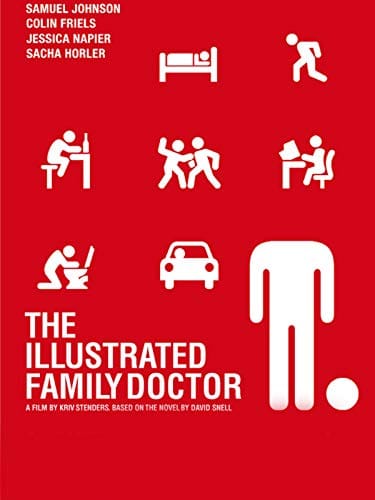
This interview was originally published on Pure Shit. Visit the link below to find more great in depth pieces like this one: