
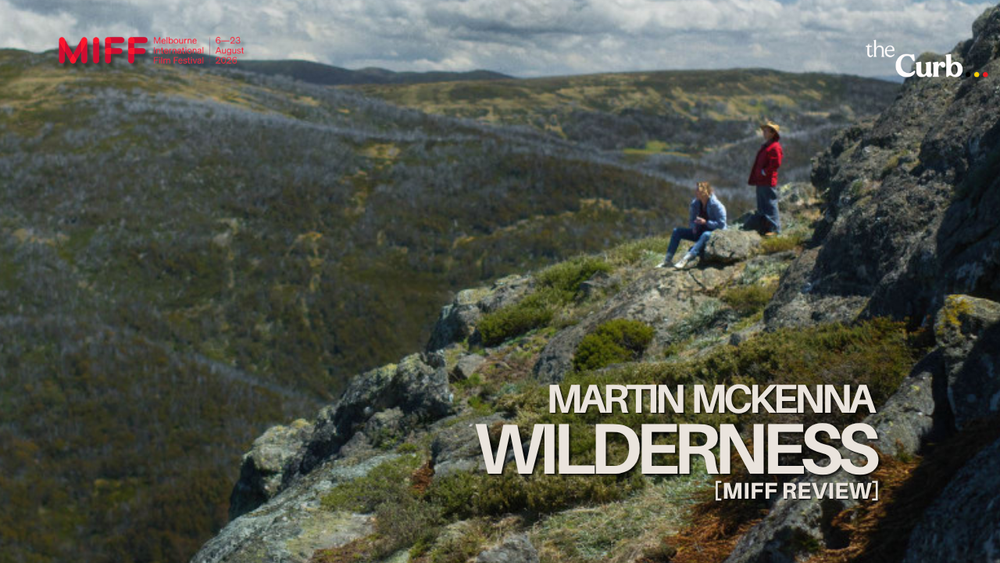
Martin McKenna’s long-gestating film Wilderness very occasionally allows glimpses of a better film he chose not to make. It gives me absolutely no pleasure to write a review of a small budget Australian film and deem it incompetent on almost every level. Mirrah Foulkes and Yael Stone are both fine actors trying to breathe life (and a narrative that makes sense) into McKenna’s dire script about two erstwhile friends reuniting via a journey to Victoria’s alpine region. No matter what Foulkes and Stone do to add gravitas to the film, and no matter how finely shot the undeniably beautiful area is, Wilderness fumbles around obscuring a vital message for us to be aware of the extinction of biodiversity in Australia and instead favours a middle-class domestic drama that is routine and pedestrian until it is ridiculous.
Mirrah Foulkes plays Allie, a medical doctor and mother to a teenage daughter who is soon heading to university and a life of her own. Allie’s life has reached a crisis point where she is trying to stave off her unstable domestic situation with bottles of wine and couch sleeping. Allie decides that because she can’t sleep in her own home she will go to the office and sleep on one of the cots set up for patients setting off alarms when she does so. Her co-worker tells her that she has to get some help before she loses her job.
Returning home she packs a bag and decides she’s going to take some time out at a lake her father used to take her as a child. She also packs her dog. On seeing her husband’s car approaching the house she deliberately backs into it. Laughing about the damage she caused she isn’t paying attention to the road where she has quite a serious collision with another car.
Allie still wants to be alone, but by chance her ex-best friend Kaz (Yael Stone) sees the damage done to the car and offers her a lift to the lake. Allie demurs at first thinking Kaz is trying to inveigle her way back into her life but eventually accepts the offer the ride in Kaz’s campervan – thus setting both of the women up for a chance to repair their damaged relationship.
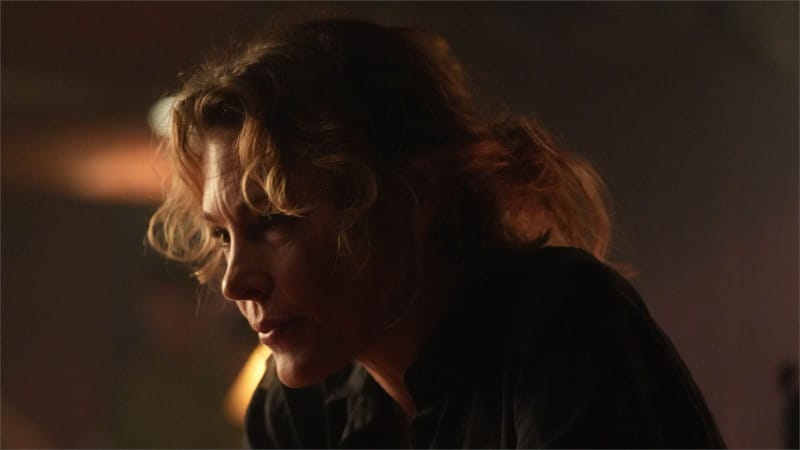
The problem emerges that Allie is a first-grade pain-in-the-arse and despite the favour Kaz is doing for her takes over the small space with her needs. She needs a beer. She needs food. She doesn’t want to listen to the music Kaz is playing. Kaz, with all the patience in the world puts up with Allie’s behaviour only occasionally making jokes about it. If Allie’s display is any indication of the friendship they shared it’s no great shock that it ended; except as we latter find out that it was Allie who cut Kaz out of her life.
The lake park no longer exists as it is being turned into a housing estate and Allie decides she will go with Kaz who has work further along documenting habitat acoustics as a way to prove the shrinking population of fauna in delicate eco-systems. They stop off at a small rural pub for dinner and Allie is aggressive with almost everyone she encounters there. The aggression is to pre-empt any attempt by a guy who might want to pick her up. She meets, and insults, local tradie Will (George Mason) who later after many, many drinks she will find attractive and go home with, not bothering to tell Kaz where she is.
The next morning, she steals his truck (totally normal behaviour) and gleefully drives to where Kaz will be hiking from. Allie shows off a rifle that was in Will’s car and jokes that she could use it to keep creeps away. Kaz throws it into the river admonishing her for brandishing an instrument of death. Later, when a group of deer hunters set up camp close to where Allie and Kaz were setting up their tent, Allie gets spooked and decides she wants to hike with Kaz. Kaz assures her that the hunters are okay and only interested in the deer (this kind of amnesia about a character’s stance only a scene or two ago happens far too often). Despite the hike being difficult and many hours long, Allie (who doesn’t even have a bottle of water with her) decides she’s coming too.
At this juncture in the film McKenna is trying to communicate how precious the natural environment is. How it has been revered by its traditional owners for many thousands of years and how in a short amount of time is becoming endangered. The expectation for the film is for it to switch to Kaz’s point of view as a conservationist and for Allie to look at the wonder of the region (and it really is beautiful) and decide that she could put her personal problems into perspective in the face of encroaching devastation.
The expectation is far from what McKenna delivers. In an ancient cave where bogon moths have gathered for time immemorial Kaz records the sounds. She offers Allie a chance to hear what she is hearing, but Allie refuses and instead launches into a self-centred rant about her marriage issues. This later turns into Allie telling Kaz that no-one cares about her stupid job of recording things no-one listens to. There’s also an argument where Allie tells Kaz she has no idea what life is about because she isn’t a mother. “Until you are a mother, you are a child!” is a line written by McKenna that exists on film now for future generations to squirm at.
Wilderness might have some heft if not for the protagonist being so self-indulgent in projecting her problems on to everyone she encounters. It’s not a sin to have an unlikeable main character, and it’s not a sin for that character to be a woman, but having to sit with her selfishness for the majority of the film is a bewildering choice for something that claims it’s about connection. McKenna also included a scene where Kaz explains that an office building in London was through a number of acoustic factors making the employees sick – some even getting cancer because the tones combined to play “The Devil’s Chord.” An acoustic scientist rabbiting on about an unpleasant tri-tone as a real cause for human illness is nonsensical.
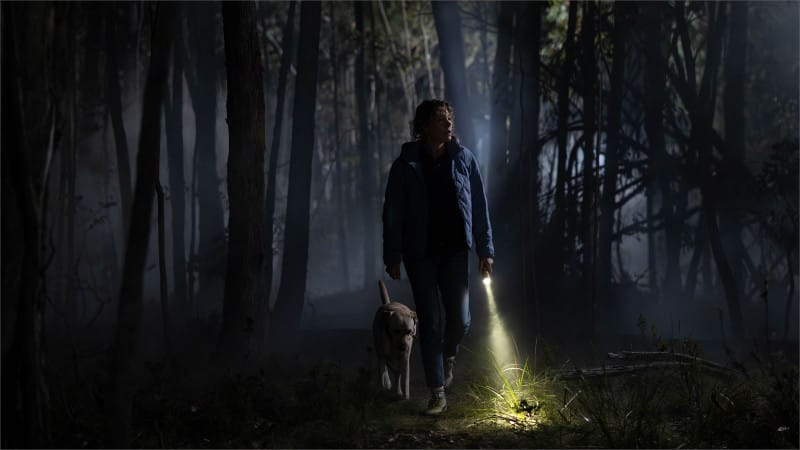
Finally, there is an obviously telegraphed twist that turns the whole film into a puff of irrelevancy. It’s deeply disappointing to see two of Australia’s feted actors (and in Foulkes’ case writer and director) struggling to give meaning to a script that trips them up constantly. Wilderness is a slog and one that offers no reward at the end, simply a confused reaction as to why it was greenlit in the first place.
Director and Writer: Martin McKenna
Cast: Mirrah Foulkes, Yael Stone, George Mason, Grace Jackson, Jack Sandle, Lotte Gallagher
Wilderness screened at MIFF 2026