
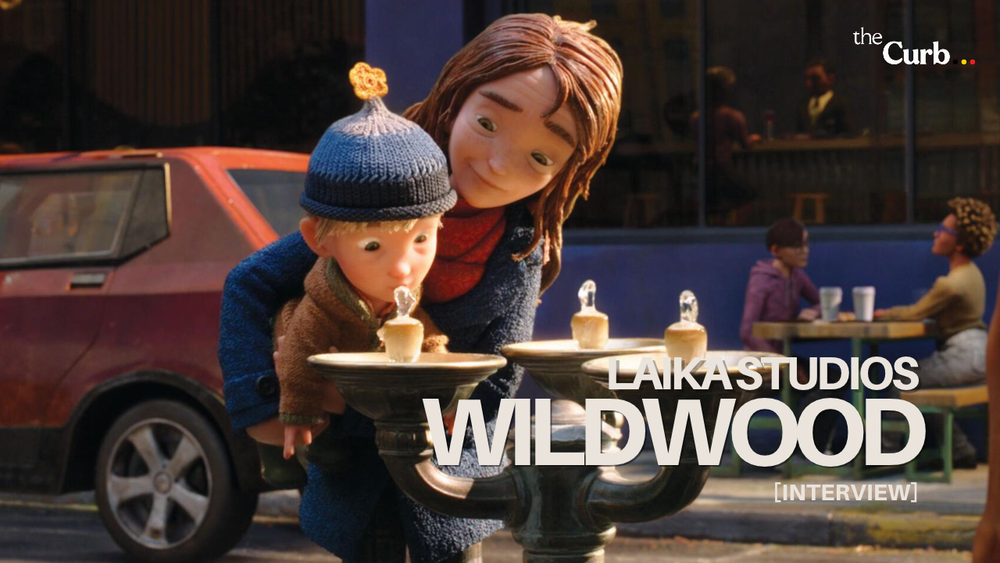
By almost any measure, Laika’s Wildwood is one of the most spectacular films of its type. It took six years, 142,000 printed faces and 715 miles of brass wire to make. Its creators tell Andy Hazel why it could only have come from Portland.
There is a kind of city that keeps growing until something stops it: money, water, the sea. And there is Portland, which decided, in 1973, to stop itself. That year Oregon began requiring its cities to draw urban growth boundaries, lines the malls and housing tracts are not allowed to cross. As a result, Portland has edges. It also has a motto, “Keep Portland Weird,” which began in 2003 as a record-store sticker and meant, more or less, ‘shop independent’. It has bronze drinking fountains, paid for in 1912 by the lumber baron Simon Benson, who reportedly hoped his city’s workers would drink water at lunch instead of beer. And inside its edges, it has a forest of more than 5,000 acres, through which runs a path called the Wildwood Trail.
I arrive in August, carrying the version of the United States I have assembled from the news: journalists’ social media combed for “un-American” sentiment, people taken off the street by ICE, the sense of a country watching itself and not liking what it sees. My Uber driver has his own version. “I moved here from Ethiopia two years ago and I’ve never even seen ICE,” he says. “Portland is great, you know? Very welcoming, very beautiful. The forest in the city, Forest Park? I love it.”
I think about our conversation for the rest of the week. The film I have come to see is about a forest in a city, and what happens to outsiders who walk into it.
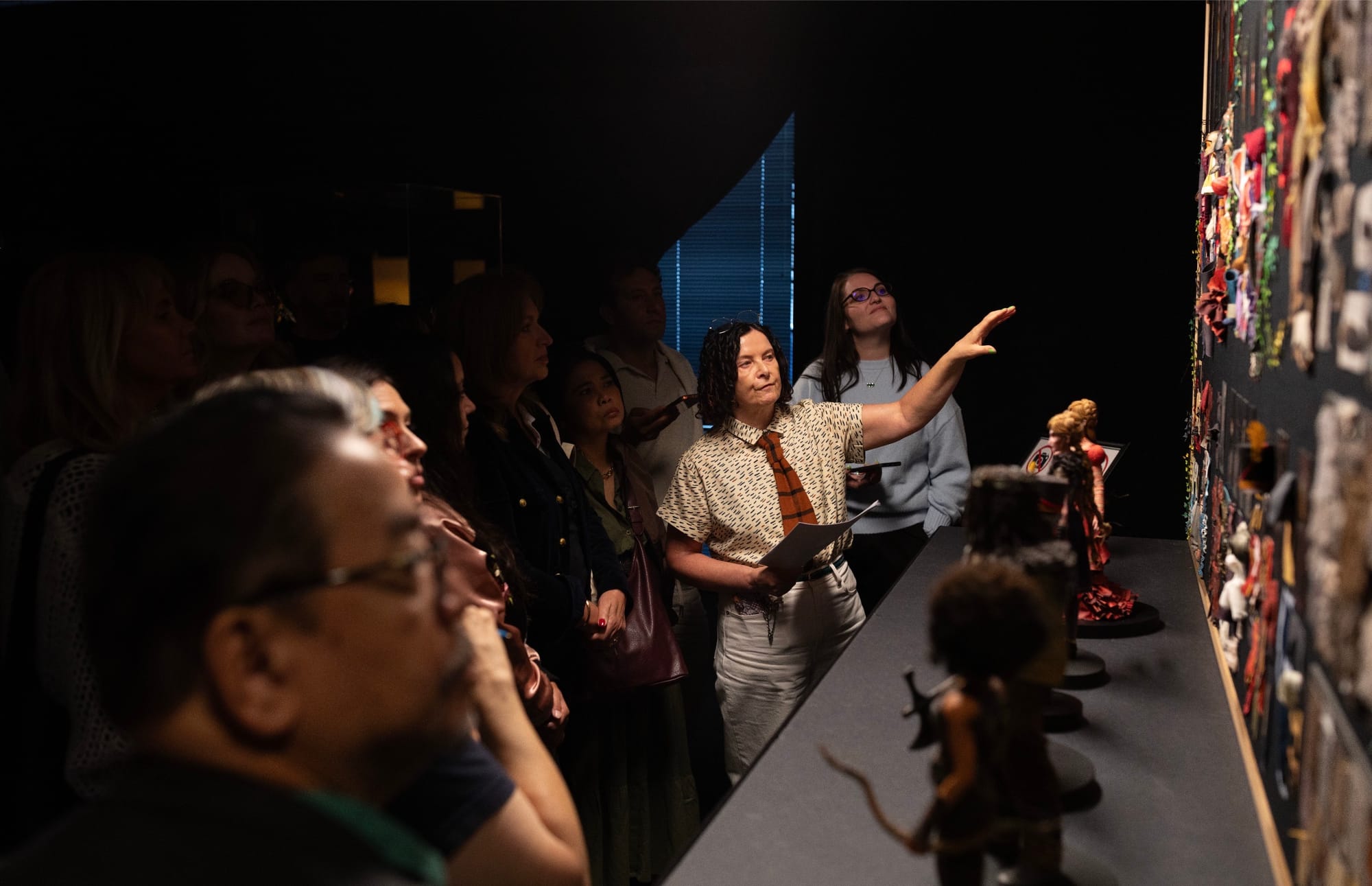
Laika, the stop-motion studio that has made its home on the edge of Portland, has invited around 50 journalists to watch 20 unfinished minutes of Wildwood and meet the people who made it. Early in the film, as twelve-year-old Prue McKeel cycles furiously through town, a sign flashes past beside a stall of local pottery: “Enjoy handmade art before it’s gone forever.” Near the end of the credits come three more words: “Handmade in Oregon.” Laika has never needed to say that before. That it says it now, with generative AI moving through the industry like weather, tells you something about the year.
Wildwood begins in a woodland castle during a thunderstorm. A young boy steps onto a terrace and falls. His mother cannot reach him in time. When the crowd gathers, his shattered chest shows metal cogs: he was an android. Then Travis Knight’s adaptation of Colin Meloy and Carson Ellis’s novel cuts to Prue, who is outgrowing her parents’ fairytales. She takes her baby brother Mac out against their wishes, and a murder of crows carries him across the St. Johns Bridge into the Impassable Wilderness, a fantasy version of Forest Park. With her nerdy classmate Curtis in tow, she follows him into a forest of bandits, talking birds, coyote soldiers and Alexandra, voiced by Carey Mulligan, its merciless ruler.
It is a film about a city that has decided where it ends, and a girl who crosses the line between urban and wild, reality and fantasy. Prue’s parents have one rule: Mac must never leave the house. The forest beyond the bridge is forbidden, and nearly everyone Prue meets there is defined by something they have lost. The prologue names the fear beneath all of it, the one every parent carries and tries not to look at: that the world will take your child, and you will not be able to stop it.
Her grief for her lost son has hardened into a war on the whole forest. Deb Cook, the studio’s costume designer, dressed her descent in red, in a dress that holds “her kind of emotional disintegration and breakdown.” Curtis, who she describes as “a bit lost,” is conscripted into Alexandra’s coyote army before he falls in with the bandits. “He goes through some heavy stuff,” says Brad Schiff, head of animation. And Prue has to accept that the stories she thought she’d outgrown are true, and that growing up does not have to mean giving up on wonder.
The book was a Portland story before Laika touched it. Knight has called Meloy “a fellow Portlander,” and told Animation World Network that the novel drew him in because, for all its echoes of classic fantasy, it was “very specific because it was set in Portland.” The studio, then best known for Coraline, knew it would make the film one day, but first it made ParaNorman, The Boxtrolls, Kubo and the Two Strings and Missing Link, each one more ambitious than the last.
By the time work on Wildwood began, the people making it had become world experts in some very narrow fields. They had also spent years living in the city they were about to rebuild. “There is such a unique quality of culture here,” says Nelson Lowry, the production designer. “It’s, you know, this whole ‘keep it weird’ kind of thing. It really is a place of creativity.” Schiff lists the film’s locations as if describing his weekend. “We’ve been to all these places, like the Saturday Market where Prue’s riding bike through town. The bookshop, Voodoo Doughnut. We go and have brunch in St. Johns and the farmers market there and go on hikes in the forest. It’s all very personal.”
The design work began as COVID arrived. While the city emptied, Lowry walked it, taking thousands of photographs. He lives beside Forest Park and went into it to study the trees. Cook walked the forest too, “familiarising myself with the territory of the story.” Some of the crew had come from Los Angeles and had scarcely spent any time in forests, so Lowry took them on field trips and gave them lists of places to go alone.
What they brought back is reproduced with a fidelity that borders on devotion. Powell’s City of Books, which fills a city block in real life, was rebuilt at half puppet scale, Drag Queen Story Hour sign and all. The man who interrupts a scene by riding a unicycle while playing bagpipes and wearing a Darth Vader mask is a real local fixture. Benson’s fountains are there. So is Voodoo Doughnut. When Mac tears into one of its doughnuts, the frosting in his mouth has to match the frosting on the art department’s miniature, a detail overseen by Brian McLean, Laika’s director of rapid prototyping. “All these little boring things that we have to keep track of,” he says, with a smile.
Cook dressed the McKeels as locals. “They are very much a Portland family,” she says. Prue’s mother wears a house coat made of patchwork quilts. Her father, voiced by Jake Johnson, is “a prolific knitter” who makes the beanies, the cardigans, Prue’s house socks, “a warmth and texture around the family that runs through them, that pulls them together.” When the crows take Mac, the knitwear “just drops away,” Cook says, taking with it the family structure and comfort it represents.
The film’s geographical heart is St. Johns, the old neighbourhood at the city’s northern tip, beneath the bridge Mac is carried across. Lowry built its Saturday market from life. “I live close by so I do my shopping,” he says, and points at a storefront. “That’s my bank, we just changed the name.” There is a shop called Caleb’s Cameras, named after the cinematographer Caleb Deschanel, and a brief cameo by a puppet of Carson Ellis, standing near her own illustrations. And there is the St. Johns Twin Cinema. “It’s charming. It’s such a great theatre, because they actually do first run movies,” Lowry enthuses.
Beyond the bridge, the Impassable Wilderness grows from the region’s own plants, about twenty-five species of tree, all native. “Because why not, right?” Lowry says. “We all had to learn the names of them and where they grow and how they grow.” I like this more than almost anything else I hear that week, a room of artists learning the names of trees so that a forest of chicken wire, tissue paper and ground walnut shell be as authentically like the real one as they can make it.
At a roundtable interview, I ask whether Prue’s father’s mention of his openness to Prue bringing home a partner one day – “he, she or they” – and Powell’s inclusive events program risks making Portland too weird for some audiences. Cook says no straight away. “Absolutely not,” Lowry adds definitively. “Travis makes that final call, and he couldn’t care less. It came up and he was like, ‘I don’t care’.”
Cook, a native of Bristol, England, says that she feels the weight of the responsibility to do the right thing by her adopted city. “It’s like a relationship with the town and you kind of want to do the right thing,” she says. “When they see the authenticity in it and the affection, I think the way they talk about it will really influence how the broader audience sees it around the world.”
That care is the real answer to the sign by the pottery stall. In a year when a moving image can be conjured from a sentence, Laika has spent six years doing the opposite, and doing it in a way that is itself a portrait of the city. Lowry estimates Wildwood is “99.9 per cent handmade,” because “stuff that we buy stands out” on camera. The sets, puppets, costumes and props are built in the studio’s own workshops by hundreds of artists, many of them local. Some of the model makers came up from Los Angeles, where that work has dried up, veterans of films like Titanic. When they asked how much Laika builds in-house, the answer was “All of it.” Lowry sees the connection plainly. “That’s kind of Portland in itself, right?” he told the Portland Mercury. “The maker mentality.” A city that prints “shop independent” on its bumpers has, in Laika, a studio that refuses to outsource its own imagination.
The first Portlanders to see any of Wildwood didn’t know it was coming. Lowry was at the St. Johns Twin for a horror film when the trailer began. It opened on the St. Johns Bridge, and the cinema they were sitting in was in it too. “The room went dead quiet,” he recalls. When it ended, the audience applauded. “I’ve never heard of anybody applauding a trailer. It gave me chills,” he shakes his head in wonder, before keeping his response in proportion. “I also had to remind myself that 0.001 per cent of the audience is from Portland for this film. It’s going to be seen all over the world. But it’s a love letter to Portland, and we need some good representation.”
He hopes Laika will screen the finished film there, though it isn’t his call. I hope so too. I picture the audience in their seats, in a real cinema, watching its miniature copy, made a few miles away by their neighbours, one frame at a time.