
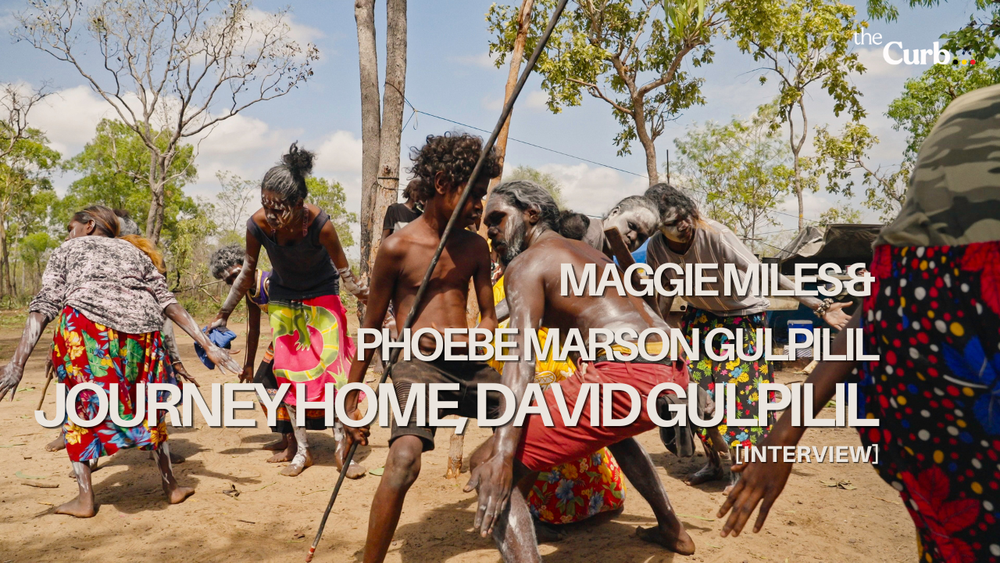
Journey Home, David Gulpilil (Maggie Miles and Trisha Morton-Thomas, 2025) celebrates his life and takes us on a journey that is equally spiritual and existential as it is physical and geographical. We witness the remarkable undertaking that was the repatriation of this legendary First Nations Yolngu actor, who passed away 2021; all the way from Murray Bridge, South Australia, to his burial ground in Arnhem land (the Arafura Swamp) – in line with his final wishes.[1] The captivating multi award-winning documentary[2] was rescreened during 2026 NAIDOC week; highlighting its enduring relevance and its lingering message of interconnectivity, authenticity, and real depth (far removed from AI hype and mindless nonsense)[3]. Significantly, SBS On Demand – celebrating the individual who made a difference while the platform is holistic in perspective – currently features a selection of Gulpilil’s key films and ‘witness statements’.[4]
Below the answers to my last questions to Maggie Miles, whose Savage Films “has … deep experience with remote shoots”[5], and policymaker and daughter Phoebe Marson Gulpilil, on 20 August. Our extensive 1.5 hr interview[6] encompassed their thoughts on Gulpilil – the father and friend, the actor, artist and activist, the dancer and the man, and the larger-than-life human being who initiated hard conversations where others failed to do so and who was always prepared to address on-screen injustices reflective of off-screen realities. Lucid, convinced and driven until the end, David Gulpilil was our voice of reason. A visionary peacemaker with a focus on what matters then and now, he spoke of conflicts and reconciliation, looked to the future as informed by the past, and was ethically driven and always acutely aware of the bigger picture.
Do you think the documentary will bring us back to some kind of (universal) essence?
Maggie Miles: "Well, we did attempt to speak to the universal story, as well as David’s. Through David’s specific story, we touch on the universal, which is part of Yolngu culture."
"And the feedback that we’ve had is that people just respond to that very strongly. And, of course, we do that because that’s part of him. Everything comes back to the character of the man. And so, we hope that it gets people thinking about their own lives, their own place, their own connectivity, their own families, their own cycle of life, and what they hope to achieve during [this cycle of existence] and what they hope the sentiment might be at the end."
Your father left an extraordinary cultural and artistic legacy. What do you hope future generations will understand about him and his work?
Phoebe Marson Gulpilil: "That was something that I thought about for a really long time. Before and after. And I didn’t really know what that looked like for me, for the family."
"And I guess that his career, and just the amount of change that he was able to create – we always say that you’ve got to carry that on. It doesn’t stop with him. /…/ So much that he did open doors for us. And you’ve got to continue that momentum and change. So, I use policy to create change. It’s not as cool as movies but I really enjoy working in the First Nations space, and problem solving, and finding better ways forward for all of us. And the way that I continued his legacy was setting up the business, the consultancy[7], continuing that momentum and change through policy but also creating it as a space to support my family and to support community as well. I just wanted it to be a space where I could support and lift people up and use it as a platform and maybe go in different directions. – So that’s my legacy, I guess; [to] help people remember him."
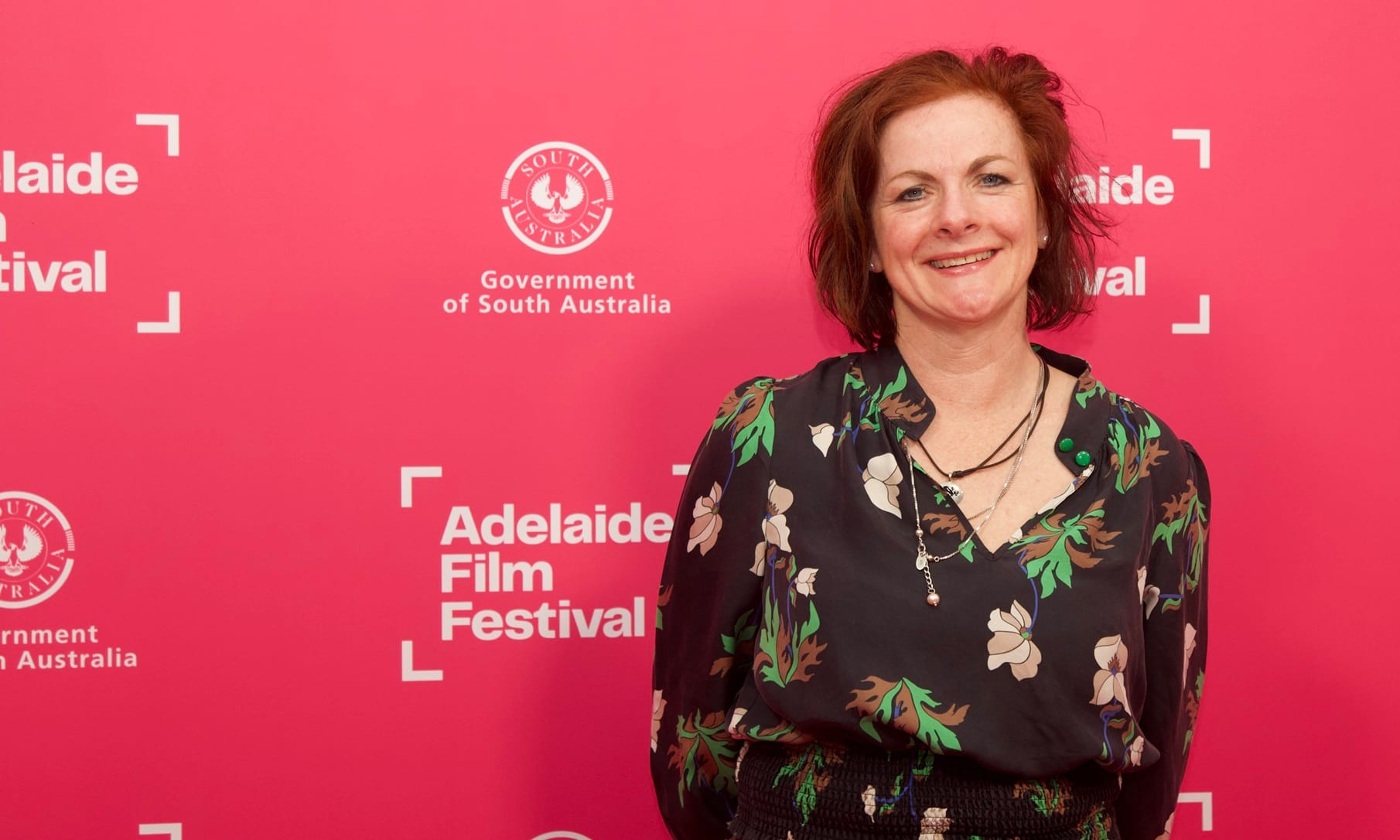
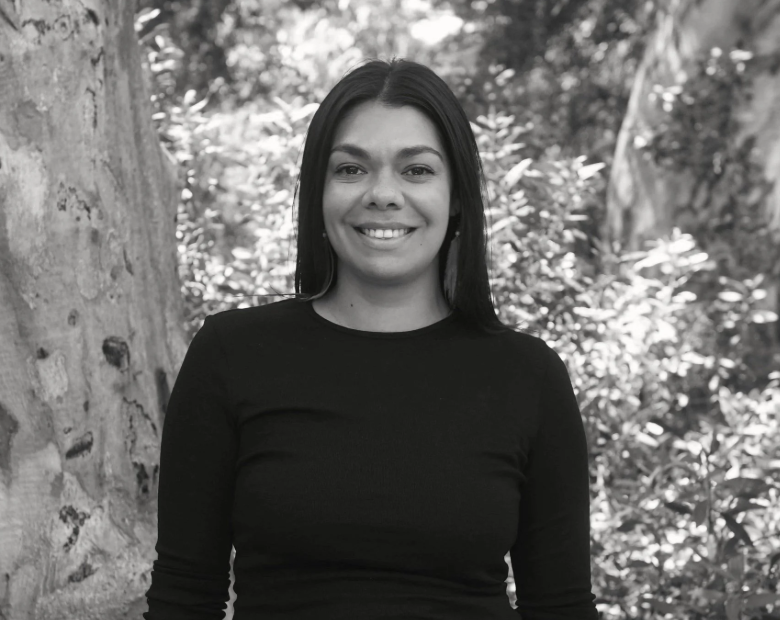
L: Maggie Miles; R: Phoebe Marson Gulpilil
And lastly, we acknowledge the 2026 exhibition One Red Blood: Gulpilil in the Landscape[8]
Phoebe Marson Gulpilil: "The exhibition was quite an interesting experience because it was the first time that I really had to consider how I wanted to approach it, how I wanted things to be portrayed, and what the story is and protecting his name and legacy as well.” She recognizes that “[I]t’s a big responsibility”.
And she continues: “It took me a while to get the hang of it at the start, because I don’t actually talk or promote his name. I mean, he can do that all on his own. /…/ But I make sure that things are done with care and consideration, and thinking about the family first, and different words, and how it makes you feel, and what sort of experience you want to [put out there]. The exhibition, to me, was sharing the other sides of Dad, not just who he was on the screen.”
David Gulpilil was incredibly versatile and is celebrated for his ability to look further and beyond and for reigning superior until the very end. We thank his astonishing daughter and acutely sensitive Maggie Miles – both beautiful artists in their own right.
Author Profile: Dr Jytte Holmqvist, PhD (University of Melbourne)
Research officer, tutor & lecturer, University of Technology Sydney (UTS)
Scholar in Screen and Media Culture and Spanish. Affiliated Researcher in Spanish at Lund University (SOL)Recipient: International Award for Excellence -The International Journal of Technology, Knowledge, and Society (2022). Website: https://brytpunktforlag.se/
[1] Coincidentally, "the remains of nine Yolŋu ancestors have [only recently] been sung back onto their country in the remote Northern Territory. Elders had been pushing for the remains to be returned for years. For them the ceremony is a milestone”: https://restitutionmatters.org/news-item/yolnu-remains-buried-in-arnhem-land/
One wonders how highly ranked Melbourne University can allow themselves to be so far removed from humanistic understanding; particularly given that David Gulpilil set a precedence. Institutional gains sadly overshadow real empathy and socio-political sensitivity.
[2] https://www.screenaustralia.gov.au/screen-guide/journey-home-david-gulpilil-40515/
[3] “Yolngu have strong connections to the spiritual world through beliefs given by our ancestors” (Journey Home, David Gulpilil: 00:13:52-00:13:58).
[4] https://www.sbs.com.au/ondemand/collection/gulpilil-nitv
[5] “Savage Films is one of Australia’s foremost independent production companies working in collaborative relationship with other parties. The company has extensive financial, production and editorial expertise, and deep experience with remote shoots. Savage has an adventurous spirit towards creative projects, treating each as a unique proposition and upscaling the team as needed. The company has produced narrative and documentary features and is developing series. Savage produced the narrative feature High Ground with Maxo Studios and Bunya Production.” https://www.savagefilms.com.au/about See also: https://www.savagefilms.com.au/copy-of-trailblazers
https://www.abc.net.au/news/2024-05-01/david-gulpilil-funeral-documentary-arnhem-land/103780084
[6] See my longer interview recently published in the Australian Arts Review: https://artsreview.com.au/journey-home-david-gulpilil-the-kingfisher-returns-to-country/