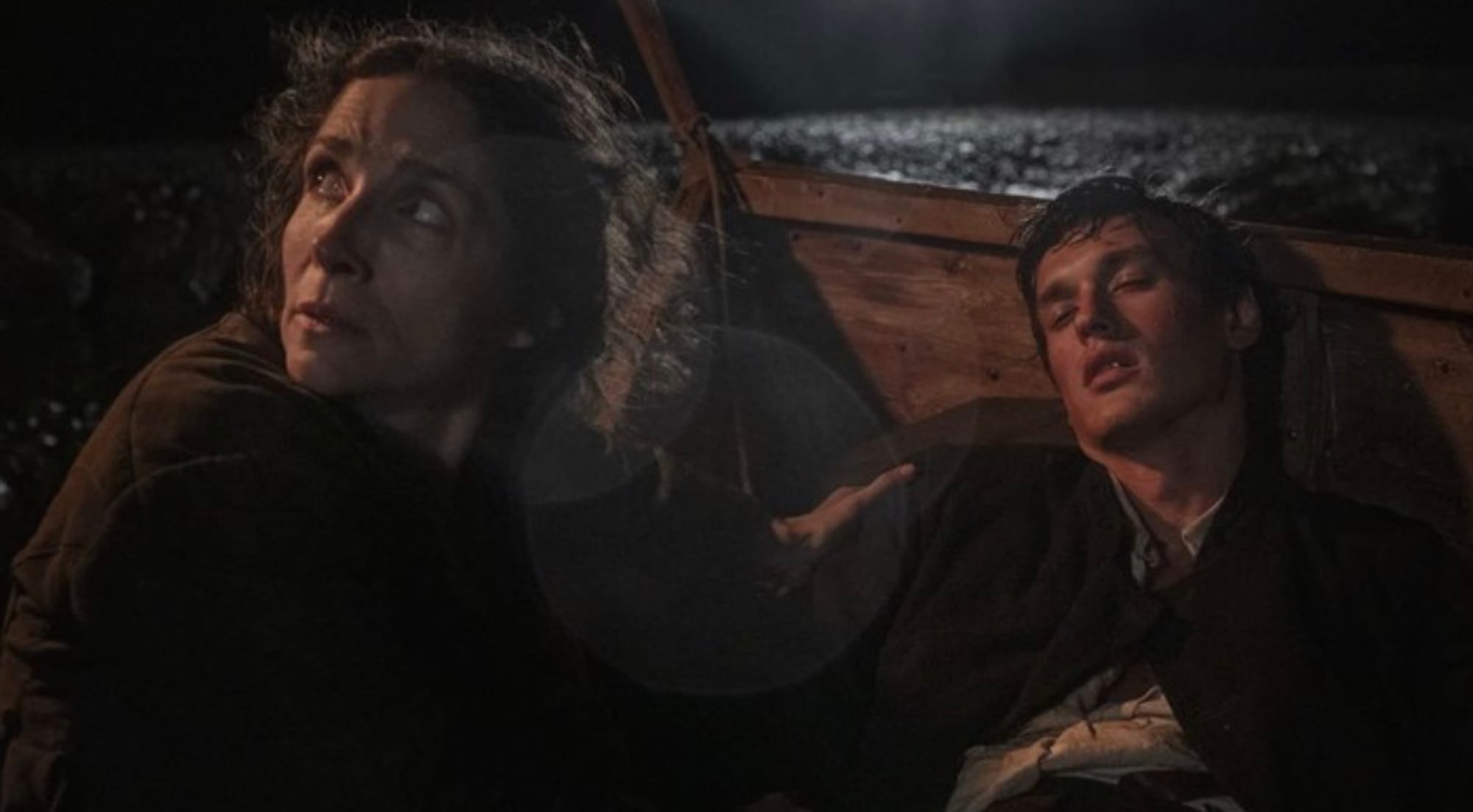
Kaspar “Kalle” Skovsbøl’s No Rest for the Wicked is an echo from the end of the world crying out the depths of devotion. Baldur (Egor Venned) lives with his widowed mother, Ásla (Sofia Nolsøe Mikkelsen) in a tiny community nestled on the Faroe Islands in 1862. Their lives are filled with work for survival. Baldur is a talented fisherman and Ásla keeps the small hearth fire burning in their grass thatched cottage. They have each other, and that is enough, until in a deep fog Baldur hears a cry for help on the water. Rowing toward the sound he runs his boat into rocks and begins to drown until he is pulled from the depths by the Danish whaler Helge (Pilou Asbæk). Whatever Baldur and Ásla imagined their futures to be, the arrival of the charming and good-natured Helge changes them.
Ásla quietly fancies that she has a prospective husband in Helge and encourages his visits and spending time with Baldur. Baldur finds himself slowly feeling drawn toward the handsome Dane who tells him about the world beyond the islands. Places that have trees, mountains, and horizons not governed by only a small community, a Priest and the work of fish and wool. As the young man becomes closer to Helge he realises that what he feels is love, and it is a love that is reciprocated. Once the tentative glances and touches give way to passion, the two lovers find every opportunity to carnally discover the pleasure of their beautiful bodies.
Helge’s integration into Baldur’s small community encourages other men to sign up for a whaling ship. Helge is widely liked and some of the men see the appeal of going beyond Faroe for some kind of adventure. Not wanting to be parted from Helge, Baldur makes the decision to sign on for the crew. Ásla, equally not wanting to be parted from Baldur, wheedles her son using guilt and abandonment as her argument. Eventually Baldur submits to Ásla’s wishes and when Helge comes to take him to the ship the next day the lovers say goodbye and Baldur’s remembrance of the man he adores is a whaling knife carved with care.
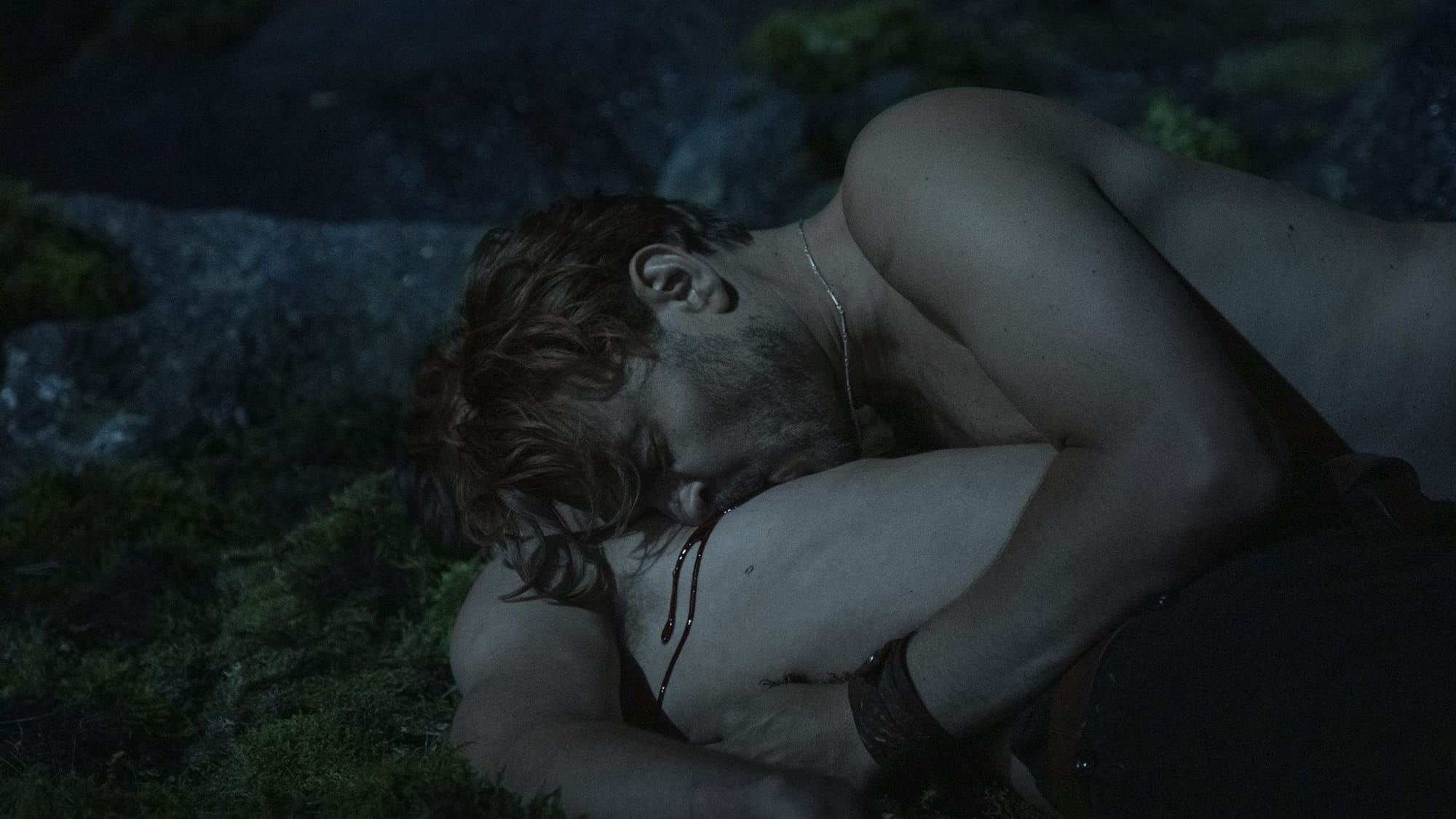
That evening a violent storm encases the island and in the aftermath is the shipwreck of the very boat that Baldur would have been on. Bodies float through the water and Helge’s is among them. Baldur makes a dark wish in the water using his blood for Helge to return to him, and within his grave Helge stirs seeking his lover and the blood that called him.
No Rest for the Wicked is a sublimely beautiful film about love that uses tones of folklore and horror to carve an atmosphere of Gothic Romanticism. Helge becomes an unholy horror in the eyes of the community – a revenant who climbs out of his Christian burial plot to sensuously bleed his lover. What the community and Ásla fear is the twinned “blasphemy” of an undead man seeking the body of another man (no matter how willing or desirous he is).
Skovsbøl’s metaphors are not hidden. An isolated island ruled by Christian doctrine upset by temptation from the outside world. Yet, the island is vulnerable to change on its own. Men want to see the world and leave widows. A love that is forbidden becomes an abomination as it refuses to settle and fade. Neither Baldur nor Helge are wicked men in life, but death reveals their passion as something “unholy” that must be contained as it makes a mockery of the foundations of belief.
There is so much beauty in No Rest for the Wicked that it defies the very notion of abomination. The Faroe Islands and their natural majesty and mystery filmed with a devotion to capturing their haunting essence by Jacob Møller. The yearning and wonderful script by Rasmus Birch based on a short story by Karl Heinreich Ulrichs becomes a brilliantly impassioned work when translated by actors Egor Venned and Pilou Asbæk. The sound design and music are impeccable.
No Rest for the Wicked is an astounding and mesmerising film rich with passion, atmosphere, and the melancholy of being unable to speak of love. Seductive and sacred, far more than it is horrific, it will enmesh you in its dark spell.
Director: Kaspar Kalle
Screenplay: Rasmus Birch, Kasper Kalle, Karl Heinreich Ulrichs
Cast: Pilou Asbæk, Egor Venned, Sofia Nolsøe Mikkelsen
Cinematography: Jacob Møller
Music: Hettarher, Torleik Mortensen, Andreas Tykjær Restorff
No Rest for the Wicked played at Fantasia International Film Festival 2026