
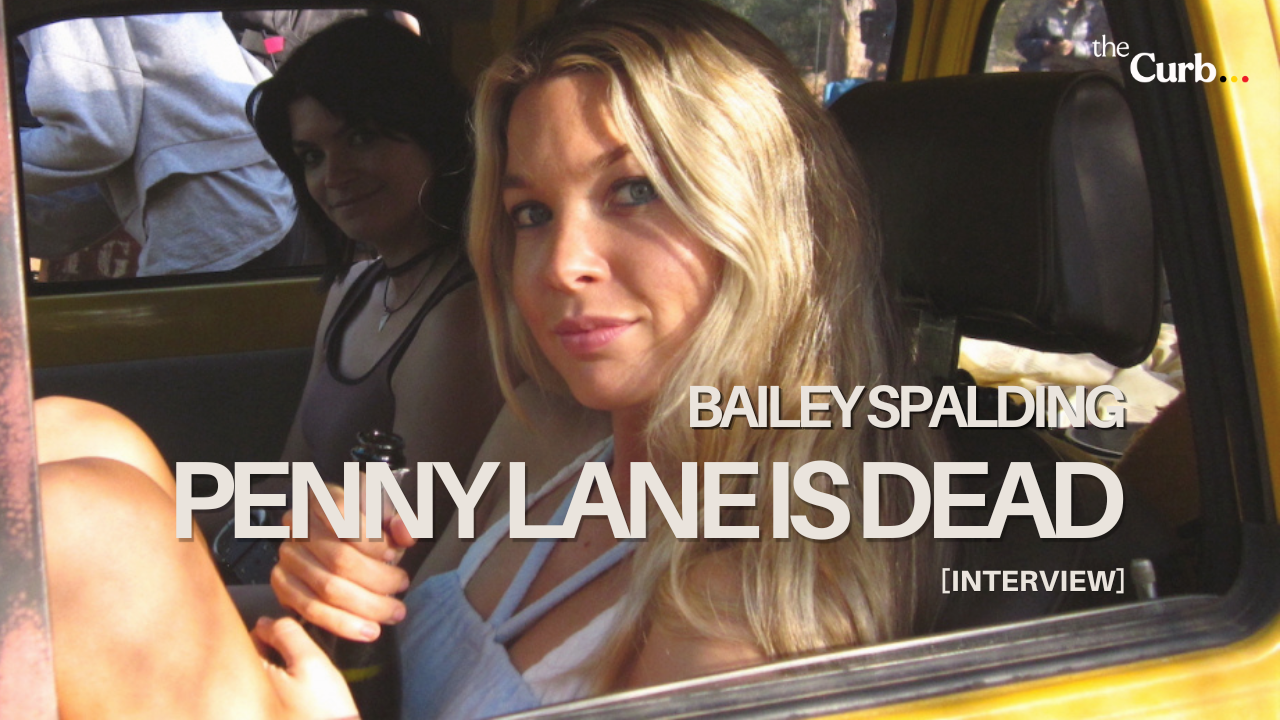
With a handful of titles to her name, Bailey Spalding has already left a major mark on the Australian film industry. From working on the kids show Hi-5 at a young age to stepping onto an international production in Rome for her first gig with Domina, to knocking it out of the park with short films like Yeah the Boys and Allegedly, to recording an EP with Kav Temperley, to now being bloody brilliant as the titular character in Mia’Kate Russell’s acidic horror-comedy experience Penny Lane is Dead, there’s clear signs that Bailey is on the cusp of having a major career in the creative arts.
Penny Lane is Dead is set in the Aussie summer of 1986 where three best friends, Penny (Bailey Spalding), Amy (Alexandra Jensen), and Toni (Tahlee Fereday), Penny’s girlfriend, head off to the family holiday house to unwind at the end of a school year. When a fourth girl, Kat (Sophia Wright-Mendelsohn), arrives with cupcakes in hand and chaos in mind, things take a bloody, brutal, and grim turn. Written and directed by Mia’Kate Russell, Penny Lane is Dead deftly weaves brutal horror with dark comedy, all the while spinning a brilliantly spot on feminist narrative that fits the era it’s set in while also speaking to the times we live in right now. To call this essential viewing feels like an understatement.
Andrew caught up with Bailey to talk about her career, where she wants to go as an actor, and what the experience was like taking on the titular role of Penny Lane in Penny Lane is Dead.
This interview was recorded ahead of the film’s release nationally in Australia from 23 July 2026. It has been edited for clarity and conciseness purposes.
What was the thing that kicked you off on this acting journey and made you say, "Yeah, this is what I want to do as a vocation?”
Bailey Spalding: I always loved movies and films. As a kid I’d always recreate different skits and scenes. We had a few films that Dad would put on and [we’d recreate] Jurassic Park, Men in Black, Shrek, Ice Age. They were kind of like the things we could quote off the back of our hand.
I did all the high school musicals. Then I [started] going for music theatre and I booked Hi-5, the kid show. When we got to do the filming aspect of it, I was like, ‘wait a second, this is really cool.’ I'd always loved the idea of being in film and wanting to be involved in film, but I never really thought-I don't know-I hadn't really thought that that was a thing or I could do that. I think getting to experience it in Hi-5, I was like, ‘Oh, okay, this is this is where I want to be.’ So I went to WAAPA and did the screen acting diploma, and then boom, booked my first gig straight out of uni.
What was the WAAPA experience like for you?
BS: I loved that campus. There was such a culture there. Everyone would loop in with each other. The dancers and actors were on the grass. When I first went there, I was doing a diploma in Classical Voice, Opera. You'd just be like, ‘Whoa, look at all these actors and dancers and creatives! This is amazing!’ I was just in the musician sector, and we had our rabbit warren of rehearsal rooms, and it was just magical.
That place just breeds creativity. You meet some of your lifelong friends there. I've still got so many friends that I went to WAAPA with. I loved doing the Screen Acting diploma. That was predominantly a night course. We did like 5pm till 10 pm Monday to Thursday and a whole day Saturday. That was the course for the year, but I loved it. I found it really set me up for self-taping and getting yourself out there and knowing what to do and having the right setup. There were so many fabulous teachers in that. That was unbelievable, especially because it was just screen for that entire year. I highly recommend that course.
The breadth of knowledge that exists there is immense. Everybody carries so much history. When I was at uni, I did night classes too. I'd rock up saying to myself, ‘I'm supposed to think and be involved and engaged and turned on, but I’m so exhausted after a day of work. How do I get this going?’ How did you find that period of being active and creative mentally after a busy day?
BS: Oh, totally. It was so hard at the start. It was honestly one of the funniest things because I think it would have been two weeks straight of all of us playing bobbleheads every night, one heads down, two heads down, everyone's nodding off through the class because we just couldn't get used to it. A lot of us would be working our little side jobs. I'd be coming from the cafe off to uni that night. But then you get used to it, and then you become a night owl, and you find that because everything is almost so quiet at night, you lock in, and you're all in it together. So it got really easy. I think we all really grafted onto it actually, and I found I'd retain a lot of stuff, and then just became a night owl for a really long time after that.
After WAAPA, what was the first gig you booked?
BS: Right before I graduated, I had a friend of mine, Renato, message me out of the blue. He was like, "I'm in Rome right now. My friend is directing this TV series, and they need to find a young girl who looks like this character. Can you get a self-tape to me this weekend? I need your British accent, and I need this within 24 hours. Can you do it?’ And I was like ‘done. Let's lock it in.’ I had no idea what this job was at all.
I sent the tape off and then heard nothing. Then on the night of my birthday, I got this call and they were like, "You've booked it. You've got to fly to Rome in two weeks' time.” I had just signed with my agent at the time, and it was all very exciting. It was called Domina. It’s an ancient Roman drama for Sky UK and Sky Italia. I spent two months in Rome filming. It was for the first two episodes, the setup of the show with all the younger cast, then it does a big 15-year time jump. It was just so much fun. We got to film at Cinecittà, right next to Frederico Fellini's studio, so it was just nuts, an insane first job to get straight off the bat. I was like, ‘Is this what they're all like?’
Then from Domina you return to working back in Australia. Was there a kind of mental reset for you where you thought, ‘Oh, they're not all going to be like this. I'm not always going to be flown to Rome to do this work.’
BS: 100%. One of the girls who I was working with, she had done quite well in the industry, but she'd also had a lot of time between jobs. She sat me down once, and she was like, "Bails, I just want you to know, no matter how long goes by between each job that you have, just know that doesn't have anything to do with you or you as an actor or your talent or your worth. Sometimes it just is what it is.” I'm so thankful she gave me that little piece of info because COVID hit directly after Domina, so I didn't book for maybe a year and a half, and then I booked North Shore, an Australian show.
That was a great experience. I loved that. Working on an Australian set was a different shift from the huge European set. There's just such a nice natural flow that comes to working in Australia and with Australian creatives and Australian crew. Everyone's just so welcoming and you can have a laugh with everyone. I really loved it. After that there was another year and a half break. You do short films with your friends, and you create things, and you do a lot of things for free. But it's hardly work where you're all just doing it because you love it, and then you know you're just waiting for the next one to come.
 Andrew F Peirce
In the like the early stages of your career, the choices that you probably want to make might not be offered to you, so you almost have to take what you're given in some regards. But looking at your filmography, I see shorts like Yeah the Boys and Allegedly, two films that both mean something. Now you might have worked on them for free or for not much at all, but there is this notion that you have selected these particular projects to work on because they mean something to you. Is that the case?
BS: Absolutely. With Stefan Hunt and Vanessa Marian and their film Yeah the Boys, I was living in Bondi at the time, and my agent messaged me and was like, ‘Stefan would love to get a coffee with you just to chat about the short.’ The way he pitched it was just unbelievable. His partner Vanessa, who's also a beautiful movement director, was basically like, “everyone's writing stories about my Indian heritage, so I'm going to write a story about white boys. Let's do it and talk about toxic masculinity and how far is too far.’ I was so moved by that. I love the fact that it was done through dance, so just to be a little part of that, and get to work with also Sam Chippy (Chiplin), who's an amazing DoP, that was just so cool. I got to stay and watch the rest of the shoot and sit behind the scenes. That was just an incredible experience.
I'm very proud of that one, and especially with Allegedly too. That's my best mate Laura Brogan Brown, who wrote and directed it. She approached me with the story and was like, "Have a read. Would you be interested? Because I would really like you to do it.” The second I read it, I was like, it's a no-brainer. That was one of the most beautiful experiences. That was five-day shoot in Bowral. It was just gorgeous, and that was like a real creative lock-in. Let's do this together. It was the first time I really got to experience being a lead in something where you were almost in every single shot. So, getting to pick up the pace and experience all of that was really amazing. I'm very proud of that film, the crew and everyone involved in that.
As you should be. It's a gift of a movie. It's hard going, of course, but it never puts the audience through the wringer. It asks for empathy and understanding of what it's like to be in your characters situation. How did you get yourself into the mindset of Clover?
BS: One thing we spoke about was the grey area that's involved with an issue like that because there's a lot of guilt and shame that comes from a certain experience like that. I think we spoke about it at length. But you know, grooming is very common, like a lot more common than I think a lot of people tend to think it is. I've seen a few cases in Perth specifically. I can't really like name things, but I have also come into the throes of being really close to that happening myself with a teacher, and I think I really understood the subject matter massively. So it was quite easy to touch on because there was a kind of lived experience, not to the same extent as Clover. What was complicated about that character was the really minute shifts and being able to portray that and switching between ‘I'm liking this but I'm not’. Like, how much do I show? How much do I reveal? How much do I keep to myself? That was a really interesting thing to play with in that shoot. Most of the time in that shoot we were kind of keeping it light between the sisters a lot of the time, but it's just having that simmering underneath. I think the score (by Bryn Chapman Parish) also really helped, and the way that Callum [Riddell] shot it also informed how her mental state was so much too.
It felt like a very safe set. It doesn't even need to be a film that's about something heavy, it's just about making sure that the culture is right and safe. Yeah the Boys is a great example of having that kind of nice, safe culture on set, and you feel that in the film. Can you talk about making sure that a set is a safe place for you as an actor?
BS: I think it's just a massive trust thing, hey. You know, you come to work and you do trust the people that you work with. I think, at least for me, it's inherently in me. I'm a very trusting person. You just need to know in your head ‘I have the right to speak up if anything doesn't feel right.’ Full stop. Everybody does. Everybody has the right to speak up if they're feeling uncomfortable or if someone said something. You're not being a diva, you're not being a brat if you have to speak up about something that you feel uncomfortable with, [these labels] can sometimes be branded on women a lot. I think it's just trusting yourself for that and then trusting others.
Every time I've come onto a set, everybody that you come across is always like, ‘Speak up if you don't feel comfortable. You'll have people watching out for you all the time.’ So there definitely is a big trusting network already within the sets that I've worked on. I've been very fortunate. But it is just knowing in yourself that you can speak up if you ever need to, and I think that's what then makes it a safe set because you go, "Well, I actually do have an element of control here. I don't just have to let things happen to me.” Especially if you're performing pretty sensitive material as well. Sometimes you might just need an extra minute just to be like, ‘Hey, can I just take a couple more breaths before we run into another take,’ or ‘can I have a little bit more time to run into this?’ Then you're able to kind of jump back and have a little bit of a joke in between crying scenes, you know?
 Andrew F Peirce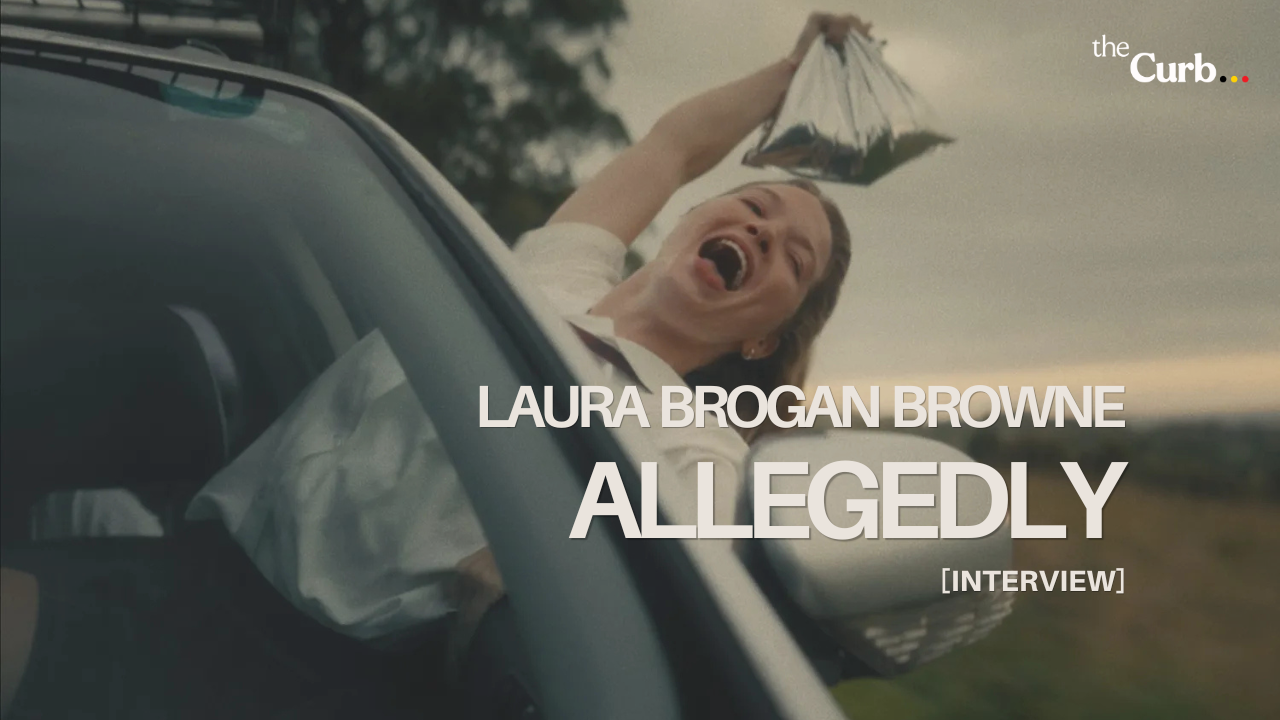
Let's shift over to talking about Penny Lane is Dead, which is such an exciting film. I'm so excited for audiences to be able to experience this kind of bonkers roller coaster of a film. How did you get this film?
BS: I got a self-tape for it. The second I saw the pitch deck, I was like, ‘Oh, I have to be a part of this.’ Sometimes things land in your inbox, and you go, ‘Come on, this has to be the one. This is one that I really, really, really, really want.’ So, I kind of just went, ‘we're giving this a crack’ and I put the tape in. I’d just moved to London, which lasted about six months, and ended up getting a call back and eventually booked the job.
It’s honestly a dream come true. I was so lucky. Just reading the script I was like, ‘whoa! I haven't really read anything like this in a long time.’ It was so exciting. You'd find new things in the script every single time you read it, hats off to Mia'Kate Russell. It's unbelievable.
I imagine that any actor would just delight in some of the lines they get to deliver and the scenes they get to play through. With your character of Penny Lane, her name is in the title. Was there an expectation of building her up into being something memorable? Did you find that a challenge? Was that something that you're like, all right, I've got to tackle this and really bring everything to it?
BS: That's amazing you said that because that was 100% one of the first conversations we had because when you're losing a character, I mean, Penny Lane is dead, you have to create someone worth losing. It has to be quite, “Oh, really?!” with the audience. So in creating somebody that is really likeable, I think there was a bit of pressure there, because if you don't nail it, it won't sit right, or they'll just be like, thank God she's gone. It also doesn't give Toni (Tahlee Fereday) anything to fight for either. You needed to have their relationship, and Penny definitely had to be, magnetic.
What were the things that helped you get into the mindset of the character?
BS: With Penny, she was raised by her mother, who basically encouraged to be anything and everything. She was that mum who told her you could do anything you want, dream big or go home. I also grew up with very supportive parents who did the exact same. They've been the exact same for me in my industry. So I think just channelling the beautiful supportive nature that I grew up in at home, that was really easy. There were a few parallels there. I think Penny just loves her friends. She's loyal. She'll speak up for injustice. She'll fight for the people that she holds nearest and dearest to her, and I feel like I relate to that in a sense.
I found I brought a lot of myself, but I think almost like blowing it up a bit further and finding some spunk in her. She’s someone who's really confident in her body. She knows what she wants. The way she walked around, she doesn't care about what other people think at all in the slightest. She's just doing everything for her, which I thought was really empowering because I don't tend to live life like that all the time.
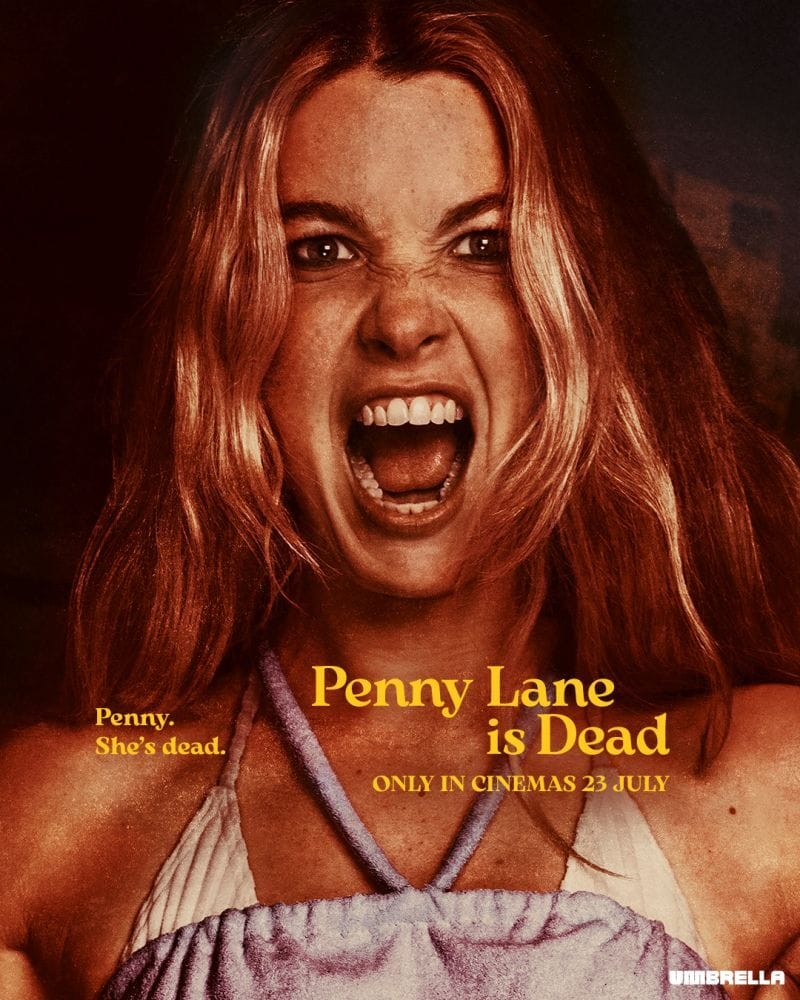
I'm curious then because, at times, that confidence is a threat. It's used against her in some capacity, and there's that, for want of a better term, cattiness in the film, which is so brilliantly brought to life. Can you talk about like existing in a space where there is that kind of negative, toxic vibe, but there's also this almost safety because you are surrounded by friends, but are they friends? Are they not really friends?
BS: I think it is so interesting because in real life, I've always tended to be like, if you have been confident, then someone kind of acts a bit strange, you just shrink off a bit, or you go, ‘oh, I might just bring that down.’ But with Penny, she's just like, ‘nah, I'm not changing. I'm staying the same.’
Obviously with the girls that I worked with, Tahlee, Alex (Jensen), and Sophia (Wright-Mendelsohn), everyone was just so wonderful. We all became so close on that set. You just felt so comfortable to play. Sophia plays such a great villain, so it's fun to play the antithesis of what she's doing. It was just really cool and fun to just watch her choices and be like, ‘oh, oh my gosh.’ It almost worked for Penny because it was just like, oh my gosh, how are you even thinking of that right now, you know?
But yeah, it was a very cool dynamic to explore, especially because we all got so close. I think it really helped for the film because it really looks like we'd known each other for years.
There is that sense of history and stuff, but it also feels fresh. Was there much in the way of rehearsals? How did you all prep for the characters this way?
BS: I remember when we first got to Adelaide, we all sat down and had a table read. And that night, Mia's like, "All right, you're all going to the pub, and you're all getting drinks and dinner together. I need you all to get to know each other. Go on now, quick, quick.” We ended up having a really beautiful night, and some of us stayed quite late. It was fabulous. We all really bonded after that dinner. After that, we really made the effort to go out to coffee shops, go out and try the new bagel place, or hang out on the weekend. I think that really helped establish this comfortability with everyone because you see each other eat, and that's I think a really big bonding experience. It's like, ‘oh, I'm comfortable enough to eat a crazy big sloppy burger in front of you. I feel like we're fine.’
We did a lot of rehearsing, especially because there's so much choreography and the stunts, and it was quite a small set. We had to make sure everything was mapped out. So we got to run a lot and feel really comfortable with what we were doing, which was great. But also, there was so much freedom to play. So it was quite fun.
I got the sense that there was no rigidity there. There was that freedom to play. There's a genuine excitement about what you're creating. The film is set in 1986. The film captures the vibe of the era so well. What was it like stepping into that world?
BS: I feel like so many people have said that. My parents watched it and they were like, "Well, we grew up in the '80s, so this is amazing. It felt really real to us.” Speaking to my parents was also a really helpful thing. Alex has this picture of her mum next to a picture of her as Amy, and they look the exact same, except her mum has a can of beer and a cigarette, and Alex has got a [stuffed] tiger. It's amazing.
My parents were big stores of information, but we were quite lucky with the music too. I feel like the music really helped. I'm a big fan of music, Debbie Harry and The Cure. So I found that really helped. Then you'd rock up, and the set was built, and you felt like you've stepped into this world completely.
Then operating in a world where you don't have an iPhone was really awesome. You're then going, what am I doing with my hands? Because you kind of have something in your hand. That was crazy. I think maybe that's why we all were quite free. We had nothing to hang on to, nothing to look out for. I found that really awesome. It was such a fun era to perform in. You'd come to work and you'd be in this completely different realm.
Were there any films from that era as well that she used as a kind of a reference point for the vibe that she's going for?
BS: We watched Quentin Tarantino's Death Proof. That was a cracker. Climax was another one, just for like that continual build-up of tension. We watched The Runaways. That was a huge one. I would say the whole kind of vibe of Penny Lane is Dead definitely relates a lot to The Runaways with Joan Jett and Cherie Currie. I’ve watched that so many times now, I love it. That was a big inspo. There were a few other crazy horrors she got us to watch more so for like girl on girl fighting. I think my brains blanked them out because I was like, ‘Oh, this is so not for me.’ I mean, I did watch them. I did push through. But, those three were probably the biggest references. I loved Death Proof. The ending of that was fabulous.
It's kind of bonkers in a way. Especially with Zoe Bell and what she does as a stunt person too. It's just a bit nuts.
BS: Insane. So cool.
I'm getting by the vibe that horror is not your genre of choice. What kinds of stories do you want to put on film?
BS: I do really like horror. I'm a big horror fan. It's just sometimes the gruesomeness that gets me. I love the whole Scream Queen kind of situation. I think that's really cool and fun. I think like Mia Goth’s done it really well. Something like X, that whole trilogy, was so awesome. I would love to do a period piece, something like Pride and Prejudice, with a romantic lead. I'd also love something that involves music. I love Damien Chazelle, La La Land and Babylon. To be able to do something where you're singing and performing would be amazing.
I was going to say that links to your studies with opera. Do you still practice? Is it still something you delve into?
BS: I don't do opera anymore, but I am still singing. I'm actually currently working on an EP with Kav Temperley from Eskimo Joe. We've been writing songs together. The first single will be coming out soon and then an EP launch towards the end of the year, which is really exciting. It's been really nice to jump back into music. I haven't done it in a while, but I found it's just so creatively fulfilling and just really fun.
Will you put on a gig at Mojo's or somewhere like that?
BS: Hopefully, I feel like that'd be really cool. I grew up like paying $5 to watch Stella Donnelly perform there, so that would be a crazy full circle moment if I got to do that.
There is this kind of notion in Perth where you do have to push yourself in different creative avenues. How are you managing your creative journey going forward?
BS: I think it's just trusting that everything is going to fall in place when it's meant to. I feel like that's easier said than done. I think it is that law of detachment almost. I own nothing. It'll come to me when it comes to me. But it’s also just working hard and constantly doing classes and watching as much as you can and reading as much as you can, so that when you do get a self-tape and audition, you're 100% ready to go.
I'd even said at the end of Penny Lane – I loved that job so much – I don't care if I don't work in a year as long as it's with fabulous people like this on a film as cool as this. I do stand by that. You'll get those jobs when they're meant to happen. As long as you're proud of the work that you're putting out there. That's a huge part of our career; the auditions and being proud of what you're putting out there, you’ve just got to stick at it, hang in there, and believe it's going to happen for yourself. I trust and I believe and hopefully we'll get there.
What’s in your mind as the film heads out across theatres in Australia?
BS: It's pretty cool to get a cinema release. Honestly, I've never had that for anything that I've done before, so it's really exciting. I love going to the cinema. It's pretty awesome. What I've experienced so far with a lot of the screenings is that we get quite a lot of audience engagement. There'll be a lot of cheering and clapping and screaming, and it's pretty awesome to experience that with a full theatre. So it'd be amazing to just pack out all the theatres when it comes out. I'm really excited to screen in hometown Perth too. That's going to be really exciting. I hope you know everyone likes it. I hope everyone enjoys the film. It's super fun and nuts.
As we wrap up, I look at the three films we’ve talked about, Allegedly, Yeah the Boys, and now Penny Lane is Dead, and all three are distinctly Australian films. What does it mean to be part of films that are so distinctly Australian?
BS: I love it. I feel so lucky. It's such a beautiful thing to experience when you're working on your home turf and you get to use your own accent. You get to play with phrases like "you dumb moll" and things like that. It's awesome. It's fun that we get to either take a piece of our culture and highlight some really harrowing moments while also highlighting really beautiful things that our country has to offer. I feel very lucky to be able to work here. It's a blessing always.
Penny Lane is Dead is in cinemas across Australia from 23 July 2026. Check your local cinema for screenings.
Read the interview with Sophia Wright-Mendelsohn here:
 Nadine Whitney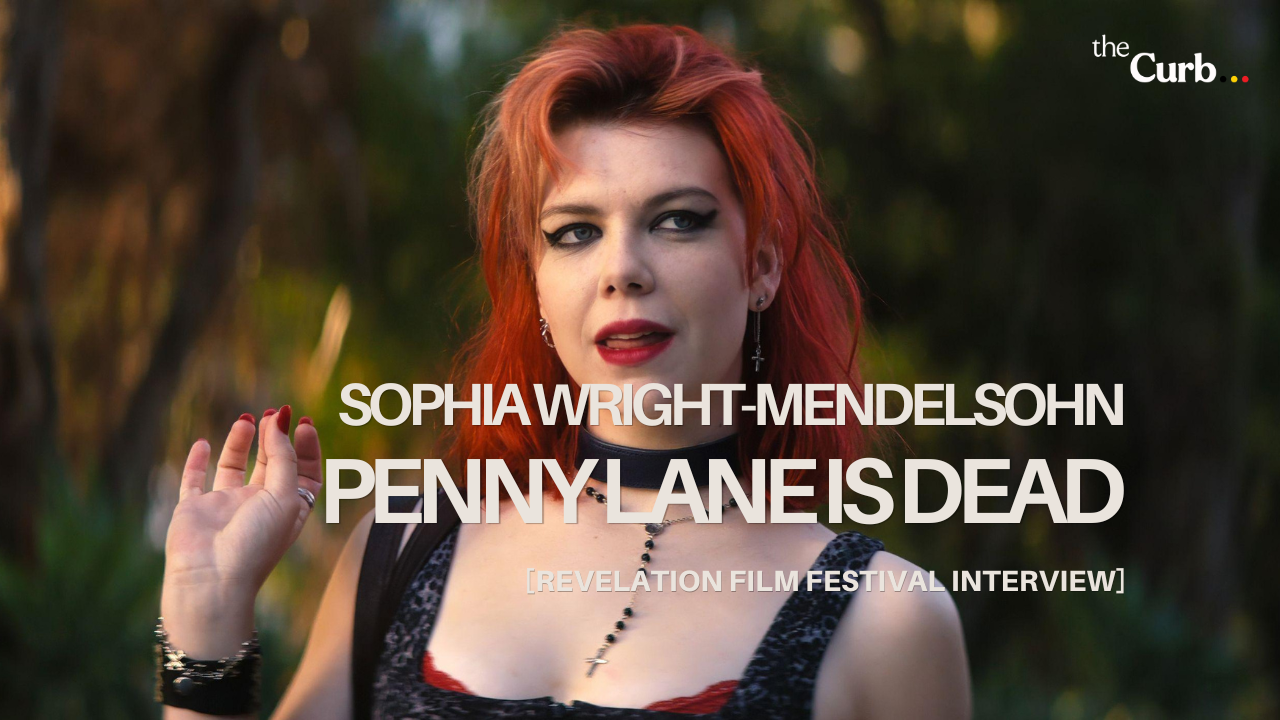
JustWatch Screening or Streaming Availability: