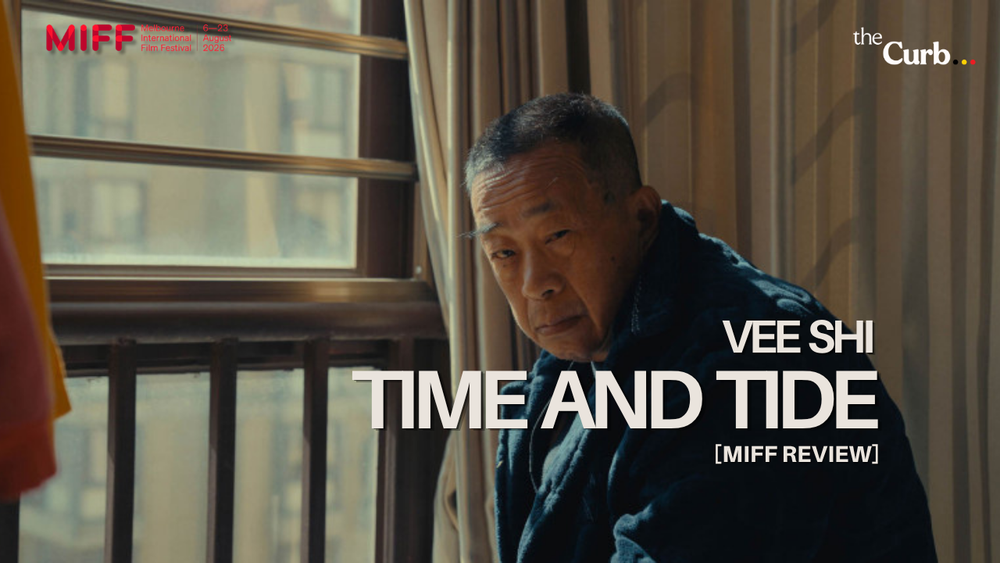
Chinese-Australian director Vee Shi was surprised when his family agreed to be in his film. He realised that it wasn’t because they were willing to air out their private lives for the sake of a documentary. They knew that if Vee was filming it would keep him in China longer. Vee’s hopes of having his parents visit him in Australia were constantly blocked by rejected visas. There was so much they didn’t know about his life, and the same was true of Vee’s knowledge of his father Yanjin’s life. Yanjin, a father of four, was in reality a father of one, Vee. Due to the One Child policy in China all three of his older sisters were unregistered for the chance of a son. One of the sisters, Liyun, returned to the family. However, Yanjin left the country when Vee was only three to work in Turkey. A return to China to visit his family and check on the welfare of Yanjin after he had a stroke was mostly motivated by Vee’s desire to see his mother Jianming.
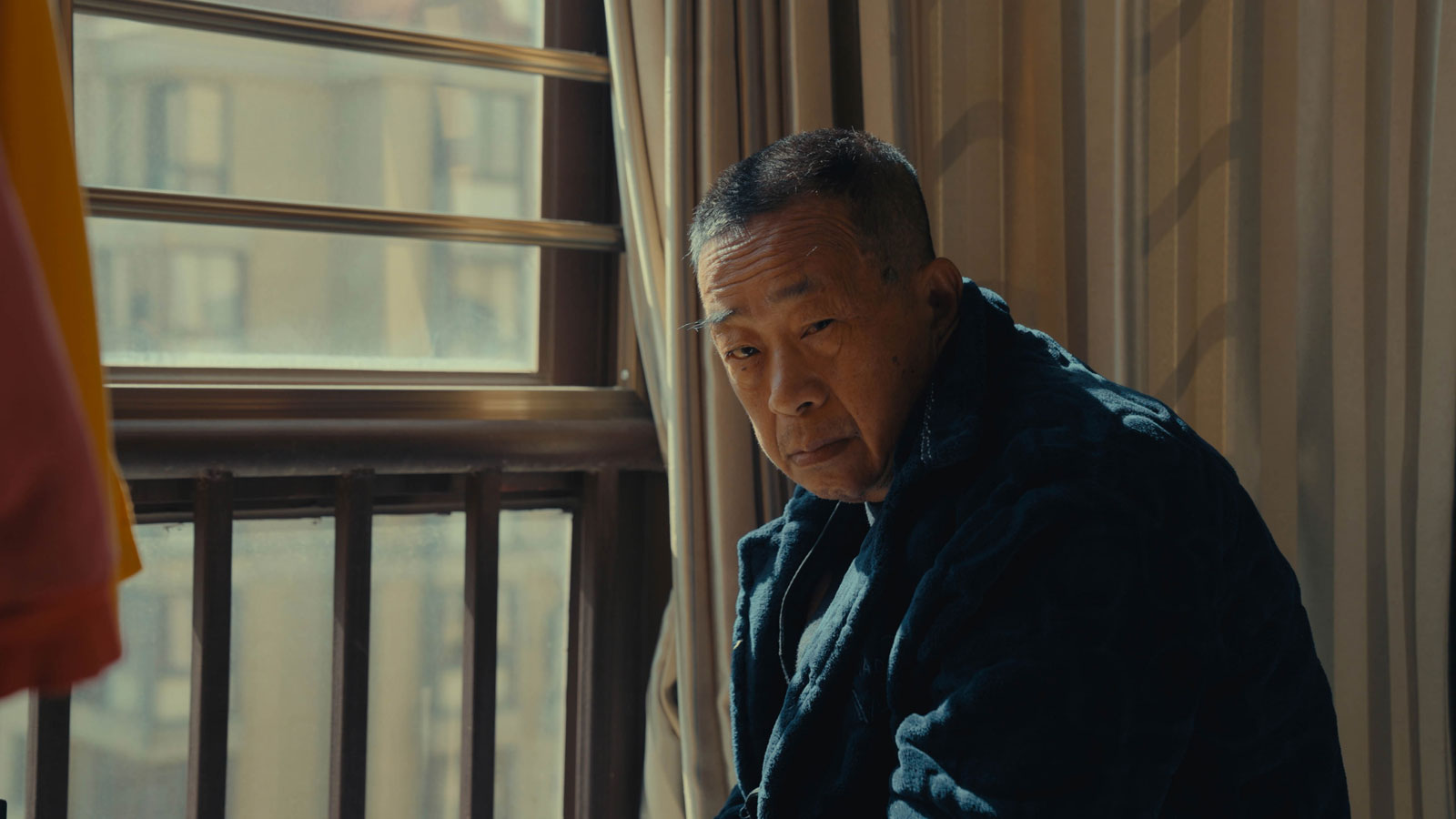
“I have no bond with my father” he admits. It’s not that Vee has particularly strong feelings against his father, he simply doesn’t know him. Time and Tide seeks to make a “stranger” his father; but the level of emotional distance coupled with Yanjin’s self-centred behaviour makes it a challenge to see the man as capable of love and earning love in return.
Nicholson Ren’s elegantly unobtrusive camera captures the Shi family at home in Longtian Town, Fuqing. In the apartment is Yanjin, Jianming, and Liyun’s young son Songze. Vee will later explain why Songze is being raised by Yanjin. If Liyun could have her two sons with her, she would. But she works in Guangzhou, a busy city that via policy makes it extremely difficult for children to live with their parents. Plus, Liyun is a single parent working long and lonely hours in a sea cucumber shop.
Liyun not only has to provide financially for her sons but is responsible for the bills of Jianming and Yanjin. Vee helps with money, but living in Australia makes it difficult for him to be a part of their everyday lives. When Yanjin had a stroke, Liyun was legally required to be at the hospital with him and to care for him. Because she couldn’t take time off work to be around for the full recovery, she organised a carer who her father dismissed. Now, back in the apartment with his unhappy wife, Yanjin deliberately sets himself apart from his family – filled with resentment because they don’t do precisely what he wants them to. Jianming puts as much energy as she can into her grandson’s wellbeing and then at night spends time in dance and exercise classes. If it were not for Yanjin’s stroke she would have divorced him years ago for domestic violence.
Vee enters into the fractured family not necessarily trying to be a salve. He understands that things are too broken to put back together. He is there to be with his mother, sister, and nephews, and perhaps, if possible, find some form of communion with his father. A kind of coming together happens when they travel to the small rural town where Yanjin was born. For the first time in the documentary, we see him as a man satisfied and naturally belonging. Yanjin tells Vee of his upbringing, meets relatives, and socialises. Despite the village having seen far better days there is a sense that he could be happy there reintegrating into a community that remembers and values him. However, when the option of him living there is brought up, he immediately says no because no one would look after him. He wants his family tethered to him no matter what that costs them emotionally. And, to a large extent, what it costs him emotionally.
Jianming and Yanjin married and had four children. Three daughters who were unregistered or adopted out (including Liyun) so when Vee was born they could keep him as a son during the One Child policy. Vee asks Yanjin if he is sad he had so many children because he had to give them up. He doesn’t quite answer but he does speak about how happy he is that Liyun came back when the others did not. Even when Yanjin is being asked direct questions there is an opacity to the man which he only drops when he wants his family to act in a certain manner. In those moments he goes from victim to tyrant, lashing out at Liyun for not giving him enough.
Time and Tide is painfully intimate. The family doesn’t seem to recall at times there is a camera trained on them and as such the verity, the truth of their lives, is not performed or varnished for an audience. There are moments where I felt I was too close to Vee’s family and I was seeing moments that I absolutely should not. Yet, that is the magic of Time and Tide. It is steadfast in its portrait of the family at their best and at their most exhausted and frayed. With the camera picking up not only the conversations and arguments, but also the physical dynamic of the family, Shi invites us into a world where the most casual acts are imbued with meaning. When the family go to a large shopping mall with an arcade they don’t wait for Yanjin as he shuffles behind them unable to walk as fast as they can. But, at the arcade Songze offers his game paddle to his grandfather and tries to teach him to play a video game. His older brother Hayoyang sits at the family table with his grandfather. Liyun might be at her wit’s end with her father, but she ensures that her sons show him respect, even if that respect has been eroded in herself and her mother.
Cinematographer Nicholson Ren has crafted a perfect observational mode and Vee Shi has edited the footage to make Time and Tide enthralling and also melancholy and maddening. With my eye and sensibilities, I place myself in the family and imagine what I’d say to Yanjin as he presses for more money, or when he lies that his wife is only feeding him boiled cabbage. I imagine too, what Vee Shi is truly feeling as someone from two cultures. I think if there was any criticism of Time and Tide it is that we don’t see Vee enough. But the intimacy, I reiterate, enfolds and opens the conundrum up to audiences who don’t live under an enforced familial piety law; yet also have to do deal with ageing parents who might not be the best people or the emotionally healthiest people they have dealt with.
Time and Tide is a miracle of close documentary filmmaking and Vee Shi makes a specific family drama one that, despite cultural mores, we can imagine ourselves inside. Vee Shi is a bright and immense talent and Time and Tide as his first full feature is an arrival what should be applauded.
Director and Writer: Vee Shi
Cinematography: Nicholson Ren
Editing: Vee Shi
Music: Luna Pan