
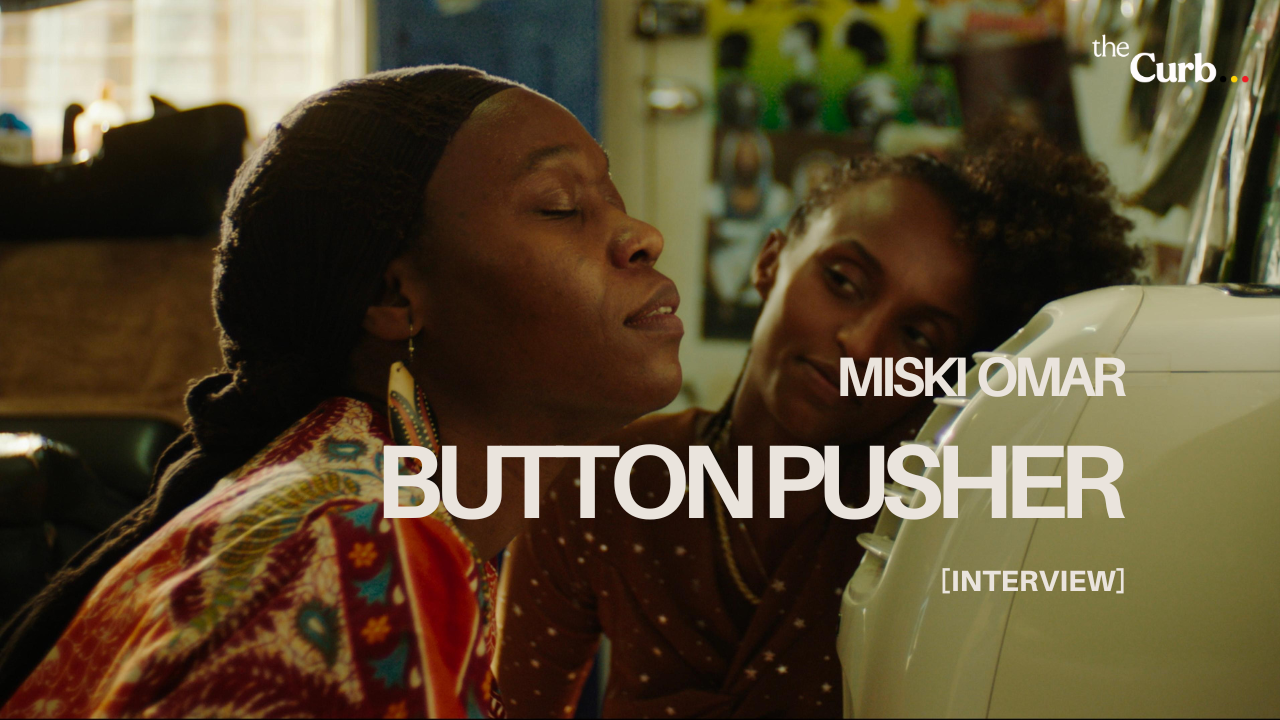
Storyteller Miski Omar is a multidisciplinary artist whose creative work includes writing and filmmaking, allowing her work as a speech pathologist to inform her exploration of the intricacies of communication, identity, and expression.
In her short film Button Pusher, a contender at the 2025 Sydney Film Festival Dendy Awards, Miski invites audiences into an African hair salon in Western Sydney. It's a hot, sweltering day and Bolude Watson's hairdresser Abiola is having difficulties with getting her air conditioner operational. Her client, Madka (Edyll Ismail), arrives for the day and as the two bond through the session, Abiola discovers that Madka is in a relationship with her husband. Tension threatens to disrupt the emerging friendship between the two, before Button Pusher gives way to empathy and compassion.
Miski joins creative counterparts like William Duan (Tui Na, 2022), Sara Kern (Moja Vesna, 2022), Kalu Oji (Pasa Faho, 2025), and Nathan Sirikumara (Famished, 2025) in the act of transitioning Australian cinema to be more representative of the multicultural society that exists within in Australia. Migrant stories are foundational aspects for this country. Through films like Button Pusher, we are invited to experience lived-in perspectives on screen, and in the process, we see the true Australia.
This interview was recorded ahead of Button Pusher's screenings at the 2025 Sydney Film Festival in June 2025 and has been edited for clarity purposes.
I would like to talk about your entry point into art and filmmaking. What came first, speech pathology or an interest in art?
Miski Omar: I was a child who loved to tell stories. I'm the youngest from a family of six, so the only way to actually have a say in something is to say it in the most dramatic, most interesting way. I always loved watching movies and watching comedy, and I was always interested in expressing myself in that way. I’d do little rap free styles with my siblings. The nature of being a young Muslim girl who lives out west, I didn't ever think that was a viable reality. It was just a thing I enjoyed doing.
When I was in Year 12, I went with an aunty to a speech pathologist, just to kind of be a language bridge to help communicate what they were saying and facilitate the experience for her. I saw what they were doing there; they were like playing with the kids, drawing language out. With my young cousin-slash-nephew, he was nonverbal, and in those 40 minutes, I saw him not change dramatically, but she facilitated some engagement from him, which I thought was remarkable.
At the time, I really wanted to be a teacher. I love teaching people, but I was also beginning to be really fascinated and obsessed with linguistics and language and the language family tree, so it just felt like the marriage between those two.
When I was younger, I wanted to be a teacher too. There's something quite beautiful about giving somebody ideas and guiding those ideas to grow in their minds and then getting to see how what you teach them lets them change their world through what they learn. There's also something beautiful about guiding someone through their speech journey and influencing their world through speech pathology. Was that something that you found as you went through that process?
MO: Of course. I think with teaching and speech pathology, it's about taking someone from a place of not being able to understand to being able to understand. So much of that is in subtext, reading their body language, reading micro expressions, and facial expressions, and with speech pathology, I just pinch myself every day because you really get to witness someone in a way that is so special, because you're really looking for micro things to latch onto so that you can build something to facilitate and draw language out of them. That's one of the greatest things about speech pathology. It really does inform my practice as a filmmaker and helps in moments of directing as well.
With speech pathology, you're drawing out things which are under the surface, but that's also what you do as a writer, as a director, as a poet. Was that something you had in mind when you decided to become a filmmaker? ‘Oh, I've already got these tools. I can just apply them over here.’
MO: Yes, I think it kind of found me after. It wasn't necessarily this intentional moment where I was like, ‘Oh, I have a lot of these tools in my toolbox. I'm going to use them.’ The first time I ever made a film was back home in Somalia. As I was making it, I realised I was unintentionally calling upon these skills that I've spent time in university building.
I think there's always this kind of natural inclination towards these callings. I'm really obsessed with subtext, and I think realising I'm obsessed with subtext is something I've kind of been able to put language to in the past year, where I just really love things that are not language and that carry information; you just become so hyper aware of communication. Communication isn't always restricted to what is said, but mainly in what is not said. I think there's a lot in Button Pusher with what is not said and that tension of holding that in.
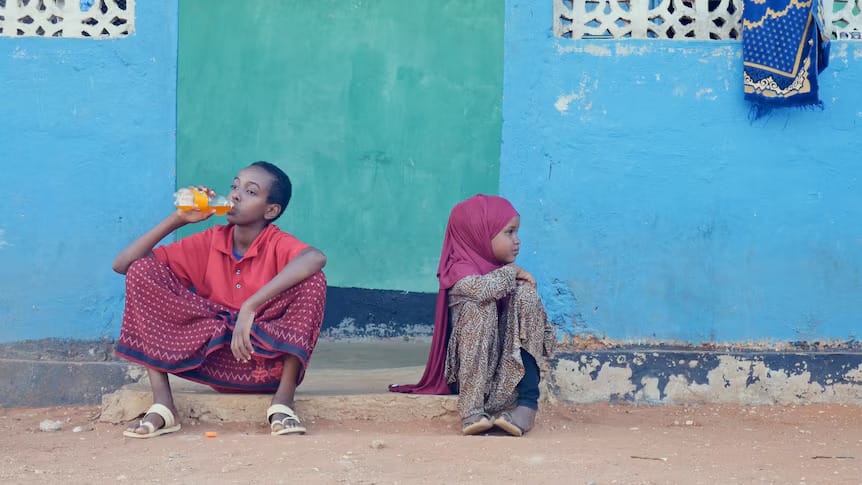
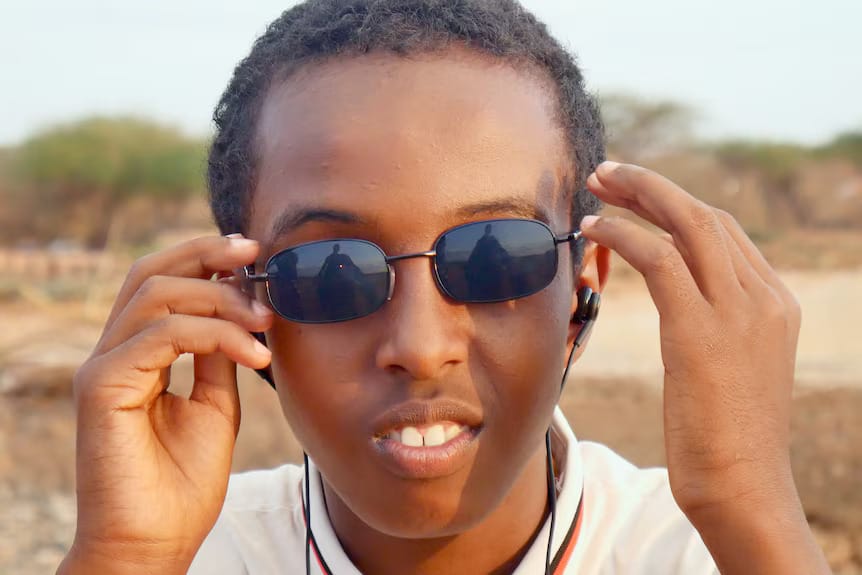
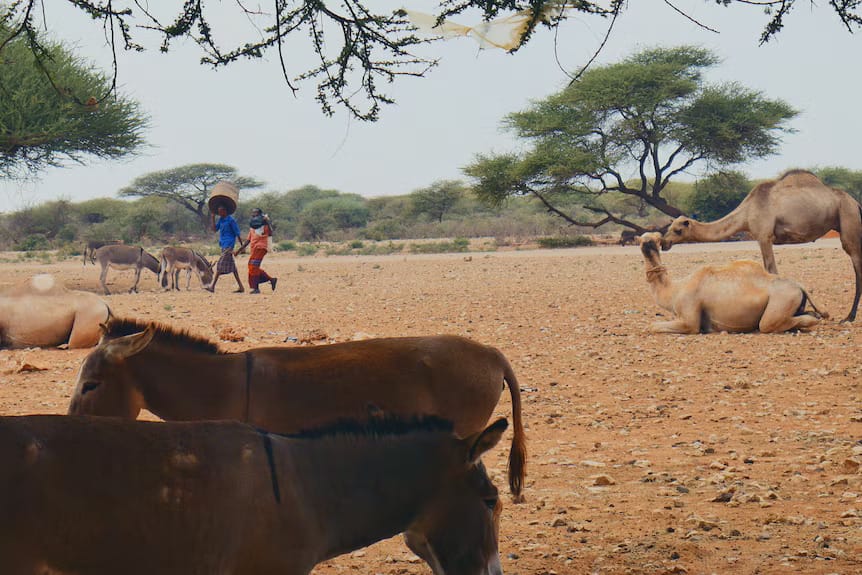
Stills from the short film Warya. Copyright: Miski Omar
I want to go back to your first film, Warya. I read that you didn't expect to be making a film.
MO: I've been back home to quote, unquote, ‘Somalia’ back in 2016 but the region I'm from has always been blocked off and inaccessible to enter due to government oppression. We were always resigned to the fact that we were never going to be able to see our land and go back. I won't get into that, but some things shifted and changed. Eventually we got to go back home, and I go with my mum, and like any youth of the diaspora, I go with my camera and my gear, and I'm like, ‘I'm going to document this. I'm going to take photos of people. I'm going to speak to my great uncle. I just really want to punctuate this moment in time.’
What I found was that in entering these regions that were recently opened up, a lot of people weren't keen on that. A lot of people were really hostile to that, even close family members. I would take photos of people on the street, and they would chase me down and be like, ‘Do you work for Al Jazeera? Are you a spy?’ They would want me to delete it, because they're, rightfully so, not used to being objectified in that way. I still knew that I wanted to do something, but I knew that maybe it needed to be a little bit more consensual.
I fell sick once entering a new town, which was my grandma's village. Stepping foot into that village, my mum looked at it, and she said, “This place has not changed since 1978. It's surprising. It still looks the exact same.” They still engage in the same way as they get their water from the world. Houses are erected by sticks, but everyone's got TikTok, which is crazy, because they have really good internet.
There were these two young boys that I developed a beautiful relationship with, Abdiqadir and Abdul Rahman. They were 14 and 16 respectfully. Maybe I emotionally manipulated them whilst I was sick, but I was like I was in my deathbed, ‘Guys, I make movies.’ That was a lie. They were like, ‘No way!’ I said, ‘If I made a movie, would you be in it?’ They were like, ‘Of course.’ I thought, ‘I've got them.’ Then I decided to make a movie.
The whole town village, as I've described, takes on this character of its own. The external microphone wasn't great, so a lot of it was just working with the kids and freestyling run and gun style. I wrote up the script on the day on this little notes app. I had of little moments which I thought were pretty funny from when I was overseas that I wanted to remember, and I just loaded that all in and made it. It was super organic, super run and gun.
Beautiful things can be made under pressure. I had the best time. I think something kind of cracked in my brain where I was like, ‘hang on, I can communicate what's in my head for other people to see. Hmm, let's see where that goes.’ I guess I haven't stopped.
Sometimes being creative under pressure and not knowing if you can actually pull it off is the best way to create. Just going out and creating something can be such a freeing thing
MO: It's so freeing. I'm very grateful for a lot of the opportunities I have now. There is this structure and the deliverables and check points and rubric you have to meet, and they're there for a reason, but I often think back to that time and really crave that freedom of just creating a story about a young boy's life, wanting to be the king in his town, and just seeing what's around you and trying to make something and being flexible in that way.
I want to then talk about putting culture on screen. As you mention, you return home and take photos and they’re uncomfortable with having their photos taken. But there’s also the knowledge that we don't really get to see or hear from that slice of the world on screen very often. With that in mind, what does it mean to be able to show home on screen? How important is it to be able to bring a slice of Somalia to the world through film?
MO: It's so crazy. I learned a big thing of making sure that the stories you tell, especially stories from people from vulnerable spaces and communities, [is that] you just need to make sure that they're okay with it. It's so crazy when you're in the edit for something and it kind of flattens what you're doing. You get used to it. You get accustomed to it. I just really forgot what an incredible place the village was, and for a person who's not from there, how incredible it would be to gain a snapshot into that world.
I lived there for many months. I got to film something there and show people. It's been really incredible. It's still such a universal story, even though it’s set somewhere that many people would not even be able to imagine. I screened it in Melbourne, and I remember the whole cinema was in fits of laughter back in August last year. A few people came up to me from other ethnic backgrounds, a Lebanese woman and a woman who was part of the Oromo ethnic group, which is an ethnic group in Ethiopia, they have different cultures and rituals, they were like, ‘This is exactly what happens to us.’ And because the whole film was in a voiceover, they were like, ‘We want to show this to people in our community. We want to show them that art can actually help you remember who you are and what you are and what you aren’t. You don't have to say goodbye to your culture and your ways. Can we dub them in our languages and show them to members of our community?’
Just that discussion being opened up was so crazy. You can make something on the other side of the world, but the stories and the themes are universal. Childhood imagination and grandiosity is universal. Wanting to be great in the face of adversity is universal. I guess in that moment, I was like, ‘Wow. You know what? You can make a story about whatever you want, and people will relate to it in whatever way they will.’ For me, that is when you know you've succeeded. It's just the best part about this all.
The life a film can take fascinates me. Where you have an idea of what it is when you first write it, you shoot it on the day, you're in the edit, and then you're seeing it in a whole different light after it's edited. You send it to friends, and they tell you what they think, and it has a whole new life. But watching it in a cinema is so crazy. You notice things you didn't notice before, people come and interpret in ways that you never intended. It takes a whole new shape, and you see it through the eyes of others.
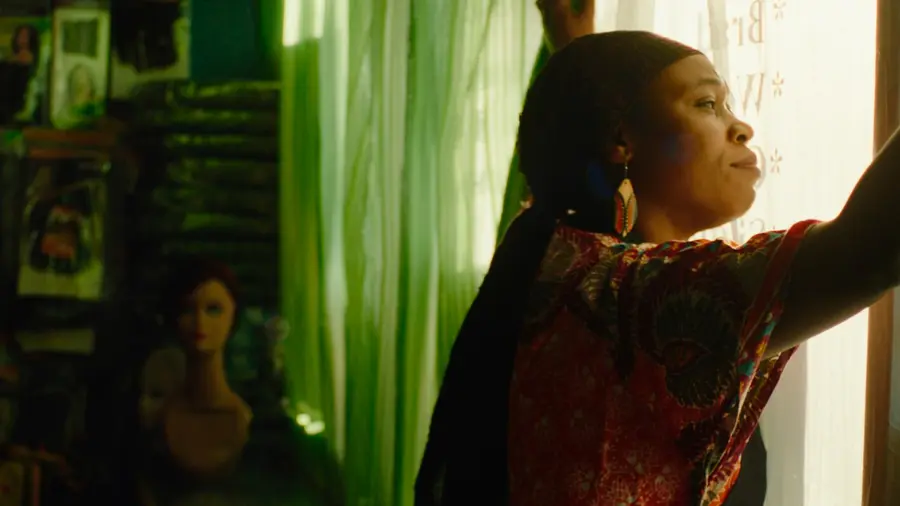
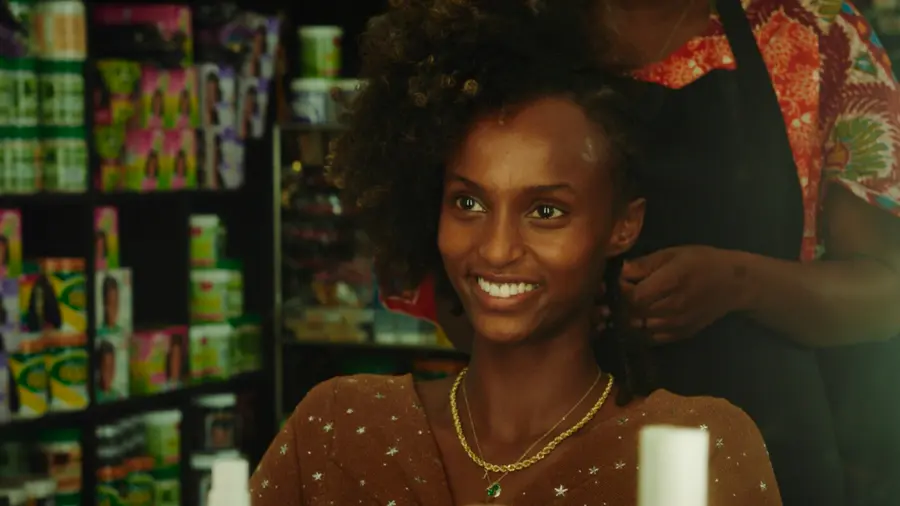
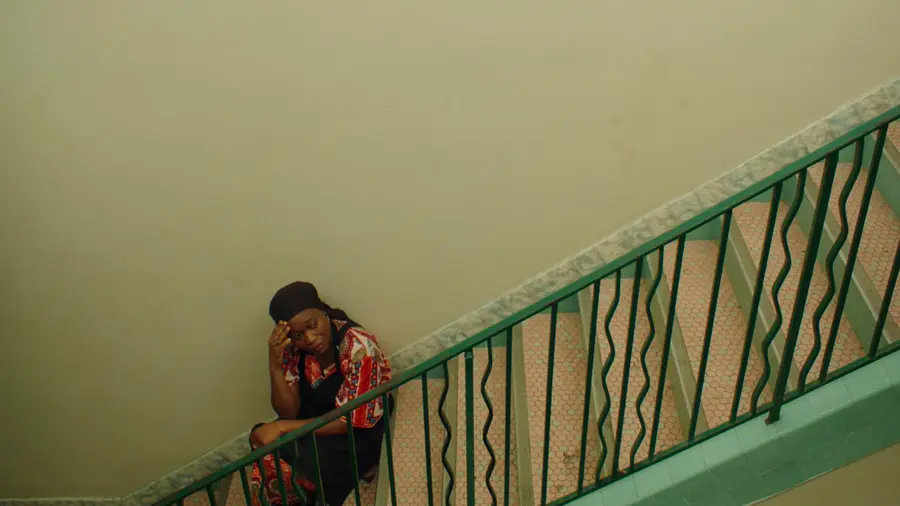
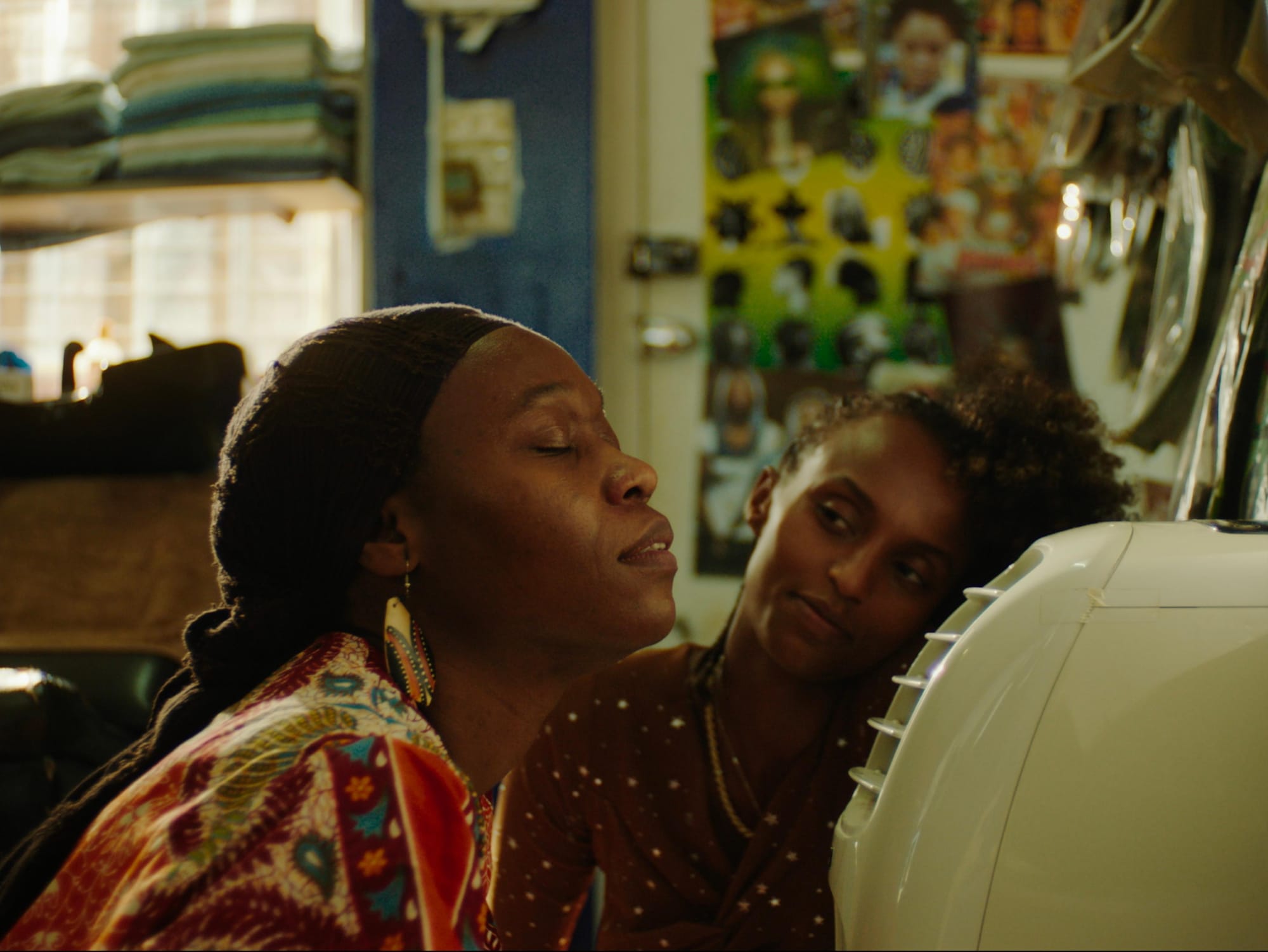
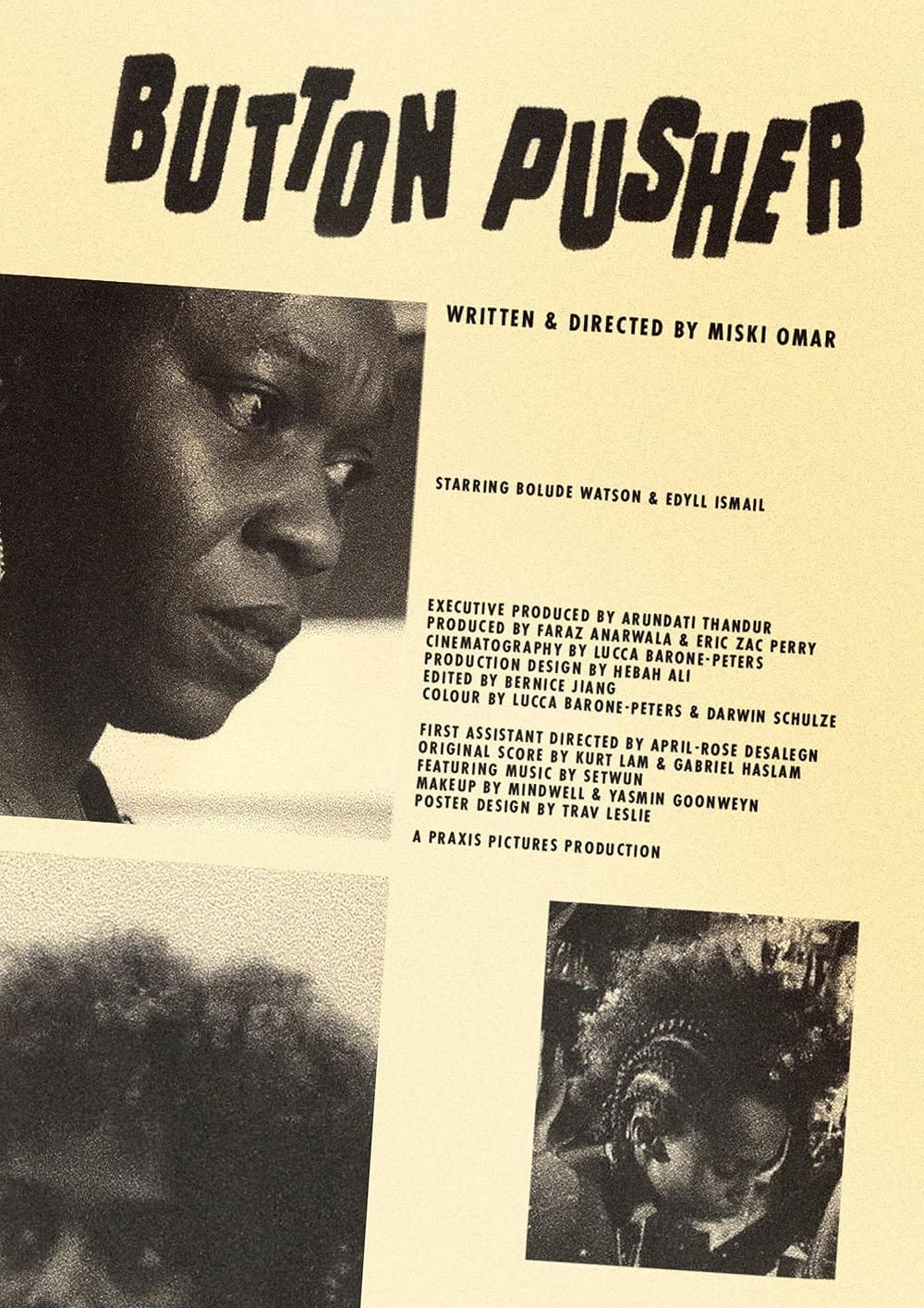
Let’s shift over to talking about Button Pusher. It’s a beautiful film full of layers. On a textual level, the story is guided by the design of the salon, the set dressing, and the lighting, all of which inform who these characters are and the lives they live. The story itself is rather simple, but it's all underpinned by full lives that are so clear on screen. It feels like you're stepping into documentary in some regards. Can you talk about building up the characters in the script and making it feel like it was lived in?
MO: I've always wanted to make something that was set in a salon. I'm fascinated by the social geography of a salon, particularly African salons, because the nature of our hair and the certain hairstyles we get, sometimes you're in that chair for six hours, so you better lock in. So much can happen in that space of time; whether it's boredom, banter, beauty, vulnerability, it's just such a beautiful container for stories. You come in and out, it's just like a gorgeous cross section of the community. I'd meet a Cameroonian Aunty because we were sitting next to each other just talking.
Button Pusher came through the Blacktown Arts Film Festival. They had a small fund for filmmakers who wanted to pitch ideas centred in Western Sydney. So, when I saw that, I was like, ‘Oh, it's time to make the salon story. Let's go.’ I wanted something emotionally intimate, but logistically simple, something that [could be made in] a short window of time and [with a] minimal budget, and maybe a small cast, and that you can still create something that is quite emotionally resonant. The salon just seemed like the perfect site for that.
Another thing that I was really interested in is that I definitely wanted the story to be centred around Black women, obviously. People always expect narratives surrounding Black women on screen to be all about spectacle, especially in moments of betrayal. It's about rage. It's about violence, confrontation; their betrayal becomes our entertainment. I really wanted to push against that, because for a lot of the Black women I know, and a lot of the women in the salon, when I would hear their stories, so much of it was about restraint and about control and about self-possession and about having to hold it together. Some people might want to yell and pop off, and that is cathartic, but a lot of people are going to sweep the floor. A lot of people are going to silently fold the laundry. A lot of people are going to just swallow it.
It’s a lot more interesting to me to see what kind of happens in that restraint, and how you can compose yourself, and what a quiet unravelling looks like when something really big happens, like in the movie, and to see what happens to someone who in the face of that is able to transform when met with a random act of kindness. I find that a lot more intriguing and actually a lot more representative of the women I have met and seen in the salons.
The notion of support between the salon person and the customer is beautifully realised. The way that you present the reveal of their relationship is awfully kind. It's kind to the characters, but it's also kind to the audience too. Can you talk about building that kindness in a way to make sure that there was a level of support for one another, even if it's as simple as just pushing a button on an air conditioner?
MO: For the lady who works the hair salon, Abiola, I really wanted to start off her day with loneliness, dissociation, this unravelling and ritual. She's a woman who has to hold it together, even though the day is falling apart. Her husband flakes, that dirty man. Her co-worker cancels. The day is hot and stuffy. I wanted the environment to also be oppressive and unavoidable, this kind of pressure cooker of all these unfortunate events.
What I really wanted to showcase was a woman who just isn't being considered and isn't being seen, and in a way, is submerging a lot of her feelings, but submerging a lot of her feelings for duty and obligation. When the young customer, Madka, walks in, immediately, off the bat, she helps with the rubbish. She's already extending an act of kindness. But as she enters the salon, Abiola begins to kind of notice her and taking interest in her.
In a salon, there is this kind of social grammar, these unspoken rituals and rules that govern how you interact; it's like there's this choreography of knowing when to tease, knowing when to not speak, knowing when to vent, knowing when to check in and knowing when to check out. Sometimes you can get personal, but you really need to be invited into that, you can't push because then you'll be shut down. Like, I'm not going to ask you about your 4k debt and your daughter who ran away or whatever. I'm not going to go there, but I might be able to, and with Madka, because she sees that Abiola is unravelling, she takes a keen interest in her. She asks her questions. I'm interested in when that social grammar is broken. What does it look like when she pushes a bit much and asks her, ‘What do you have time for?’ ‘Would you like to come to this musical you’re clearly interested in?’ Then it’s seeing how, once that rhythm is broken, Abiola responds to that.
And she doesn't necessarily engage that much. She is a bit open to it, but she still pushes away. I have seen the hardest people who are changed when you fix one tiny thing for them or extend a random act of kindness to them, like turning the air conditioner on or finding a way to fix it. It completely transforms them. No one is really helping her, and here is this woman who is supposed to be her enemy. It's crazy. You have a stupid husband, and there's another woman involved, and the other woman happens to be in your salon chair. A lot of people would jump at this opportunity, and she was going to, but then is changed by something so small.
It's like she is actually her friend. There is camaraderie in that, and there is softness in female friendships, and there is quiet support from the people you don't expect. You know they don't have to run off into the horizon, hands interlocked, giggling like schoolgirls, being best friends, but once she's left that salon, she's changed, and she is going to do something about her situation. She now has agency. I really wanted the vehicle of someone's kindness to lead her to that because the kindness from friends and strangers and people in my life has actually allowed me to have the confidence to do.
These are types of goodness and kindness which we don't usually get to see on screen. There is something quite tender about your presentation of this style of bond or friendship, which is a transactional one, Abiola is there to do a service. There’s also the understanding that six hours is a long time to spend with somebody. It's a lot more time than she's going to spend with her husband that day, or maybe even that week. You can't help but build a strong connection with them. It's beautiful to being able to see that part of life on screen.
MO: That's the thing, we have our real families, our biological families. We have our chosen families, the friends we make along the way. But then we also have these circumstantial families, families that you don't choose, they're brought together through work or school. These are people who may not even exist in the same social circles or economic circles. Those relationships are sometimes the most exposing and revealing, and they're the ones where sometimes you can be most vulnerable because these people don't know you, and you can just go off in each other's lives, and into your own lives, and be changed by that. I find those circumstantial relationships so cool.
I want to talk about your lead actress, Bolude Watson. I got to see her film Carmen and Bolude, and after watching that and getting to see her on screen, I asked myself, ‘Where have you been?’ She's so good. Getting to watch her work on screen here was a delight. What's it like working with her?
MO: Oh, wow. Bolude Watson is absolutely incredible. I feel so honoured to have been able to work with such a talented, intuitive, emotionally present actress. She doesn't just act, she's pulling from something internal, and throughout the shoot she expressed so much gratitude just being there. I think that just really comes across on screen.
It's quite remarkable when you think about how we were able to pull all of this off; we had minimal rehearsal time, because the window of time in which we made Button Pusher from script development to casting to shooting to it being screened, was like a two-month window. It was very, very, very tight. Casting was locked off properly like a week before shooting, and we wanted Bolude. I've been such a quiet fan for a while, and when we were able to have Bolude and Edyll Ismail, who is a phenomenal actress. Edyll was actually originally from Perth. She’s a Somali Australian actress.
When we were able to rehearse, it was over Zoom with Edyll in the room with me and Bolude at home. What was really interesting about that is we were able to run through it a few times, but a lot of it was us talking and sharing stories on camaraderie, female friendships, betrayal, restraints, the quiet tension of not erupting. What was beautiful about that is that on the day when we all came together, there was such a beautiful trust and chemistry between the three of us that there was never a moment where I ever had to tell them what to do or how to act, rather than reminding them of how they felt in that moment and just really trusting them to find that rhythm.
Bolude is so skilled. It was just such a master class in what it takes for an actress who can just sit and walk away for a second and be like, ‘Give me a moment. Let me just lock into this and sit there.’ For the for the scene where we were on the stairs, they were like, “Let me just have a moment.’ They sat there for a minute and, clearly pulling from some emotional experience from the past, started crying. I was at the monitor like jaw gaping, ‘Oh my God.’ It was really beautiful.
Edyll is someone who has trained at WAAPA and is such a promising actress and was so skilled as well. Seeing them working with each other, there was so much that they were both able to give to each other from what they've learned. I'm so happy with the performances, and I feel so honoured. I feel so lucky and I'm so grateful. I hope every experience is like this for the rest of my life.
I hope so too, because it sounds so supportive in the way you give each other the space to be open and vulnerable. That can be a freeing thing, but that’s underpinned by feeling safe enough to be vulnerable. That comes back to the emotional safety that you've given space to on set, and also the cultural safety and support that Bolude and Edyll give each other too. The notion of safety on set is personal thing, it can be dealing with different aspects, whether it be intimacy coordination all the way down to emotional safety. What kind of things did you put in place to allow for emotional safety on set?
MO: A lot of it is rooted in these quiet moments, the changes in facial expressions when they look at each other, so in a certain way, gestures carry information, a look carries information, and to be able to achieve that successfully, it is quite an emotional experience. The team really uplifted the actors and me and made it such a beautiful, emotionally safe experience. Everyone was just so receptive and responsible with the actors, asking them what they needed. We had a beautiful executive producer, Arundati Thandur. Lucca Barone-Peters, who was the DoP, Bolude hugged at the end and thanked him crying. Shout out to our First AD, April-Rose Desalegn; it was just such a beautiful team that just felt like a family.
When it came to the story, I wanted it to be an interactive experience on set with Bolude and Edyll, checking in with how they felt and letting them have the moments they needed. I would remind them of things we spoke about, but never explicitly, I wanted them to draw upon experiences that we discussed in the rehearsal. I did ask if they were comfortable with me asking them on set with a whole crew and team, and they said yes. I wasn’t specifically referring to those moments but more reminding them of that feeling. A lot of it was symbiotic; what happened over those two days was kind of magic, considering a lot of the mini-roadblocks we had. It was because of the love and care of the people and the camaraderie that it was made. It's a story about control. It's a story about restraint. In many ways in this experience, I really didn't have control. But within losing control, there is having trust. I really trusted every single person there on the day.
I’d like to shout out Eric Zac Perry, who is one of the producers. Zac really believed in it, and said, “Let's submit it to festivals.” So we did, and he called me in the beginning of May, he said, “We got into Sydney Film Festival.” I almost dropped my phone. It was such an honour. I've been attending Sydney Film Festival for years now, and there are some phenomenal filmmakers that have come out of the Dendy Shorts line-up, people I admire and respect. Just to be acknowledged was super affirming. I’m super proud of this achievement from the team.
Is the salon a found location or is it a set?
MO: I'm going to quickly have a little moment where I get to plug La Chic Hair Beauty Salon in Guildford, Western Sydney, 10 minutes from Parramatta. Monica owns the hair salon. She's a Ghanaian woman, and she is awesome. I've known her since 2013 and have been attending the salon for years. She's a boss lady, a businesswoman. She's also a harnesser of so many people and so many stories. She is the thread that keeps people together. She has this job, runs her family, but is also somewhat of a psychologist. She just does it. Monica and the salon itself was such a big inspiration.
We did some set design, but a lot of what you see is how it already looked. For the past five years, I've been walking into that salon being like, “Monica, you're gonna let me use this one day. I just hope you know that. Should we sign the papers right now? Can I get my name on the lease?” It carries character. It made it so easy to have a single day film set in a salon. We changed location once to an external location, but otherwise entirely stayed in that salon for the entirety of the film.
Having a place that has so much history in it and so much life lived in it and all the stories that have been told in there, we feel it so keenly.
MO: Energetically, yeah. It's powerful. Thank you. I often forget that you can see that and you can feel that, because it's a space that I'm so accustomed to. You can feel the steps that have walked in there, the stories that have been told. It carries so much story. It’s such a beautiful cross section of the community. My mum would sometimes have no reason to interact with other people if it's not in a hair salon or a market, or these spaces where we all get to come together. A market is just in and out. You grab what you eat, you leave, but a salon is a day, you chat and allow it to permeate over a period of time. No one can say they're not changed after spending some time there.
Berni Jiang is the editor here. What was the process of making sure that the rhythm and beat of the film moves in a comfortable way?
MO: Working with Berni was absolutely incredible. They were so skilled. They edited a version of the film that was very close to the final product in like a day. I had a cool document that Zac provided on where I got to point out certain shots that I liked and I could communicate what I liked about it. That was organised and structured into communicating what we were looking for. We gave that to Berni, and they said that really helped them. From then, they were able to pull a cut together.
We came together and we tweaked some stuff, but we really wanted to leave space for stillness and for things to be quiet, to let the performances and the expressions breathe and communicate what we need to communicate. We really wanted to have a story that felt hot as well. That mainly came alive in the grading.
Berni is a phenomenal filmmaker themselves. Their film, Mango Seed, was in the Dendy shorts line-up as well. Their style and my style, whilst quite different, was really complimentary in the sense that we both really appreciate cinema that is slow, and the moments speak for themselves and are emotionally resonant. It was such a beautiful process. It was my first time working with a female editor, and this was such a delicate story about womanhood and friendship in womanhood, and how that can be shaky in the face of something that happens, so we've got to have a lot of our own beautiful discussions.
What was the emotional reaction of getting to see your finalised film like?
MO: I was so ecstatic. What you write is always going to be different. They say a film is made three times, but it's made in a whole different way in the edit. It was everything I had imagined, if not better. I'm still quite new to this, and like many people, I’m years away from my best work, but I'm just excited to go back and learn before making more things. This being the first film I made with a crew and a proper camera, with a whole set, and the whole shebang, seeing it and not hating it was a beautiful experience.
What does it mean to be able to create art and tell stories in Australia right now?
MO: We're very lucky to have artistic organisations and programs in Australia that have funds and grants that uplift many different types of stories and diverse stories. Interestingly enough, what I found is in some places that might reach out to me for stories or are interested in something that I might want to write, they’re interested in stories from Black people that centre around a certain type of struggle or oppression or some type of hardship. Whilst those stories are important and need to be told and can provide catharsis for many people, and awareness for others, I can't help but find for me that does reduce our complexity and flatten our story into just one narrative.
In many ways, when we are thinking about oppression and struggle, and when we are thinking about what it means to be a Black person in a country that is foreign to you, we are always going to talk about that in relation to whiteness. In a way, sometimes that unintentionally centres whiteness. Again, these stories are important, but I'm very interested in “normal stories” where we can be normal characters. It can be a story about finding a sandwich at a train station or lamenting about waiting one hour to get two pages printed at Officeworks, or a story about friendship between two women. These are human stories. These are universal stories. These are stories where we can actually explore all those themes without being so on the nose and reducing someone to a single story.
In terms of making stories in Australia, unless I feel called to talk about certain things that may be plaguing me in certain struggles, I'll never stop that, I'm very interested to bring to life the mundane. I'm an observational person. I'm reading into a lot of things. I often find that a trip to the supermarket or looking at my bookshelf or staring at paint drying on the wall can actually open up a realm of realities and possibilities. I really love the word apophenia: drawing a connection between things that are seemingly unconnected. That's my artistic challenge. That is my practice. You could talk about grand things like love, pain, hardship, but everyone can talk about those. I think the true skill is to convert something so simple into something so grand. That's what I want to tell and the stories that I want to make in Australia.
This is the everyday and we're experiencing it. Small things can mean the world of a difference. I'm attracted to those stories when I watch them, often in those stories what you're left with is that you think about yourself and your life, and you're also left with the characters. I hope I can reach a point where I can write characters that people are left with for days or weeks, they're sitting next to you and you're on the train when you find that sandwich or whatever. I'm super interested in the mundane and the magic all of that.