As 2019 comes to an end, we take a look back at the year of Australian films that we’ve just had. Now, I’m going to admit, this list might be a little more controversial than some of my previous Best Australian Films lists, and I can’t apologise for it.
For starters, this is the first time I’ve included short films in the list. In the past, I’ve seen a lot of great short films that have been worthy of inclusion, but have relegated them to their own list. The three short films I’ve included are that good that they deserve their place in the ‘Best of’ list.
Now, a few stats!
I watched 49 Australian films that were either released in 2019, or had festival releases in 2019. Of these 49, there were many that could have been considered here, but as they will be getting a theatrical release in 2020, they will appear on that list instead. Some of the Australian films that had theatrical releases in 2019 were rated and ranked in the 2018 list, so make sure to check out the 2018, 2017, and 2016 lists.
More stats!
- - Twelve films are directed or co-directed by women
- - Four films were nominated for Best Picture at the AACTA Awards
- - Ten films are documentaries
- - Three are short films
- - Two feature films were made for under $4000 each
Ok, enough of that, onto the list!

The 2019 Melbourne Documentary Film Festival had a wealth of great films (as every year does), but my pick of the bunch was the fascinating look into the different lives of single women from around the world. What made Singled [Out] the success that it is, is the way that it humanises the untold stories of single women, some of whom find themselves forced into marriage because of social expectations. One story tells the tale of a woman who wishes to be a mother, and turns to IVF to help make her dream come true. It’s a tender and caring documentary, highlighting the need to remove the expectations forced on women around the world. I only wish it were a little bit longer!
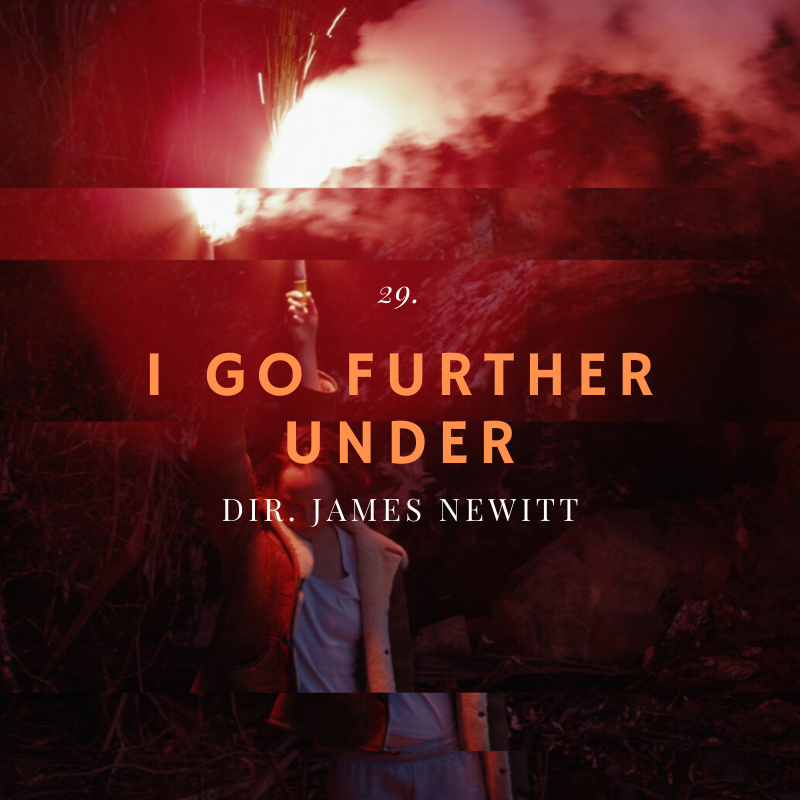
I Go Further Underis a low-fi, low budget, very artistic driven film that is loosely based on the life of Jane Cooper: a teen who lived on the remote and uninhabitable De Witt Island for a year. Director James Newitt employs an intriguing use of modern technology to reinforce actress Emily Milledge’s Jane Cooper-surrogate character desire to escape from civilisation. At times, the screen is overwhelmed with the letters of people pouring out their lives to this person seeking solitude, reinforcing the insidious way that humanity cannot escape itself. Admittedly, this is a film that works best when reflecting on it, when your mind has had time to parse the experimental film aesthetic, but it’s Emily Milledge’s performance that will resonate the most.

I feel I was too harsh on Rod Rathjen’s slavery drama Buoyancy when I reviewed it out of Cinefest Oz. I asked then, who was this film for? Suggesting that nobody would want to watch this at all. But, ever since watching this film about a teen seeking a life of his own, and ending up on a slave boat, fishing for trash fish that will inevitably turned into someones cat food, I couldn’t shake the imagery from my mind. Lead actor, Sarm Heng, is exceptional, delivering a performance that feels so natural, so lived in, that I couldn’t help but fear how much he had taken on board the trauma within the film. This is dark, depressing filmmaking, but it’s filmmaking with a purpose. I was already aware of the impact of overfishing on the world, but I had no idea it was this bad. To hear Rathjen mention that they had to tone down some of the brutality that they learned about while researching for the film makes my mind race as to what else has happened. Powerful stuff.
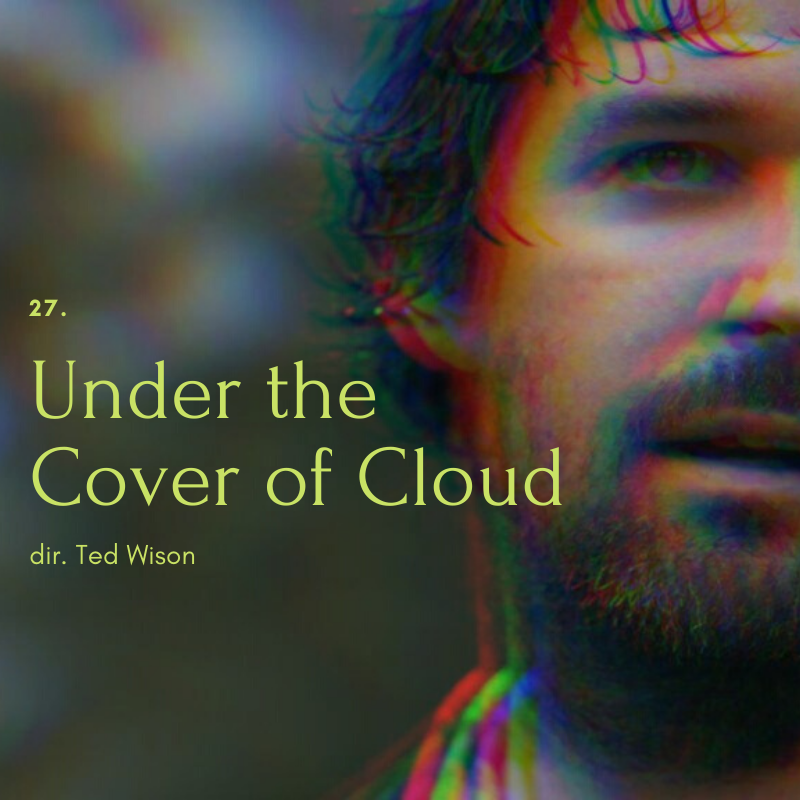
Ted Wilson’s quiet, tender, loving family drama feels so deceptively surface level, so run of the mill and routine, that by the time it’s reached its conclusion, and its story of a family just existing wraps up, you can’t help but feel moved. This is deceptive filmmaking, with a very observational tone that simply watches as people live a life - a family has a reunion lunch and shares family stories, or later, a son and a mother work together to do some gardening. Ted Wilson is a multi-hyphenate here, wearing the hat of director, writer, actor, and producer, and it’s this full bodied role that makes me wish that this film were given a wider release. It’s quiet filmmaking, subtle in style and not overly showy, and that’s its key strength: it’s a slice of life story that asks us to reflect on the small moments, embracing the conversations between conversations, and the bonds that make a family whole.

There’s an absurdity to Chocolate Oyster that gives it a certain charm. Sure, the story of the titular chocolate oyster recipe is deeply hilarious, but it’s the vignettes of people living life in the suburbs of Sydney that makes this film a joy to watch. There’s a pretentiousness to Chocolate Oyster that appears to have turned a lot of viewers off - there’s a surprisingly high amount of undeserved vitriol for this hugely independent film - but it’s a pretentiousness that Jaggi embraces completely. It’s in black and white, the end credits are at the beginning, the conversations are often bland and tedious, but, there’s an extreme charm to it all, and the failures of the various characters are what makes Chocolate Oyster the intriguing, slice of life affair that resonates with two other films on this list.
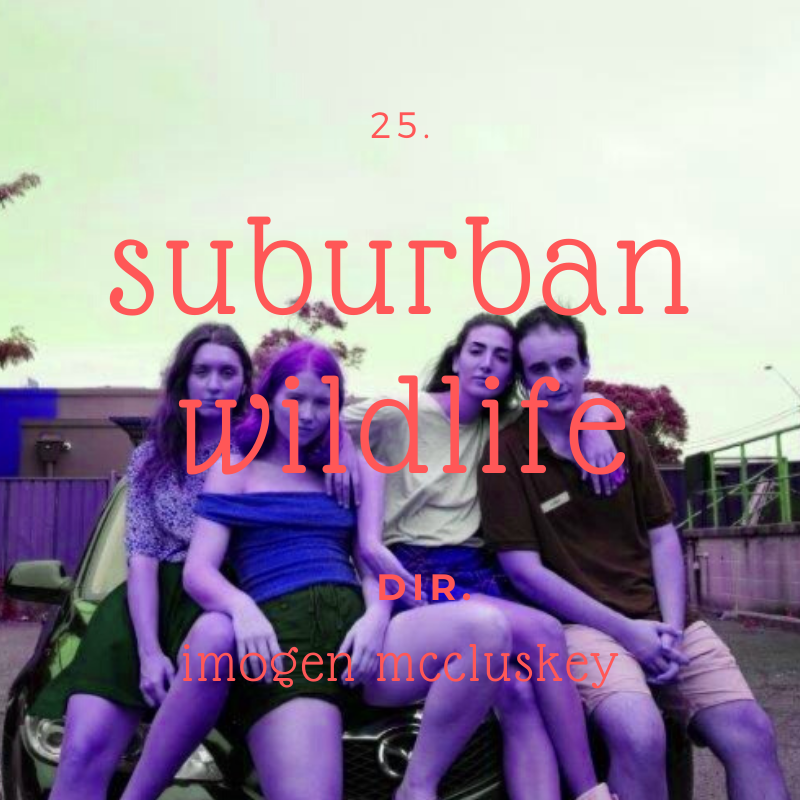
When viewed as a loose trilogy of films, Chocolate Oyster, Hot Mess, and Suburban Wildlife go far in portraying the struggles of life for the young adults of Sydney. The life they’ve been promised is not what they’re presented with. They realise the momentous challenge that they face just to try and get ahead in life, and it’s not going to be easy. This is reflected in the way that director Imogen McCluskey and co-writer Béatrice Barbeau-Scurla managed to make this film for a mere $4000. While that should sound impressive (it is), it’s a mildly devastating reinforcement of the themes of Suburban Wildlife. Here are two exceptionally talented filmmakers who should be given the chance to make films with a budget, but that’s not the reality of the Australian film industry, and it’s not their reality. If anything, the proof of their ingenuity and ability to make a film this good on no budget at all is reason enough to feel that these younger generations will be ok.

Look, it seemed like a pretty fun thing for a lot of reviewers to beat up on Rachel Ward’s ode to upper class white folks, and I can understand that completely. But, under the surface of that gloss and sheen is a solid story about friends and family getting together and addressing the issues that have long gone unspoken. While Ward’s film never fully interrogates the difficulties of early retirement in a world that was built exactly for that, it does at least touch on some salient topics like depression, the fragility of men, and the fear of ageing. Some issues are not explored at all - Jacqueline Mackenzie’s Bridget clearly has a drinking problem that nobody ever addresses - but that lack of introspection is part of the point of Palm Beach. These characters have a world of issues in front of them, and much like the real world upper class white folks, they wilfully ignore a fair chunk of them occurring in front of their eyes. Ward never condemns these characters, often celebrating their white privilege, but that lack of condemnation makes Palm Beachan interestingly performed film.

I fear that the placement of The Nightingale so low on this list might cause some deep anger, and I do apologise for that. This is a towering achievement of a film, with Jennifer Kent exploring the toxicity and brutality of colonialism, laying out the harshness of the 19th Century Tasmania for both women and Indigenous Australians. Yet, for all of its brilliance, I found myself not engaging with the film on the level it required. I admire Aisling Franciosi’s searing, hate filled performance, and Baykali Ganambarr is simply brilliant as the reluctant tracker, but the overwhelming brutality left me feeling numb, when it should have left me enraged and engaged in the way that Warwick Thornton’s masterpiece Sweet Country did. This is an important film, it just did not impact me as much as I had hoped it would.
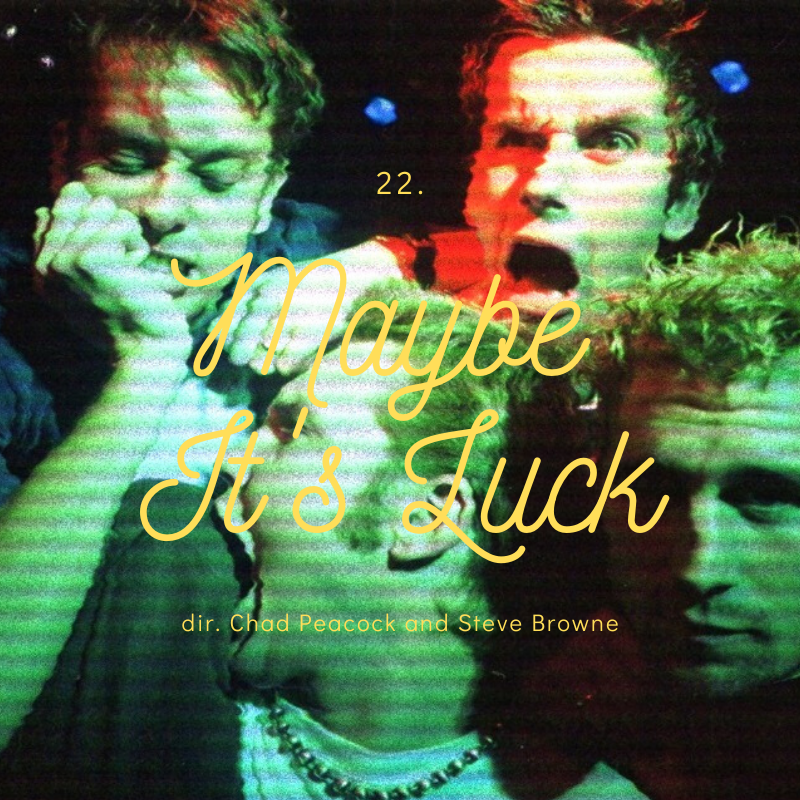
Maybe It’s Luck takes the place of Meal Tickets and Rockabul as the Aussie doco that takes a look at an untold slice of the worlds music scene. This time round, it’s Perth punk band Kerb (again, no relation), who after a decades long sojourn from the music scene embark on the comeback of comebacks. With failures and foibles, the band soldiers on, pushing forward with gusto, and it’s front man Steve Browne’s energy that helps drive this film. It’s often frenetic, often hilarious, and always entertaining stuff. Maybe It’s Luck reflects punk music perfectly, taking risks where you wouldn’t expect it to, and ending with one heck of a hilarious punchline. This is short fast loud, it gets in, doesn’t fuck around, and then gets out.
The first short film on the list is also the first sci-fi film. Chris Elena’s short is centred on a silent performance from newcomer Emma Wright. Channelling early Bethany Whitmore performances, Wright provides a powerful lead through this engaging and intriguing short that asks a lot of big questions, and isn’t afraid to tackle the answers for some of them. The script by Lee Zachariah is smart and considered, embracing the format of short films and meeting the format on its own level. This isn’t a proof of concept short that works to try and get a feature film out of it, instead, Audio Guide is its own complete narrative, one that could only exist within this format. It’s powerful in its simplicity, and honestly, I cannot wait to see what all of the team associated with this wonderful film do next. More please.

It’s not often that an Aussie filmmakers debut feature film is a broad scope sci-fi film that tackles some fascinating themes, but here we are with Perthian Grant Sputore’s I Am Mother. At the center of this futuristic fare is a Clara Rugaard’s ‘Daughter’, a girl raised by a robot called ‘Mother’ (Rose Byrne). This is not a distinctly Australian film, but a lot like David Twohy’s Pitch Black, this sci-fi film utilises the Australian landscape to perfection, amplifying the dystopian aesthetic wonderfully. At once, this is a story about the way humanity works to find roots to establish itself in the world after a presumed apocalypse, but then, midway through, it changes into something different, raising questions about whether humanity can be trusted, or whether mankinds android creations are the new rulers of the world. There are some broad, big ideas that I Am Mother doesn’t always pull off, but it’s the fact that Sputore wasn’t afraid to go big that makes this a superb film. Also, the robot creation by Weta is – as expected – simply brilliant.

There are a few films on this list that have been done dirty by Australian audiences, and right up there at the top of the list is Sophie Hyde’s ode to friendship and love, Animals. Grounded by two of the best performances in an Aussie film this year, this film should have been a hit. Holliday Grainger and Alia Shawkat are so watchable and entertaining in the way they embrace the challenge of the ‘quarter life crisis’ that faces so many millennials out there. Hyde embraces the questions that come with trying to embrace feminism in a modern age – how do women tackle sexual freedom while also wanting to tear down the patriarchy? How two strong feminist friends deal with the issue of marriage in their relationship – a concept that their style of feminism willingly rejects – is explored in depth. Animals is entertaining and engaging in the same way that Booksmart is, and ideally, they should be viewed as a pair, with Animals being the older sibling to Booksmart’s headstrong youth.

Damon Gameau knows how to make an entertaining documentary, one that’s full of encouragement and hope, full of smiles and smarts, and he employs all of the tricks in his toolbox to make his climate change documentary not the doom-and-gloom fest it so easily could have been. 2040 works so well because it gives the viewer a hope that is so often lacking in the discussion surrounding climate change. The way Gameau travels the world (all the while addressing the hypocritical way that he’s flying around the world making a doco about climate change) visiting places where people are making changes for the better. Underwater seaweed farms, communities in India connected by solar panels, farmers revegetating land, and more, are all ways that the world is changing for the better in rarely publicised ways. But, the key to 2040’s success is the way Gameau reminds people that while devastating is definitely coming, it can be tempered by this united approach to tackling climate change. A hopeful, positive film that encourages viewers to a call to action.

I saw Me and My Left Brain back in 2018, and I enjoyed it at home, but it wasn’t until I saw it again in a cinema with an audience that I properly appreciated Alex Lykos’ brand of comedy. The laughs were strong and joyous, reacting to this wonderful romantic comedy vibe that Lykos had crafted. In my review, I commented on the way that Lykos pulls from the toolbox of Woody Allen, and I stand by that assessment, but on repeat viewings I can see how Lykos has made that Allen-esque comedy distinctly Australian, and most importantly, distinctly ‘Alex Lykos-esque’. 2019 was the year that Australian comedies made a major comeback, and while I want to say that audiences responded in kind, unfortunately they didn’t. And due to that, Me and My Left Brain was one of the major casualties, and by gosh, it deserved so much more than it did.

2019 gave us not one, but two essential Adam Goodes documentaries. They compliment each other perfectly, with Daniel Gordon’s The Australian Dream working as an exploration of all the material within The Final Quarter. Here, Stan Grant guides the audience through the many facets of racism in Australia, exposing with harsh clarity how caustic and cruel the society of Australia is when it comes to the treatment of Indigenous Australians. The way The Australian Dreamexposes the effects of racism on Adam Goodes should leave viewers with no doubt that he was wronged by the media, by the AFL, and by the fans. The Australian Dream works in tandem with The Final Quarter, expanding on the footage that makes up that film, and giving Goodes the chance to discuss the impact of racism on him. This is sobering viewing, working as a reminder to all those white folks who think they’re doing the right thing that they can do much, much better to help combat racism.

Thomas M. Wright’s Acute Misfortune uncomfortably sits alongside films like Snowtown and Chopper as being honest and brutal portrayals of Australian figures. But, unlike those films, Acute Misfortune isn’t about a violent murderer, but instead it’s about artist Adam Cullen and his abusive relationship with journalist Erik Jensen. Just like 2018’s Sweet Country and Strange Colours, Acute Misfortune is the kind of film that, if it were made by an American or European filmmaker, it would be a massive critical success. But the cruelty of the nature of Australian films means that this was never going to find the audience it deserved, and would never appear on the deserving ‘best of 2019’ international lists that it warrants. Thomas M. Wright is a director to watch, and Acute Misfortune is the kind of calling card film that gets directors like Justin Kurzel, Andrew Dominik, and David Michôd on the map.

Mirrah Foulkes is the new Jennifer Kent. With Judy & Punch, this actress turned director has crafted a searing pitch-black comedy that exposes and explores the intricacies of violence in society. With the powerful script that Foulkes has written, she provides the foundation for two of Australia’s great actors – Damon Herriman and Mia Wasikowska – to work their magic. The period costumes and set design is brilliant, adding to the immersion of this age old story of an abusive puppeteer getting his comeuppance. Alongside Animals, Judy & Punchis a proudly feminist affair, celebrating the lives of women and condemning the brutality of men that is allowed to flourish in an untethered patriarchal society.

Who’d have thunk that in the year of 2019, Australia would get not one, not two, but three romantic comedies? It’s a pretty great year for a revival of a long dormant genre. It’s a great joy then to see that Wayne Blair’s ultra-joyous Top End Weddingfound a receptive market who lapped up the story of the ever luminous Miranda Tapsell as she went on a journey to find her mother so she could get married. There’s so much to love about Top End Wedding, from the way that Tapsell’s Lauren is successful in her career, to the ever smile inducing Huw Higginson as Lauren’s father, to the finest climax of the year, with the wedding ceremony on the Tiwi Islands. While there are moments where Top End Wedding falters, it’s the final half hour that really cements this is a modern classic in the making. Thinking about Ursula Yovich’s role as Lauren’s mother, and the way she brings such beauty and warmth to the role makes me well up as I’m writing this. There were a few ‘firsts’ with Australian films in 2019, and Top End Wedding marked the first Indigenous romantic comedy film, a trend which I cannot wait to see continue.

2019 was an exceptional year for documentaries, and while there were many that were deservedly successful, it’s this documentary on Aussie artist Keith Looby that slipped through the cracks. With a sole screening at the 2019 Melbourne Documentary Film Festival, it’s understandably that many may not have heard about Looby, but hopeful its prominent place on this list means that people will seek it out. This acerbic icon of the art world makes for one heck of an engaging subject as directors Ian Knight and Nick Garner work to explore Keith Looby’s fractured relationship with politics, galleries, and other artists. At one point, an interview subject realises they shouldn’t be talking to the filmmakers and simply ups and walks out, proving how contentious Keith Looby is as an artist. This is a brilliantly entertaining expose into one of Australia’s best and most controversial artists. When it eventually reappears somewhere down the line, watch this, you won’t regret it.

Judas Collar is the one film on this list that I’ve seen the most. It pains me to not have it in the top ten, but I want to stress, it’s just as worthy of a place as those that are in the list. This is a genuinely brilliant film that I won’t go on too much about here as I’ll simply direct you to reading my review. Director Alison James and producer Brooke Silcox are doing the hard yards to try and get this film in front of Oscar voters, and you know what, I believe this one deserves the nomination and the win. It’s that great.

Aussie horror had a fairly solid year this year, but rising above all others was the gore driven comedy affair Two Heads Creek. When I read that it was Welcome to Woop Woop by way of The Cars that Ate Paris with a decent helping of gore, well, I simply had to rush to see this film, and I was not disappointed. This is the kind of film that’s best watched knowing nothing at all, letting the uproarious comedy beats hit every mark and having you double over with laughter. The central cast is exceptional, with co-leads Kathryn Wilder and Jordan Waller making a brilliant sibling duo, but it’s Helen Dallimore’s Home & Away-esque villain that really cements this as a modern Aussie horror comedy classic. If you dug Tucker and Dale VS Evil or The Loved Ones, then you’re going to need to watch Two Heads Creek. Get onto it quick smart so you can be ahead of the trend and start the conversation about people having missed this exceptional film. I cannot wait to see what mania and mayhem director Jesse O’Brien creates next.

The great year for Aussie comedies roles on with one of the most diverse films to be filmed in Australian. Featuring an exceptional comedic performance from Breaking Bad’s RJ Mitte, and a powerhouse debut performance from Philippa Northeaste, Standing Up for Sunny is a crude, rude, heartwarming and tender romantic comedy that absolutely works a treat at every moment. There’s so much to admire with this film, with Steve Vidler’s exceptional script giving every actor the chance to shine. But, just like many other comedies on this list, it’s been hobbled by an unfair theatrical run (which is no slam on the filmmakers, just the state of the industry). If this were an American film, it’d be getting a wide release with bus stop banners and extensive marketing, but because it’s Australian it’s shuffled off to nowhere. Which is the greatest shame because gosh, Australia needs more Standing Up for Sunny’s out there. A genuine comedy classic.

There’s a deceptive simplicity to The Final Quarter. Director Ian Darling simply presents media footage from the time, allowing it to speak for itself, and in turn, giving the media icons like Sam Newman and Eddie Maguire more than enough rope to hang themselves with. The Australian media is rarely put under this kind of spotlight, with its mere existence laid bare in such a frank and basic manner that causes every crack, every slander, every injustice thrown upon Adam Goodes to be recognised in with complete clarity. As above, The Final Quarter is essential viewing with The Australian Dream, working as an entry point to that deep dive film. Both films left me shaking, furious at how the media and how Australia has treated Adam Goodes, one of the greatest footballers around. The Final Quarter and The Australian Dream work in tandem as a reckoning for everyone involved in this horrific saga, laying the foundation for this to never happen again. But, the worst thing is that this is Australia, and racism is a torturous inevitability. Shame on us all.

I called Happy Sad Manthe most important film that you could see this year in my review, and I stand by that claim. I’ve watched it three times, and each time I’ve felt a weight lifting further off me, like I’m able to discuss my mental illness. Then, each time I hop onto the ever caring Happy Sad Man Instagram page, and I see director Genevieve Bailey sharing the thoughts of audience members who have responded to the film, I’m touched. I’m touched that there is someone as generous and caring and empathetic as Genevieve Bailey out there. Someone who saw an issue occurring within the men of Australia and put herself to work to tend to that issue. I’m grateful for Happy Sad Man, but I’m ultra-grateful that Genevieve Bailey exists. She is a genuine blessing. See this film, talk about mental health, embrace each other.

True to my word, Hot Mess is one of the best films of 2019. This millennial comedy about one woman trying to get a hold on life, find romance, further her career as a writer, and to just not fall apart, is one of the finest indie film achievements this country has ever seen. The one-two punch of writer-director Lucy Coleman and actress Sarah Gaul is overwhelming. These two are immense talents who I cannot wait to see what they do next. The fact that Hot Mess was made for all of about $3000 is amazing, and the fact that Lucy Coleman was one of twelve filmmakers who went to LA through the Talent USA initiative from Screen Australia makes me hope that she goes far in America. For everyone else in Australia, if you missed the festival runs of Hot Mess in 2019, then fear not, Filmink Presents will be screening this five star comedy in 2020.

Possibly the least Australian film on this list, but no less a great one. David Michôd’s The King is a timely film about the insidious and toxic nature of power and government, with Timothee Chalamet’s Hal being dragged down a path of leadership and being forced to reckon with the hands of manipulation. I had little experience with the Shakespeare work that this is based on, and maybe that lack of knowledge coloured my opinion, but regardless, I was left stunned by what Michôd had created here. It’s a genuine masterwork, showing a filmmaker excelling at his craft, and executing some risky creative choices (everything about Robert Pattinson for example) that elevate the film even more. If this is what happens when Australian filmmakers are given a budget and free reign, then I say, let’s get more Aussie filmmakers working with Netflix, and let them tell Aussie stories.

While we often talk about those with mental health needing to rely on phone services for support, we rarely consider the people who are there to provide the support. Directors Josiah Allen and Indianna Bell, part of Adelaide’s Stakeout Films, have created a short film that addresses that exact subject. Caithlin Ologhlen joins Audio Guide’s Emma Wright as an actress in a short film who also delivers some of the finest work of the year. Shot in one take, with a gradually imposing camera amplifying the tension and anxiety that Caithlin’s operator has as she answers her first phone call unprepared. Brendan Rock’s caller, who we only hear, is brilliant, presenting the weariness of someone who has used a mental health call center for help with great frequency. Stakeout Films are a production company that everyone interested in short films and Australian cinema need to keep an eye on, because if Call Connect. is evidence enough, then they are going to be creating some of the finest cinema we will see. This is a powerful short film, one that left me broken, feeling the weight of the struggles that many with mental health live with, and the difficulties that those on the other end of the line face when trying to help them. For the longest time, this was my favourite Australian film of the year, and if I could, I’d give this and the next three films equal top billing.

One of the constants on this list is the presence of first time women filmmakers, with Lucy Coleman, Mirrah Foulkes, and Imogen McCluskey all proving that in Australia, these directors have stories they want to tell, and they’re darn well going to make sure they land with an impact. Topping the list of exciting and invigorating filmmakers is Selina Miles, whose documentary on photographer Martha Cooper is one of the most exciting, entertaining, informative, and reflective films of the year. I couldn’t stop grinning like an absolute idiot at the end of Martha: A Picture Story, it’s that good. This is not just a film about an icon, but it’s also (just like my number one film) about the need to respect, cultivate, and maintain a historical catalogue of art in all its permeations. Martha’s work rose out of the graffiti movement in New York, an artform that many considered a blight on the city. It was Martha’s photography that partly helped pave the way for that artform to be respected around the world. You can’t help but feel energised by Martha, and in turn, Selina Miles directs and guides the editing process in such a way that reflects her energy. This is top shelf material, genuinely one of the great modern documentaries. I challenge you to not be entertained.

When I walked out of Koko: A Red Dog Story, I thought my immediate love for it was confirmation bias. I love dogs, I loved Top Knot Detective, and I love the myth of Red Dog, so naturally, combining all three together made the ‘joy’ part of my brain sing. But then the other five star reviews for this dogumentary came rolling out, and I knew right there and then that this was a genuine treat of a film that deserved every single ounce of love it got. There is so much affection for dogs in Koko: A Red Dog Story that you can’t help but weep with joy throughout the whole film, and then weep with sadness as it wraps up. I already knew that Aaron McCann and Dominic Pearce were going to be great filmmakers after Top Knot Detective, but I honestly didn’t expect them to be this great. That first film was just a tease of what was to come, and this right here is the main feast. It’s clear that McCann and Pearce are filmmakers who simply want to do everything they can to entertain, and honestly, they’ve mastered that with the best Australian family friendly film since Paper Planes. Australian audiences have loved the Red Dog films so far, and they should definitely fall in love with the best in the series.

Finally, there’s It All Started With a Stale Sandwich. This is one of those films that came and went, with a handful of screenings here and there, and that’s a real shame, because this kind of celebration for public art needs to be embraced more. Look, I should have stated at the beginning of this list that these are all my personal choices, and with that note, I recognise that It All Started With a Stale Sandwich might not be for everyone. That’s fine. But, for me, this exploration of the history of Kaldor arts project was the most thrilling, interesting, informative, entertaining, and heart warming film of the year. The way that Hungarian-born Australian John Kaldor works with the various artists that he engages with over the fifty year history of Kaldor arts is one fuelled by a passion for art in all its forms, so much so that when he’s presented with an augmented reality art project, he’s blown away. It’s here that it’s clear that art can be anything, and can be made by anyone. We’re not limited by paint brushes, film cameras, or pens, in fact, art can be created – quite literally – in thin air.
I’ve revisited this film multiple times throughout the year, with the shortened version having played on ABC, and I find myself overwhelmed with emotions at the end each time. There’s that confirmation bias again maybe, one that shows how much art means to me and my life. I wrote about that in my extensive review for the film, talking about my experience with a public art project in Times Square and how it has struggled to find a way of escaping my mind. The way that director Samantha Lang shows the residual effects of art on the mind through interviews with people who were in the projects, visited the projects, or knew of the projects, is what keeps this work of art, this documentary, alive in my mind now.
A number one position on a ‘best of’ list is a curious thing. Usually there’d be someone out there who had a similar ‘favourite film’ of the year, but I can say with certainty that that won’t be the case here. Which is perfectly fine, because if It All Started With a Stale Sandwich has reinforced one thing for me, it’s that art is a hugely personal entity, with each person reacting in their own way. I have struggled in my bid to recommend this film to people, mostly because the subject sounds so educational that it’s hard to make it sound exciting, but that’s more on me than the film, because Lang’s direction is exciting. You can easily tell how much she cares about John Kaldor, his artists, and the art they create. You can tell that she loves and lives for art as whole. This is not only one of the finest films of 2019, but it’s also one of the best of the decade.
And that’s it! My Best Australian Films of 2019 list. Hopefully there were more than a few titles on here that have surprised you and that you’ll want to seek out. I’ve already seen a fair few great films for 2020 that I simply cannot wait to get behind and support, so onwards to the future, and keep watching Australian films!